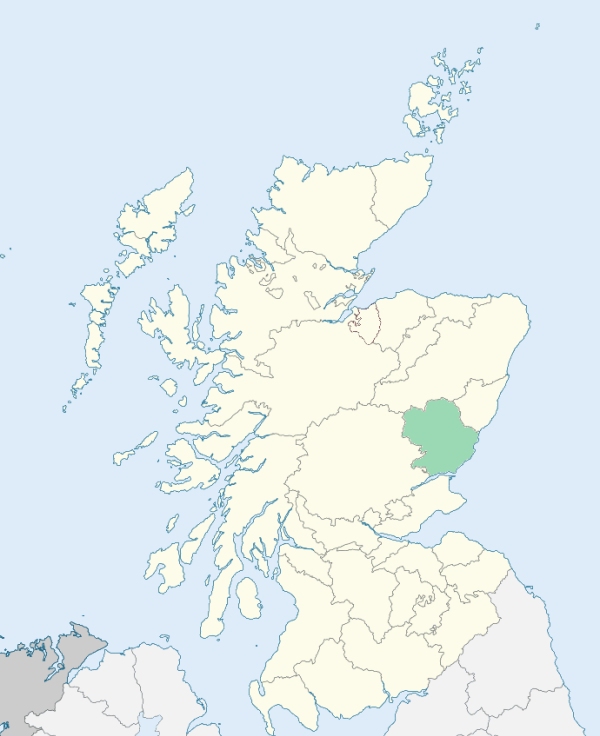
Lochlee is a parish in the extreme north of the Grampian district of Forfarshire. It is bounded by Aberdeenshire, and by the parishes of Edzell, Lethnot, and Cortachie and Clova. (1867: The Imperial Gazetteer of Scotland, by John Marius Wilson).
Achintoul or Auchintoul, Ardoch, Baillies, Dalbrack, East Migvie, Glenlee, Inchgrundle, Keenie, Littlebridge, Midtown, Tarfside
PRE-REFORMATION GOVERNANCE:
POST-REFORMATION GOVERNANCE:
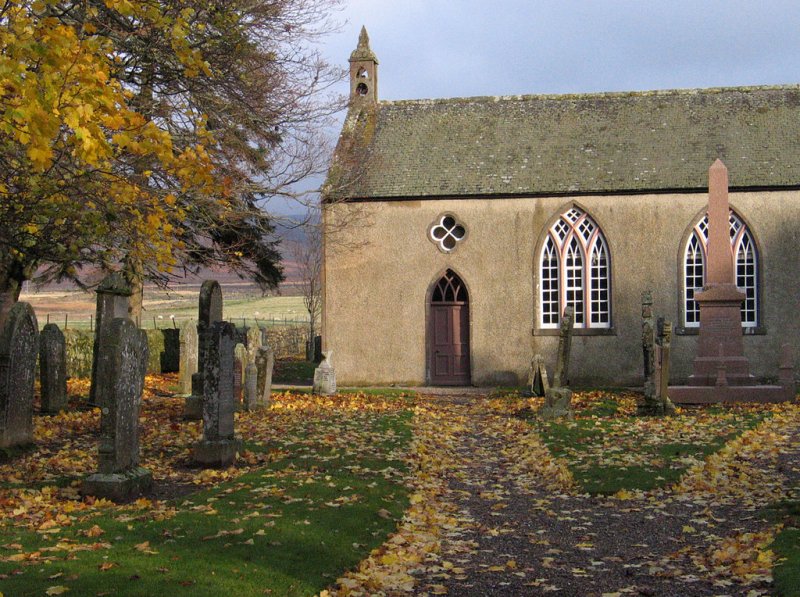
The church of Lochlee was dedicated to St Drostan. Near it was St Drostan's Well. Lochlee was united to Lethnot in or about 1618. The two parishes were severed again by the Commissioners of Teinds on 6 February 1723. Lochlee Church was burned in 1645 by the troops of the Marquess of Montrose. A new church was built in 1803.
Includes ministers, licentiates, assistants, readers, and clerks.
(1928: Fasti Ecclesiæ Scoticanæ, by Hew Scott, D. D.)
Parish registers turned over to the Registrar-General, as a result of the Registration of Births, Deaths, and Marriages (Scotland) Act of 1854. The letters B. D. and M. indicate Births (or Baptisms), Deaths (or Burials), and Marriages (or Proclamations of Banns) respectively. Numbers indicate separate volumes or books. Note: These records are by no means complete or without damage; consult the Detailed List of the Old Parochial Registers of Scotland (1872) to learn more about the condition of the records.
| OPR and RD Numbers | |||
|---|---|---|---|
| Date Range | Name | Number | Type |
| 1731-1854 | Lochlee | 303 | OPR |
| 1855-1958 | Lochlee | 303 | RD |
| 1959-1971 | Edzell, Lethnot and Lochlee | 284 | RD |
| 1972-1972 | Edzell, Lethnot and Lochlee | 365 | RD |
| 2009 | Angus, Brechin | 366 | RD |
| 2026 | Angus Council; Inveresk Community Council | ||
(2009: Parishes and Registration Districts of Scotland - Old and New, National Records of Scotland)
Local community councils (2026) are provided as a potential source of additional information for settlements within the original boundaries of the parish. (Source)
Statistics from informal and official censuses
Campbell, Christison, Davidson, Gibb, Lindsay, Middleton, Moir, Paterson, Stewart, Sutherland
Note: Names appearing in research materials, other than censuses. Simple names (First name, surname only) have been omitted unless they appear associated with large properties. All women's names, and men's names with occupations, military ranks, or peerage titles are included.
By the Reverend Mr John Pirie.
"At present (1792) there are 178 men, 237 women, and 193 children below 12 years of age, making in all 608 souls. The natives had formerly a strong attachment to the place, and seldom left the parish. Although the same attachment still continues, yet the price of labour in the low country has advanced so considerably, within the last 20 years, as to induce several of the young men to leave the parish; a circumstance, which will account for the great difference betwixt the number of men and women at present residing in it.
There are 4 wrights, 4 tailors, 3 weavers, 2 smiths, and one shoemaker in the parish. The wrights and smiths are but occasionally employed, and therefore have time to attend to small crofts of land, a few black cattle and sheep. There is nothing but coarse woollen cloth and some sheeting manufactured; but these articles afford constant work for the weavers. The inhabitants have been long in the practice of wearing shoes made of coarse leather, which go by the name of Forfar brogues, or black leather shoes; the shoemaker, therefore, is able to accomplish all the demands made upon him in his line, as these black leather shoes are to be had in Brechin and Forfar, and in most of the markets in the neighbourhood.
The inhabitants are, for the most part, regular in their lives, none of them, since the commencement of this century, having been subjected to any criminal prosecution, except one accused of murder, who was fugitated* in 1776. Dram drinking, indeed, has, of late, become more frequent among them, and may be productive of other bad practices. The character of the people, however, is on the whole, respectable; and if they want somewhat of that polish, which prevails in more fertile and more populous districts, they are also free from many of those fashionable vices, by which the others are distinguished."
*Fugitated: Scots law term declaring a person an outlaw or fugitive from justice, typically due to their failure to appear in court for a criminal trial.
(This section contains excerpts, at times restructured or paraphrased, from an article appearing in Statistical Account of Scotland, Sir John Sinclair, 1791-1799)
Primary Sources:
Statistical Account of Scotland (1791-1799), Volume 5, p. 357
New Statistical Account of Scotland (1834-1845), Volume 11, Section I, p. 191
See Parish Page Sources for all source information and links.