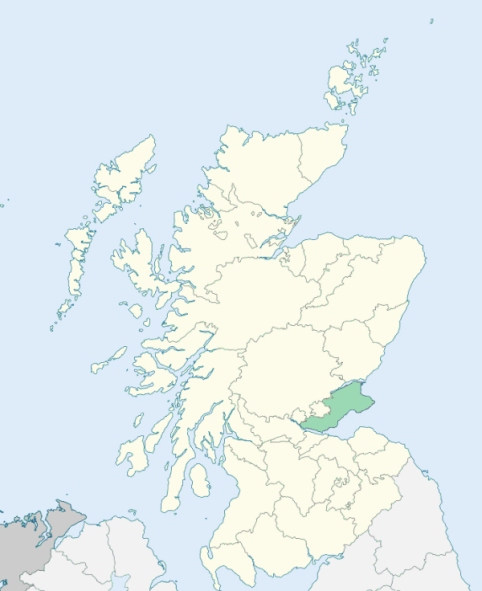
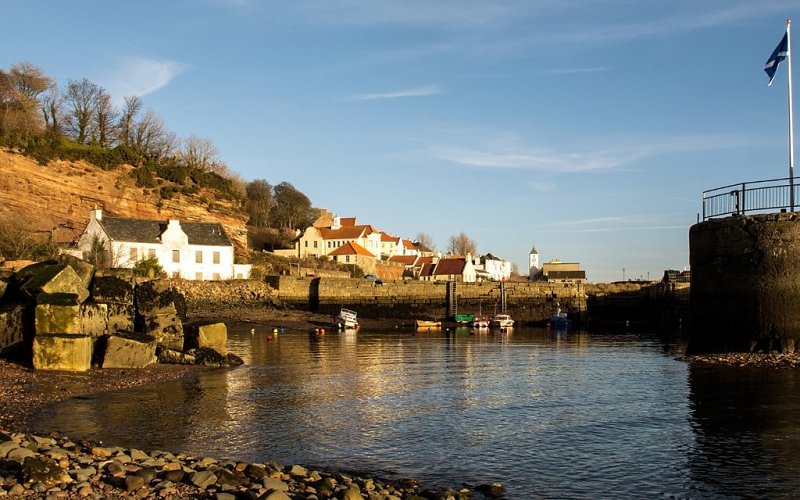
Wemyss is a parish on the south coast of Fife. It is bounded along the south-east and the south by the Firth of Forth, and on other sides by the parishes of Dysart, Markinch, Kennoway, and Scoonie. (1867: The Imperial Gazetteer of Scotland, by John Marius Wilson).
Buckhaven, Coaltown, East Coaltown, East Wemyss, Kirkland, Methill, Wemyss, West Coaltown, West Wemyss
The parish of Markinch had a detached part situated at Dubbieside (or Innerleven) and adjoining the parish of Wemyss. This detached part was annexed to the parish of Wemyss. See affected properties and landholders. (1892: Boundary of counties and parishes in Scotland as settled by the Boundary Commissioners under the Local Government Act, 1889, by Hay Shennan)
PRE-REFORMATION GOVERNANCE:
POST-REFORMATION GOVERNANCE:
The church of Wemyss was dedicated to St Cuthbert. It belonged to the college of the Holy Trinity at Edinburgh. In the church there was a chapel of St Katherine, and a croft not far off was called St Katherine's Land.
Disjoined Quoad Sacra Parishes:
Buckhaven. A chapel was built here in 1902. On 6 June 1913 the parish of Buckhaven was disjoined from Wemyss, Methil, and Milton of Balgonie.
Methil. A chapel opened here on 1 April 1838, had a constitution from the General Assembly, 18 May 1839. The parish was disjoined from Wemyss and Markinch on 6 March 1876.
West Wemyss. The parish of West Wemyss was disjoined from Wemyss on 1 March 1875. There is a mission chapel within the bounds at Coaltown of Wemyss.
(1928: Fasti Ecclesiæ Scoticanæ, by Hew Scott, D. D.)
Includes ministers, licentiates, assistants, readers, and clerks.
Wemyss (QO)
Buckhaven (QS)
Methil (QS)
West Wemyss (QS)
(1928: Fasti Ecclesiæ Scoticanæ, by Hew Scott, D. D.)
Parish registers turned over to the Registrar-General, as a result of the Registration of Births, Deaths, and Marriages (Scotland) Act of 1854. The letters B. D. and M. indicate Births (or Baptisms), Deaths (or Burials), and Marriages (or Proclamations of Banns) respectively. Numbers indicate separate volumes or books. Note: These records are by no means complete or without damage; consult the Detailed List of the Old Parochial Registers of Scotland (1872) to learn more about the condition of the records.
| OPR and RD Numbers | |||
|---|---|---|---|
| Date Range | Name | Number | Type |
| 1660-1854 | Wemyss | 459 | OPR |
| 1855-1873 | Wemyss | 459 | RD |
| 1874-1971 | Wemyss | 459-1 | RD |
| 1874-1971 | Buckhaven | 459-2 | RD |
| 1972-1979 | Wemyss | 424 | RD |
| 1972-2002 | Buckhaven | 424 | RD |
| 2009 | Fife, Buckhaven | 424 | RD |
| 2026 | (Wemyss) Fife Council; Coaltown of Wemyss Community Council East Wemyss and MacDuff Community Council West Wemyss Community Council | ||
| 2026 | (Buckhaven) Fife Council; Buckhaven and Denbeath Community Council | ||
(2009: Parishes and Registration Districts of Scotland - Old and New, National Records of Scotland)
Local community councils (2026) are provided as a potential source of additional information for settlements within the original boundaries of the parish. (Source)
Statistics from informal and official censuses
Brown, Christie, Deas, Foster, Logie, Robertson, Simpson, Thomson, Taylor, Walker
Note: Names appearing in research materials, other than censuses. Simple names (First name, surname only) have been omitted unless they appear associated with large properties. All women's names, and men's names with occupations, military ranks, or peerage titles are included.
By the Reverend Mr George Gibb, Minister.
"From a pretty accurate list taken in the year 1790, the population is as follows: In Wester Wemyss 235 families, 353 males, 416 females, total 769; in Easter Wemyss 153 families, 268 males, 289 females, total 447; in Buckhaven 163 families, 277 males, 324 females, total 601; in Methil 81 families, 153 males, 161 females, total 314; in East and West Coaltowns 93 families, 166 males, 227 females, 393 total; in the country, including Kirkland, 71 families, 191 males and 200 females, total 391. Total 796 families, 1408 males, 1617 females, 3025 souls.
There are but few Dissenters in the parish. There is a Burgher meeting-house at Buckhaven, but has no minister. Those of the Antiburgher persuasion have places of worship in the parishes of Dysart and Markinch. There are about 24 who join the Presbytery of Relief, and 6 of the Episcopal persuasion.
Wester Wemyss is a burgh of barony. There are 3 villages on the coast, viz Easter Wemyss, Buckhaven, and Methil. There are 2 villages in the country called East and West Coaltowns. A considerable quantity of land near the coast is rented by land-labourers, who reside in the villages, and though, with many of them, farming is only a secondary object, yet the land in general is well laboured, and produces good crops.
Almost every substantial family used annually to make a few pieces of good linen, from yarn of their own spinning, which was wrought by weavers in the parish, and generally bleached by the proprietors themselves, and then sold in the public markets held in this and the neighbouring parishes for the purpose. In this way the weavers had been employed time immemorial till about the year, 1750, that some in Easter Wemyss began to manufacture linen themselves, and ever since this business has been extended and improved.
At Kirkland, in the NE extremity of the parish, on the river Leven, near the ports of Methil and Inverleven, a large spinning work has been carried on for some time. They spin a considerable quantity of cotton and linen yarn, which they have begun to manufacture into cloth. The company already employs about 300 people, and the business seems to be increasing.
The people in general are sober and industrious, regular in their attendance upon public worship, and apparently contented with their situations."
(This section contains excerpts, at times restructured or paraphrased, from an article appearing in Statistical Account of Scotland, Sir John Sinclair, 1791-1799)
Primary Sources:
Statistical Account of Scotland (1791-1799), Volume 16, p. 513
New Statistical Account of Scotland (1834-1845), Volume 9, Section I, p. 390
See Parish Page Sources for all source information and links.