
Plaidwerx


Features: Scottish Parishes » Historic Shires » Elginshire » St Andrews Lhanbryde

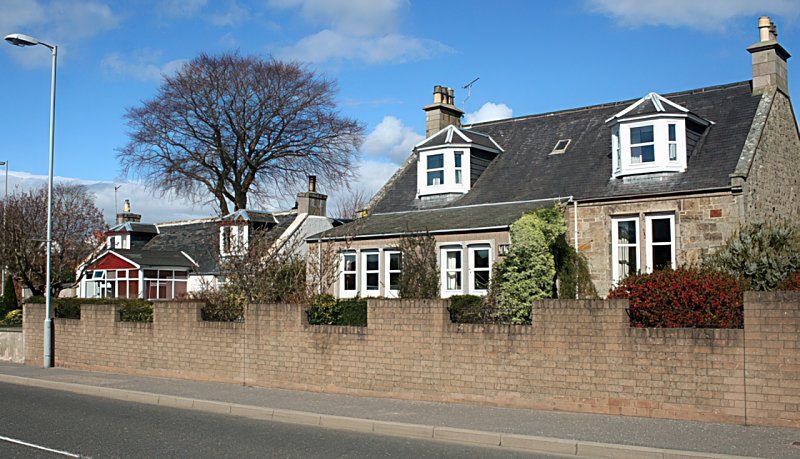
St Andrews Road, Lhanbryde by Anne Burgess
St Andrews Road, Lhanbryde, Moray © 2007, Anne Burgess

ST ANDREWS LHANBRYDE PARISH

TABLE OF CONTENTS


ALTERNATE NAMES AND SPELLING:

  • Lhanbride (Lhanbryde)
  • St Andrews and Lhanbryd, St Andrews Lhanbride
  • Kilmalemnock (St Andrews)

LOCATION

Location Description:

St Andrews Lhanbryde is a parish in Morayshire. It is bounded by the Moray Firth, and by the parishes of Urquhart, Elgin, and Drainie. (1867: The Imperial Gazetteer of Scotland, by John Marius Wilson).

Shire, District, and Region Timeline:

  • Shire: Elginshire (Before 1707)
  • County: Elgin (After 1707)
  • District: Elgin (Before 1919)
  • County: Moray (1919)
  • District: Moray (After 1919)
  • Landward District: Elgin (1930-1975)
  • Region: Highland (1975-1996)
  • District: Moray (1975-1996)

Cities, Towns, Villages, and Hamlets:

Hallowood, Lhanbryde, Pinefield


PARISH TIMELINE

PRE-REFORMATION GOVERNANCE:

  • Diocese: Moray
  • Deanery: Elgin

POST-REFORMATION GOVERNANCE:

  • Synod: Moray
  • Presbytery: Elgin

PAROCHIAL OVERVIEW:

The parishes of St Andrews and Lhanbryde were united in 1782.
St Andrews, or Kilmalemnock. The parish church was dedicated to St Andrew. Kilmalemnock was a mensal kirk of the Bishop of Moray.
Lhanbryd. The church of this parish was dedicated to St Bride.
(1928: Fasti Ecclesiæ Scoticanæ, by Hew Scott, D. D.)

CHURCH OF SCOTLAND CLERGY:

Includes ministers, licentiates, assistants, readers, and clerks.

St Andrews, or Kilmalemnock (QO)

  • Alexander Leslie, 1567
  • Alexander Wincheser, 1574
  • Alexander Douglas, 1581
  • Thomas Dunbar, 1614
  • William Guthrie, 1625
  • John Peter, 1627
  • Robert Tarras (or Tarres), 1640
  • Robert Innes, 1646
  • Thomas Craig, 1668
  • Gavin Wotherspoon, 1701
  • John Urquhart, 1717
  • Alexander Irvine, 1726
  • John Paterson, 1731
  • William Leslie, 1779

Lhanbryde (QO)

  • Andrew Stronach, 1567
  • John Blindschield, 1567
  • Robert Keith, 1567
  • James Thornton, 1574
  • Patrick Balfour, 1574
  • John (or James) Robertson, 1574
  • George Douglas, 1576
  • Patrick Cumming, 1578
  • Timothy Cockburn, 1578
  • Patrick Auchinleck, 1579
  • James Dundas, 1582
  • Bartholomew Robertson, 1601
  • Gavin Dunbar, 1608
  • William Fraser, 1623
  • Alexander Anderson, 1627
  • Alexander Tod, 1669
  • James Cook, 1682
  • Walter Stewart, 1710
  • John Stewart (son of Walter, above), 1727
  • Patrick Duncan, 1735
  • James Crombie, 1760
  • Thomas MacFarlane, 1771

St Andrews-Lhanbryde (QO)

  • William Leslie, 1783
  • John Walker, 1839
  • Charles Alexander Davidson, 1863
  • Charles Robert Halkett Dawson Gordon, 1873
  • John Robertson Duncan, 1897

(1928: Fasti Ecclesiæ Scoticanæ, by Hew Scott, D. D.)


RECORDS

Parochial Registers:

Parish registers turned over to the Registrar-General, as a result of the Registration of Births, Deaths, and Marriages (Scotland) Act of 1854. The letters B. D. and M. indicate Births (or Baptisms), Deaths (or Burials), and Marriages (or Proclamations of Banns) respectively. Numbers indicate separate volumes or books. Note: These records are by no means complete or without damage; consult the Detailed List of the Old Parochial Registers of Scotland (1872) to learn more about the condition of the records.

  • (1) B. 1701-1816; M. 1762-1819 (St Andrews); B. 1723-1819; M. 1727-45 (Lhanbryde)
  • (2) B. and M. 1820-54

OPR and RD Numbers
Date RangeNameNumberType
1701-1854St Andrews-Lhanbryde142OPR
1855-1954St Andrews-Lhanbryde142RD
2009Moray, Elgin280RD
2026Moray Council; Innes Community Council

(2009: Parishes and Registration Districts of Scotland - Old and New, National Records of Scotland)

Local community councils (2026) are provided as a potential source of additional information for settlements within the original boundaries of the parish. (Source)

Population:

Statistics from informal and official censuses

  • 1755: (St Andrews: 690; Longbride [Lhanbryde]: 442)
  • 1801: 799
  • 1811: 869
  • 1821: 934
  • 1831: 1,087
  • 1841: 1,176
  • 1861: 1,344
  • 1881: 1,402
  • 1901: 1,209
  • 1911: 1,155

RESIDENTS


Common Surnames:

Cameron, Cumming, Forsyth, Fraser, Grant, Innes, Paterson, Reid, Ross, Simpson

Land-owners, teachers, and other professionals:

Note: Names appearing in research materials, other than censuses. Simple names (First name, surname only) have been omitted unless they appear associated with large properties. All women's names, and men's names with occupations, military ranks, or peerage titles are included.

  • No full names associated with properties found

Other residents:

By the Reverend Mr William Leslie.
"The number of inhabitants at present is 777, making 140 families, of which 106 are wedded pairs; the number of males 345; females 412. The only language of the parish is Scots. The people, over all this country, are most strictly economical, and as little expensive or luxurious as possible. They are disposed to every kind of humane and generous action, as much as their circumstances will admit of.

The lower rank of farmers and labourers, though not content perhaps with their situation, and though they do not enjoy all the comforts of life, yet do not complain more than their opulent neighbours. There are numbers of them, however, who are generally without small beer and milk, and almost none of them have meat, butter, cheese or spirits, and all their poultry and eggs are sold in the Elgin market. Their dress, furniture and habitations are still of the cheapest kinds which can be procured. They use no candles; and they substitute urine for soap. Funerals are conducted without expense; there is no company or dancing on the occasion of a wedding; nor at baptisms, in general, is there any kind of entertainment."
(This section contains excerpts, at times restructured or paraphrased, from an article appearing in Statistical Account of Scotland, Sir John Sinclair, 1791-1799)


NOTES:

Primary Sources:
Statistical Account of Scotland (1791-1799), Volume 9, p. 172
New Statistical Account of Scotland (1834-1845), Volume 13, Section II, p. 29

See Parish Page Sources for all source information and links.
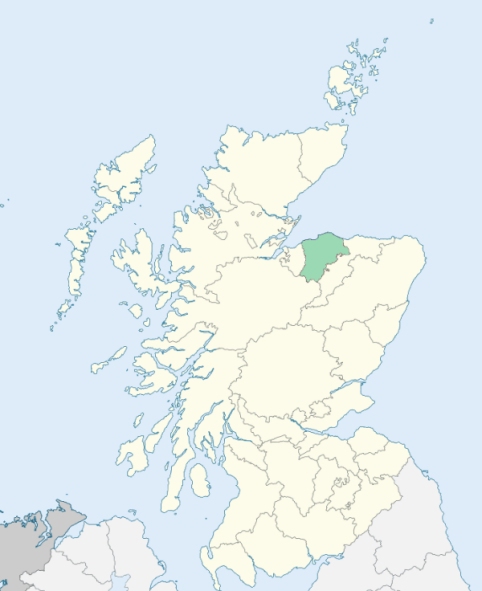

Photo credits: (Featured) St Andrews Road, Lhanbryde, Moray, © 2007 Anne Burgess, used under Creative Commons License CC BY-SA 2.0, (Related Resources) Elginshire Locator Map, © 2025, Elianfoo, used under Creative Commons License CC BY-SA 4.0.
Related Resources
Map of Scotland with Elginshire highlighted
Location of Elginshire
See more maps at Wikimedia Commons
Glossary
  • Burghs:
  • Royal - Towns on royal lands
  • Regality - Towns granted to noblemen/landowners
  • Barony - Towns granted to tenant-in-chief (laird)
  • Police - Towns with elected officials
  • Small - Population under 20,000
  • Large - Population over 20,000
  •  
  • Chapel-of-Ease: Small church for those living far from the main church
  • Collegiate church: See What is a Collegiate Church?
  • Commune kirk: Owned by a larger church
  • Court of Teinds: Controlled funds for support of clergy
  •  
  • Friars:
  • Black - Dominican
  • Grey - Franciscan
  • Red - Trinitarian
  • White - Carmelite
  •  
  • Iron chapel: Building made of corrugated galvanized iron
  •  
  • Landward District: Rural part of a district
  •  
  • Mensal: Source of income to support clergy member (Roman Catholic)
  •  
  • OPR: Old Parochial Register
  •  
  • Pre-Reformation: Before 1560
  • Prebend: Source of income to support a clergy member
  •  
  • QO: Quoad Omnia - Civil and church control
  • QS: Quoad Sacra - Church control only
  •  
  • RD: Registration District - Civil control
  •  
  • Tryst: Large-scale market or fair, particularly for livestock
  •