Easter Lenzie, Easter Leinyie
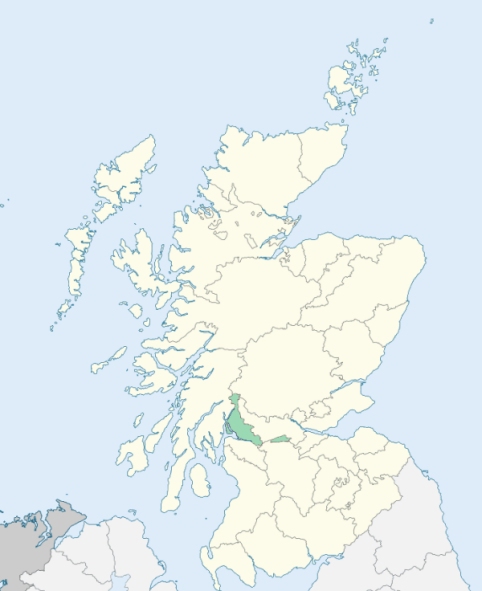
Cumbernauld is a parish in the detached district of Dunbartonshire. It is bounded on the west by the parish of Kirkintilloch, and on other sides by the counties of Stirling and Lanark. (1867: The Imperial Gazetteer of Scotland, by John Marius Wilson).
Condorrat, Craigmarloch, Cumbernauld, Dullatur, Smithton
PRE-REFORMATION GOVERNANCE:
POST-REFORMATION GOVERNANCE:
This parish was disjoined from Kirkintilloch in 1649, and was then called Easter Leinyie or Lenzie. Its church was built in 1659, and the name of Cumbernauld was then given to the parish. In 1725 the barony of Castlecary was taken from the parish of Falkirk and added to Cumbernauld.
Disjoined Quoad Sacra Parishes:
Condorrat. This parish was disjoined from Cumbernauld, Kirkintilloch, and Chryston on 29 October 1883.
Includes ministers, licentiates, assistants, readers, and clerks.
Cumbernauld (QO)
Condorrat (QS)
(1928: Fasti Ecclesiæ Scoticanæ, by Hew Scott, D. D.)
Parish registers turned over to the Registrar-General, as a result of the Registration of Births, Deaths, and Marriages (Scotland) Act of 1854. The letters B. D. and M. indicate Births (or Baptisms), Deaths (or Burials), and Marriages (or Proclamations of Banns) respectively. Numbers indicate separate volumes or books. Note: These records are by no means complete or without damage; consult the Detailed List of the Old Parochial Registers of Scotland (1872) to learn more about the condition of the records.
| OPR and RD Numbers | |||
|---|---|---|---|
| Date Range | Name | Number | Type |
| 1688-1854 | Cumbernauld | 495 | OPR |
| 1855-1971 | Cumbernauld | 495 | RD |
| 1972-2006 | Cumbernauld | 509 | RD |
| 2007 | Cumbernauld, North Lanarkshire | 509 | RD |
| 2009 | North Lanarkshire, Cumbernauld | 509 | RD |
| 2026 | North Lanarkshire Council; Abronhill and Arns Community Council Balloch and Eastfield Community Council Blackwood and Craiglinn Community Council Carbrain and Hillcrest Community Council Carrickstone Community Council Castlecary Community Council Condorrat Community Council Craigmarloch Community Council Cumbernauld Village Community Council Greenfaulds and Luggiebank Community Council Kildrum Community Council Seafar and Ravenswood Community Council Westerwood Community Council Westfield Community Council | ||
(2009: Parishes and Registration Districts of Scotland - Old and New, National Records of Scotland)
Local community councils (2026) are provided as a potential source of additional information for settlements within the original boundaries of the parish. (Source)
Statistics from informal and official censuses
Allan, Bulloch, Miller, Morrison, Russell, Shaw, Smith, Walker, Wilson, Young
Note: Names appearing in research materials, other than censuses. Simple names (First name, surname only) have been omitted unless they appear associated with large properties. All women's names, and men's names with occupations, military ranks, or peerage titles are included.
By the Reverend Mr William Stuart.
"The number of inhabitants at present is about 1600. There are about 56 births and 14 marriages in the year. In the parish are two meeting houses, one of that sect of Seceders called Burghers, the other of the Antiburghers. There is a school-house and garden in Cumbernauld village, where above 80 scholars are annually educated."
(This section contains excerpts, at times restructured or paraphrased, from an article appearing in Statistical Account of Scotland, Sir John Sinclair, 1791-1799)
Primary Sources:
Statistical Account of Scotland (1791-1799), Volume 6, p. 462
New Statistical Account of Scotland (1834-1845), Volume 8, Section I, p. 135
See Parish Page Sources for all source information and links.