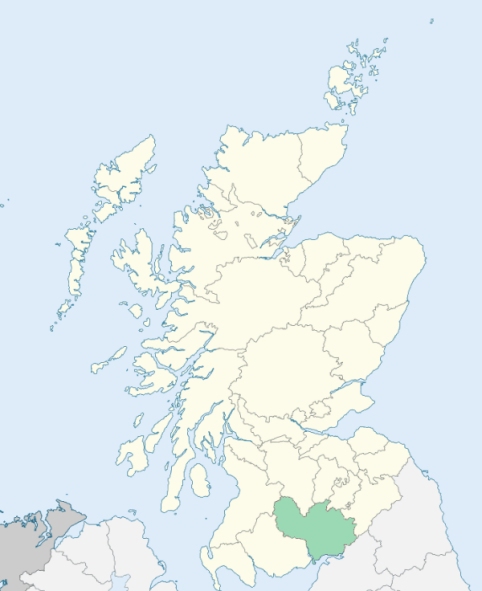
Holywood is a parish on the western border of Dumfriesshire. It is bounded by Kirkcudbrightshire, and by the parishes of Dunscore, Kirkmahoe, and Dumfries. (1867: The Imperial Gazetteer of Scotland, by John Marius Wilson).
Cluden, Holywood, Newington
Broomrig, Gribton, Portract
PRE-REFORMATION GOVERNANCE:
POST-REFORMATION GOVERNANCE:
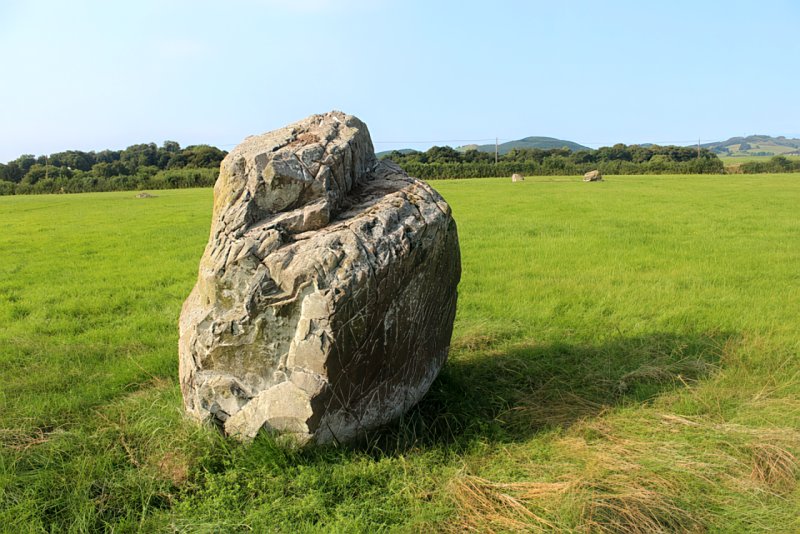
In 1180 John Maxwell of Kirkconnel founded at Dercongal, in this parish, St Mary's Premonstratensian Abbey of Holywood. Of it there are no remains standing. The parish church belonged to the abbey.
Includes ministers, licentiates, assistants, readers, and clerks.
(1928: Fasti Ecclesiæ Scoticanæ, by Hew Scott, D. D.)
Parish registers turned over to the Registrar-General, as a result of the Registration of Births, Deaths, and Marriages (Scotland) Act of 1854. The letters B. D. and M. indicate Births (or Baptisms), Deaths (or Burials), and Marriages (or Proclamations of Banns) respectively. Numbers indicate separate volumes or books. Note: These records are by no means complete or without damage; consult the Detailed List of the Old Parochial Registers of Scotland (1872) to learn more about the condition of the records.
| OPR and RD Numbers | |||
|---|---|---|---|
| Date Range | Name | Number | Type |
| 1687-1854 | Holywood | 830 | OPR |
| 1855-1968 | Holywood | 830 | RD |
| 2009 | Dumfries and Galloway, Dumfries | 834 | RD |
| 2026 | Dumfries & Galloway Council; Holywood and Newbridge Community Council | ||
(2009: Parishes and Registration Districts of Scotland - Old and New, National Records of Scotland)
Local community councils (2026) are provided as a potential source of additional information for settlements within the original boundaries of the parish. (Source)
Statistics from informal and official censuses
Armstrong, Bell, Brown, Johnston, Kirkpatrick, Maxwell, Robson, Smith, Spence, Wilson
Note: Names appearing in research materials, other than censuses. Simple names (First name, surname only) have been omitted unless they appear associated with large properties. All women's names, and men's names with occupations, military ranks, or peerage titles are included.
By the Reverend Dr Bryce Johnston, Minister of the Parish.
"On the last day of the year 1790, there were living in the parish of Holywood 736 persons, of whom there were 166 under ten years of age. All the inhabitants are of the Established Church, except 6 Cameronians, 9 Burgher Seceders, two of the Church of England, and three Catholics. There are neither towns nor villages in the parish.
All the inhabitants are farmers, and cottagers employed by them, except those afterwards mentioned. There are 8 weavers, 2 bleachers, 2 shoemakers, 2 millers, 5 blacksmiths, 6 masons, 4 tailors, and 8 joiners; all of whom are employed in working for the inhabitants of the parish, and not in manufacturing articles for sale. There are no household servants except in gentlemen's families, and these are few. There are about 32 male, and 36 female labouring servants. The greatest part of the farming and dairy work is done by the farmers themselves, their wives, their sons and daughters, and cottagers. Beside the above mentioned servants, some shearers are hired by the day from the adjacent moor countries.
They are a sober, regular, and industrious people, all employed in farming, except the few above mentioned. They are generous and humane, although they have not been called to the exertions of these qualities by any remarkable events. They enjoy, in a reasonable degree, the conveniences and comforts of society, and are in general as contented with their situation as most people. During the time of the present incumbent, which is 19 years, only one person has been banished for theft, and one enlisted for a soldier. This last, in a few months, solicited his friends to make application to get him out of the army, which they did with success, and he has ever since lived in the parish an industrious labouring man."
(This section contains excerpts, at times restructured or paraphrased, from an article appearing in Statistical Account of Scotland, Sir John Sinclair, 1791-1799)
Primary Sources:
Statistical Account of Scotland (1791-1799), Volume 1, p. 18
New Statistical Account of Scotland (1834-1845), Volume 4, Section I, p. 553
See Parish Page Sources for all source information and links.