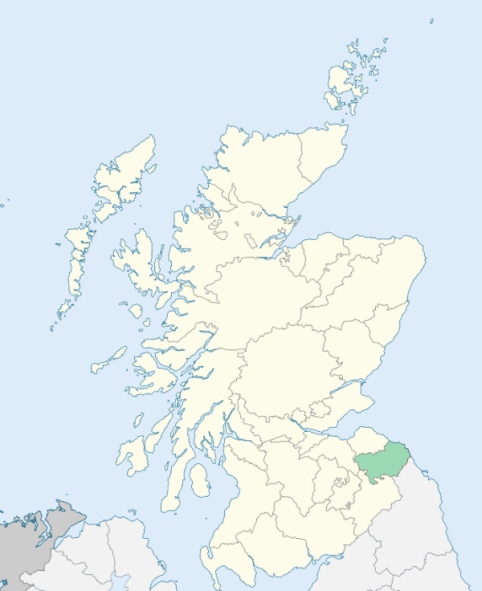
Fogo is a parish in the central part of the Merse district of Berwickshire. It is bounded by Edrom, Swinton, Eccles, Greenlaw, and Polwarth. (1867: The Imperial Gazetteer of Scotland, by John Marius Wilson).
Fogo
Caldra, Charterhall, Harcarse, Marchmont, Mortonhall
PRE-REFORMATION GOVERNANCE:
POST-REFORMATION GOVERNANCE:
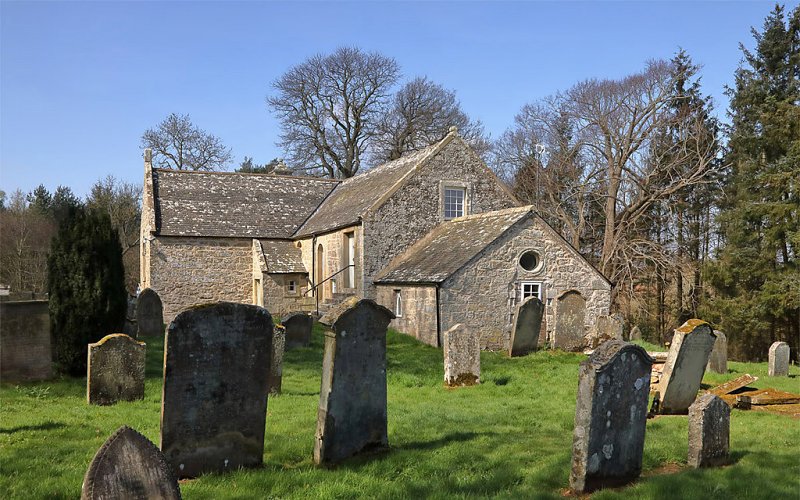
Fogo was given to the Abbey of Kelso about 1159 by Gospatrick, third Earl of Dunbar. The parish church was consecrated 29 March 1243. A restoration in 1755 destroyed most of the antique features of the church. There was in the parish a chapel of St Nicholas, granted by Patrick Corbet to the monks of Kelso between 1280 and 1297.
Includes ministers, licentiates, assistants, readers, and clerks.
Parish (QO)
(1928: Fasti Ecclesiæ Scoticanæ, by Hew Scott, D. D.)
Parish registers turned over to the Registrar-General, as a result of the Registration of Births, Deaths, and Marriages (Scotland) Act of 1854. The letters B. D. and M. indicate Births (or Baptisms), Deaths (or Burials), and Marriages (or Proclamations of Banns) respectively. Numbers indicate separate volumes or books. Note: These records are by no means complete or without damage; consult the Detailed List of the Old Parochial Registers of Scotland (1872) to learn more about the condition of the records.
| OPR and RD Numbers | |||
|---|---|---|---|
| Date Range | Name | Number | Type |
| 1660-1854 | Fogo | 740 | OPR |
| 1855-1966 | Fogo | 740 | RD |
| 2009 | Scottish Borders, Duns | 785 | RD |
| 2026 | Scottish Borders Council; Gavinton, Fogo and Polwarth Community Council | ||
(2009: Parishes and Registration Districts of Scotland - Old and New, National Records of Scotland)
Local community councils (2026) are provided as a potential source of additional information for settlements within the original boundaries of the parish. (Source)
Statistics from informal and official censuses
Anderson, Brown, Fleming, Hamilton, Hogg, Patterson, Renton, Robertson, Stuart, Wilson
Note: Names appearing in research materials, other than censuses. Simple names (First name, surname only) have been omitted unless they appear associated with large properties. All women's names, and men's names with occupations, military ranks, or peerage titles are included.
By the Reverend Mr John Todd.
"The population, in 1755, according to Dr Webster's account, was 566 souls. It may be now stated at 450. All the inhabitants are farmers and cottagers, with a few tradesmen, employed for the purposes of husbandry; as three smiths, and two joiners or wrights, with 45 labourers. There are no manufactures in the parish, but it is supplied with three corn-mills.
The population of this parish has of late been greatly diminished. The vestiges of old houses are to be seen in every part of it. Several villages almost totally demolished, occasioned by the monopoly of farms, now so customary in this country. There are instances in this, and the neighbouring parishes, of one person possessing three, four, or six, very considerable farms, every one of which was formerly considered as sufficiently large for one person to occupy."
(This section contains excerpts, at times restructured or paraphrased, from an article appearing in Statistical Account of Scotland, Sir John Sinclair, 1791-1799)
Primary Sources:
Statistical Account of Scotland (1791-1799), Volume 20, p. 270
New Statistical Account of Scotland (1834-1845), Volume 2, Section III, p. 223
See Parish Page Sources for all source information and links.