Simprin (Simprim)
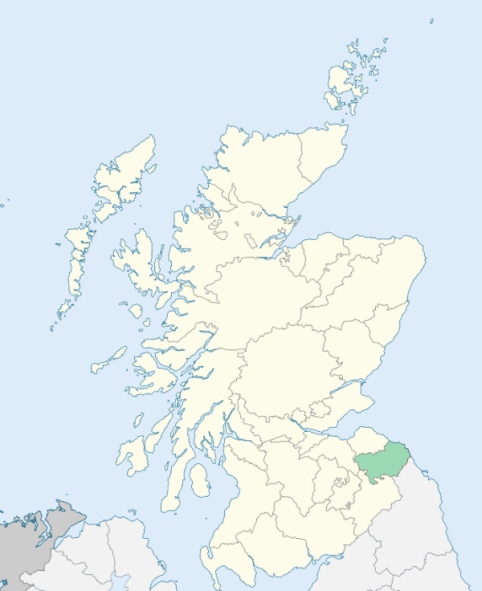
Swinton - Swinton is a parish in the Merse district of Berwickshire. It is bounded by Fogo, Edrom, Whitsome, Ladykirk, Coldstream, and Eccles. (1867: The Imperial Gazetteer of Scotland, by John Marius Wilson).
Simprim - Simprim is an ancient parish, now united to Swinton, and consisting of some wavy swells and their intervening plains in the lower Merse, Berwickshire. (1867: The Imperial Gazetteer of Scotland, by John Marius Wilson).
Swinton
PRE-REFORMATION GOVERNANCE:
POST-REFORMATION GOVERNANCE:
The parishes of Swinton and Simprim were united in 1761.
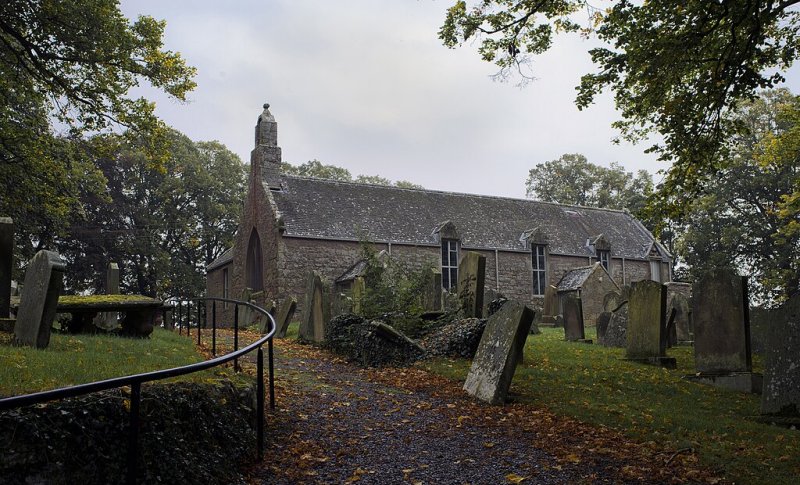
Swinton. The whole manor of Swinton was part of a gift by King Edgar, for the endowment of Coldingham Priory, about 1100. The church, dedicated to St Mary, and built shortly after that date, was held by Coldingham. In 1909 the church was largely rebuilt. The bell, in use, is dated 1499.
Simprim, or Simprin. Previous to the Reformation the church, dedicated by Bishop David de Bernham, 25 June 1247, belonged to the Abbey of Kelso. It fell into ruin after the parish was united to Swinton, 27 Sept 1761.
Includes ministers, licentiates, assistants, readers, and clerks.
Swinton (QO)
Simprim (QO)
(1928: Fasti Ecclesiæ Scoticanæ, by Hew Scott, D. D.)
Parish registers turned over to the Registrar-General, as a result of the Registration of Births, Deaths, and Marriages (Scotland) Act of 1854. The letters B. D. and M. indicate Births (or Baptisms), Deaths (or Burials), and Marriages (or Proclamations of Banns) respectively. Numbers indicate separate volumes or books. Note: These records are by no means complete or without damage; consult the Detailed List of the Old Parochial Registers of Scotland (1872) to learn more about the condition of the records.
| OPR and RD Numbers | |||
|---|---|---|---|
| Date Range | Name | Number | Type |
| 1697-1854 | Swinton and Simprim | 755 | OPR |
| 1855-1957 | Swinton | 755 | RD |
| 1958-1958 | Ladykirk and Swinton | 755 | RD |
| 1959-1971 | Ladykirk, Swinton and Whitsome | 755 | RD |
| 1972-1995 | Ladykirk, Swinton and Whitsome | 786 | RD |
| 2009 | (Ladykirk) Scottish Borders, Chirnside | 783 | RD |
| 2009 | (Swinton) Scottish Borders, Coldstream | 787 | RD |
| 2009 | (Whitsome) Scottish Borders, Coldstream | 787 | RD |
| 2026 | (Ladykirk) Scottish Borders Council; Swinton and Ladykirk Community Council | ||
| 2026 | (Swinton) Scottish Borders Council; Swinton and Ladykirk Community Council | ||
| 2026 | (Whitsome) Scottish Borders Council; Allanton, Whitsome and Edrom Community Council | ||
(2009: Parishes and Registration Districts of Scotland - Old and New, National Records of Scotland)
Local community councils (2026) are provided as a potential source of additional information for settlements within the original boundaries of the parish. (Source)
Statistics from informal and official censuses
Aitchison, Anderson, Brown, Davidson, Henderson, Norris, Paterson, Purves, Robertson, Spence
Note: Names appearing in research materials, other than censuses. Simple names (First name, surname only) have been omitted unless they appear associated with large properties. All women's names, and men's names with occupations, military ranks, or peerage titles are included.
By the Reverend Mr George Cupples.
"The number of souls in 1791 is 898, of whom 481 are males, 417 females, 258 under 10 years of age. In Swinton village, 357; in Simprin, 73. There are 180 inhabited houses; there are no uninhabited houses. There are 90 Burgher, Antiburgher, and Relief Seceders, and 2 Cameronians.
There are 123 farmers and their families, 8 weavers, 28 handicraftsmen, 21 journeymen and apprentices, 45 household servants, 30 labouring servants, 35 tradesmen, 4 shopkeepers, 1 surgeon, 1 dancing master, and 1 fiddler.
Many changes have happened in the village and in the parish since the year 1754. At that time Swinton consisted of a few miserable huts not containing 100 persons, and Simprin contained the whole inhabitants of that parish. By a division into three farms, the parish has increased in numbers, though the village of Simprin has declined a little."
(This section contains excerpts, at times restructured or paraphrased, from an article appearing in Statistical Account of Scotland, Sir John Sinclair, 1791-1799)
Primary Sources:
Statistical Account of Scotland (1791-1799), Volume 6, p. 322
New Statistical Account of Scotland (1834-1845), Volume 2, Section III, p. 186
See Parish Page Sources for all source information and links.