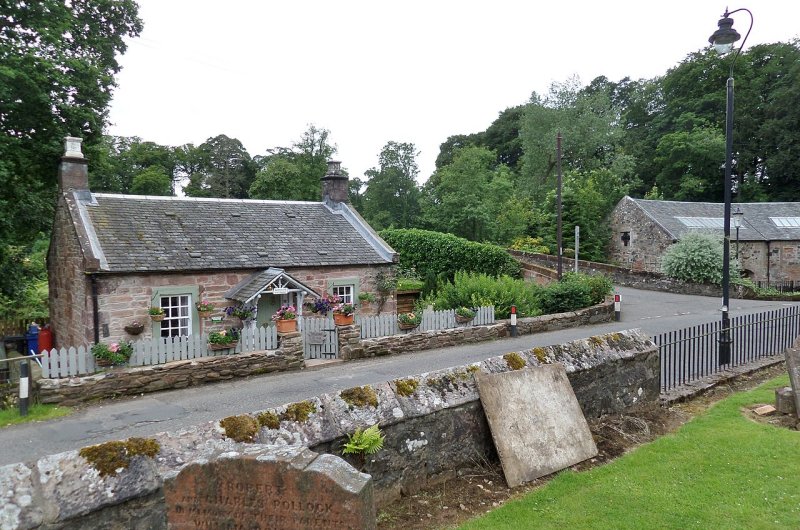
Dalgain
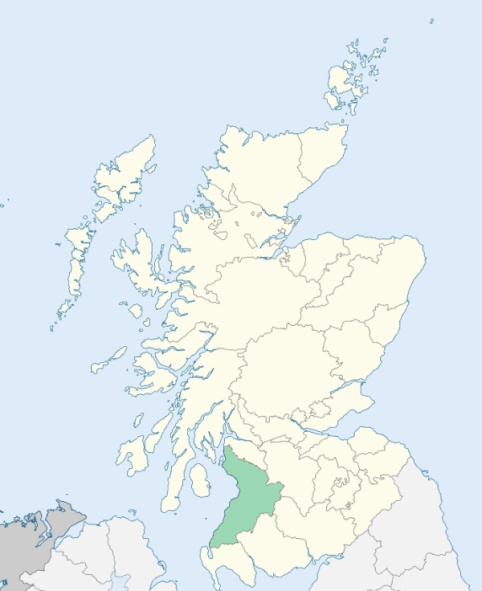
Sorn is a parish in the northeast of the district of Kyle, Ayrshire. It is bounded by Galston, Muirkirk, Auchinleck, and Mauchline. (1867: The Imperial Gazetteer of Scotland, by John Marius Wilson).
Auchencloich, Catrine, Glenlogan, Sorn
Auchmannoch, Burnhead
The parish of Sorn had a small detached part which was surrounded by the parish of Mauchline. This detached part has been transferred to the parish of Mauchline. See affected properties and landholders. (1892: Boundary of counties and parishes in Scotland as settled by the Boundary Commissioners under the Local Government Act, 1889, by Hay Shennan)
PRE-REFORMATION GOVERNANCE:
POST-REFORMATION GOVERNANCE:
The lands forming this parish were disjoined from Mauchline in 1656, but the new parish of Dalgain was not erected till 1692. Its church was built in 1658 on the lands of Dalgain, very near Sorn Castle. There was a chapel of the Water of Greenock within what is now the parish of Sorn.
Disjoined Quoad Sacra Parishes:
Catrine. A church was built here by Claud Alexander of Ballochmyle in 1792. On 31 May 1834 the General Assembly granted it a chapel constitution, and assigned it a district. The parish of Catrine was disjoined from Sorn on 30 October 1871. At St Cuthbert's Holm on the Water of Ayr, near the site of Catrine Church, there was a chapel of St Cuthbert.
Includes ministers, licentiates, assistants, readers, and clerks.
Sorn (QO)
Catrine (QS)
(1928: Fasti Ecclesiæ Scoticanæ, by Hew Scott, D. D.)
Parish registers turned over to the Registrar-General, as a result of the Registration of Births, Deaths, and Marriages (Scotland) Act of 1854. The letters B. D. and M. indicate Births (or Baptisms), Deaths (or Burials), and Marriages (or Proclamations of Banns) respectively. Numbers indicate separate volumes or books. Note: These records are by no means complete or without damage; consult the Detailed List of the Old Parochial Registers of Scotland (1872) to learn more about the condition of the records.
| OPR and RD Numbers | |||
|---|---|---|---|
| Date Range | Name | Number | Type |
| 1692-1854 | Sorn | 613 | OPR |
| 1855-1897 | Sorn | 613 | RD |
| 1898-1968 | Sorn | 613-1 | RD |
| 1898-1968 | Catrine | 613-2 | RD |
| 1972-2005 | Catrine | 677 | RD |
| 2006-2009 | East Ayrshire, Catrine | 677 | RD |
| 2026 | (Sorn) East Ayrshire Council; Sorn Community Council | ||
| 2026 | (Catrine) East Ayrshire Council; Catrine Community Council | ||
(2009: Parishes and Registration Districts of Scotland - Old and New, National Records of Scotland)
Local community councils (2026) are provided as a potential source of additional information for settlements within the original boundaries of the parish. (Source)
Statistics from informal and official censuses
Anderson, Black, Brown, Campbell, Clark, Mitchell, Reid, Smith, Wilson, Young
Note: Names appearing in research materials, other than censuses. Simple names (First name, surname only) have been omitted unless they appear associated with large properties. All women's names, and men's names with occupations, military ranks, or peerage titles are included.
By the Reverend George Gordon and the Reverend Mr Robert Steven, Ministers.
"The number of families in this parish, exclusive of those in the village of Catrine, is 243, and of souls 1429; of these 677 are males, 752 females. Catrine contains 1350 souls. Total in the parish 2779 souls, of whom 365 are under 10 years of age. The number of Dissenters form the Established Church is about 78, the greatest part of whom are Burgher Seceders. The very few exceptions are Antiburghers and Cameronians.
About 100 families are chiefly employed in the business of agriculture. There are 48 men servants, 49 women servants, 20 weavers, 8 shoemakers, 11 masons, 6 wrights, 6 tailors, 3 smiths, 2 gardeners, 1 dyer, 1 cooper, 3 corn-mills and millers, 1 waulk-mill and miller. The rest are colliers, lime-quarriers, ditchers, &c.
Though there are several groups of houses in the central parts of the parish, on both sides of the river, inhabited chiefly by colliers and other labourers, yet the only one that can properly come under the denomination of a village is Dalgain, situated a little to the eastward of the church. This village consists of 24 houses and 43 families, beside 7 families who reside in houses on the banks of the river, which, from the proximity of their situation, may be reckoned a part of the village. These 50 families contain 191 souls; among whom are 3 shopkeepers, 3 innkeepers, 3 masons, 7 shoemakers, 5 weavers, 5 tailors, 4 seamstresses, and 7 colliers; the rest are labourers, aged widows, &c. This village is, therefore, evidently the residence of a large proportion of the tradesmen belonging to the parish.
Catrine. The village of Catrine is entirely a new creation, and owes its existence to the flourishing state of the cotton manufacture. In 1787 a cotton twist-mill was built, along with a jeanie factory, and a corn-mill. It is proposed to erect a waulk or fulling mill. Three hundred and one persons are employed in carding, roving, and in spinning, with an overseer and two clerks: Clockmakers, smiths, mill-wrights, and other mechanics, amount to 15 more. The women, who pick cotton in their own houses, are at present 226. In all, belonging to the twist-mill, were 445. Of these, 118 are under 12 years of age. In the jeanie factory, 200 persons, including an overseer, two clerks, and mechanics find constant employment, besides 55 women who pick cotton in their own houses. Forty-three are under 12 yeras of age.
Children are not admitted into the work under 9 years old; and they all lodge with their parents or friends. It is but justice to add, that both old and young enjoy uniformly good health.
Weaving is only in its infancy here; however, a hundred looms are erected, but they are seldom all occupied at the same time. At present 91 are at work, and are chiefly employed by the cotton manufacturers in Glasgow and Paisley.
Catrine contains in all 1450 souls - 650 males, and 700 females. Thirty-seven of these are Antiburgher, and 278 are Burgher Seceders. Exclusive of those engaged in the cotton manufacture, there are the following mechanics, viz. 3 blacksmiths, 6 house-carpenters, 7 masons, 7 tailors, 6 shoemakers, 1 dyer, 1 flax-dresser, 1 baker, 2 butchers, 91 weavers including apprentices, 2 sawyers, 1 corn miller, 3 brewers including the clerk, 15 day-labourers, 7 shopkeepers, and 7 or 8 alehouses.
Few examples of so rapid an increase of population are to be found; for in the year 1787 two or three thatched houses occupied the place where this thriving village now stands."
(This section contains excerpts, at times restructured or paraphrased, from an article appearing in Statistical Account of Scotland, Sir John Sinclair, 1791-1799)
Primary Sources:
Statistical Account of Scotland (1791-1799), Volume 20, p. 138
New Statistical Account of Scotland (1834-1845), Volume 5, Section I, p. 126
See Parish Page Sources for all source information and links.