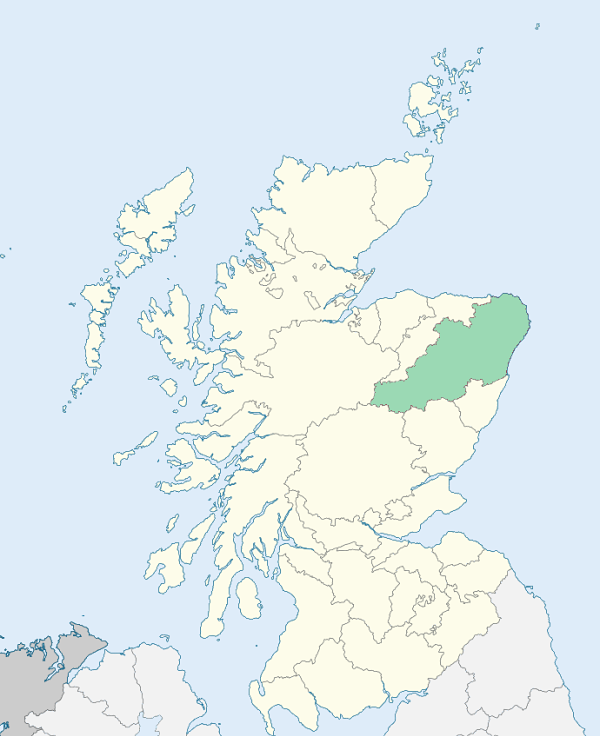
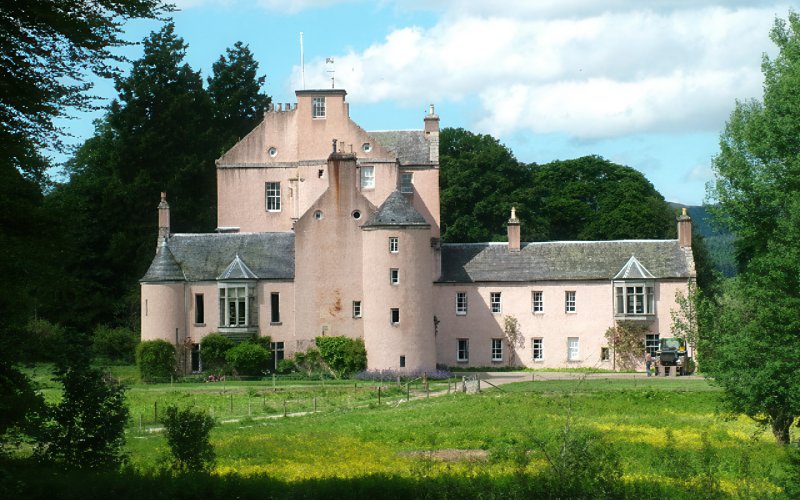
Monymusk is a parish in the Garioch district of Aberdeenshire. It is bounded by Keig, Oyne, Chapel of Garioch, Cluny, and Tough. (1867: The Imperial Gazetteer of Scotland, by John Marius Wilson).
Monymusk
PRE-REFORMATION GOVERNANCE:
POST-REFORMATION GOVERNANCE:
The church of Monymusk was dedicated to St Mary. It belonged to the Priory of Monymusk, which was in the parish. This monastic site was occupied from very early times by an ancient Celtic abbey. In 1179 it was converted into the Augustinian Priory of Monymusk. There was within the bounds a chapel of St Finan. A fair was held at Monymusk on Our Lady Day in Harvest.
Disjoined Quoad Sacra Parishes:
Blairdaff. A chapel was opened at Blairdaff, 9 June 1839. The parish of Blairdaff was disjoined from Chapel of Garioch, Monymusk, and Oyne, 15 March 1895.
Includes ministers, licentiates, assistants, readers, and clerks.
Monymusk (QO)
Blairdaff (QS)
(1928: Fasti Ecclesiæ Scoticanæ, by Hew Scott, D. D.)
Parish registers turned over to the Registrar-General, as a result of the Registration of Births, Deaths, and Marriages (Scotland) Act of 1854. The letters B. D. and M. indicate Births (or Baptisms), Deaths (or Burials), and Marriages (or Proclamations of Banns) respectively. Numbers indicate separate volumes or books. Note: These records are by no means complete or without damage; consult the Detailed List of the Old Parochial Registers of Scotland (1872) to learn more about the condition of the records.
| OPR and RD Numbers | |||
|---|---|---|---|
| Date Range | Name | Number | Type |
| 1678-1854 | Monymusk | 224 | OPR |
| 1855-1967 | Monymusk | 224 | RD |
| 2009 | Aberdeenshire, Alford | 326 | RD |
| 2026 | Aberdeenshire Council; Cluny, Midmar, and Monymusk Community Council | ||
(2009: Parishes and Registration Districts of Scotland - Old and New, National Records of Scotland)
Local community councils (2026) are provided as a potential source of additional information for settlements within the original boundaries of the parish. (Source)
Statistics from informal and official censuses
Adam, Donald, Gordon, Grant, Gray, Main, Milne, Rae, Reid, Strachan
Note: Names appearing in research materials, other than censuses. Simple names (First name, surname only) have been omitted unless they appear associated with large properties. All women's names, and men's names with occupations, military ranks, or peerage titles are included.
By the Reverend Mr Alexander Duff.
"There are in this parish 243 families, containing 539 males and 588 females; total souls 1127. There are 9 house carpenters, 3 plough and cart-wrights, 4 masons, and 5 smiths. There are of large farms, 35; smaller farms, 61; 62 inhabitants who have houses with gardens only, and 85 families who have small crofts and houses from the farmers, to whom they pay their rents.
There are no emigrations from this part of the country, except what may be occasioned by the casual removal of tenants or servants, who are replaced by a greater or lesser number as circumstances occur. This parish sends considerable quantities of oats, oat-meal, and barley, to the Aberdeen market, but how much cannot be known; the quantity produced within the parish is considerably greater, than what is consumed by the inhabitants."
(This section contains excerpts, at times restructured or paraphrased, from an article appearing in Statistical Account of Scotland, Sir John Sinclair, 1791-1799)
Primary Sources:
Statistical Account of Scotland (1791-1799), Volume 3, p. 66
New Statistical Account of Scotland (1834-1845), Volume 12, p. 469
See Parish Page Sources for all source information and links.