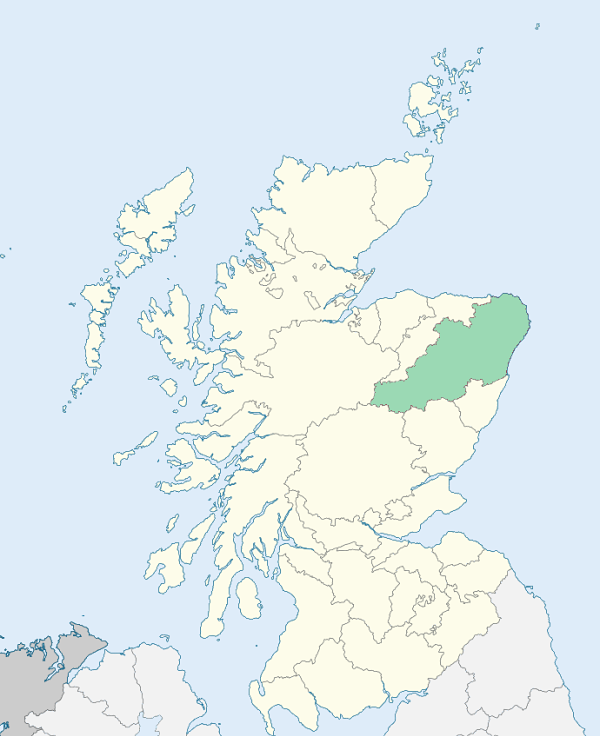
Leochel-Cushnie is a united parish in the Alford district of Aberdeenshire. The parish is bounded by Kildrummie, Alford, Tough, Lumphanan, Coull, Tarland, and Towie. (1867: The Imperial Gazetteer of Scotland, by John Marius Wilson).
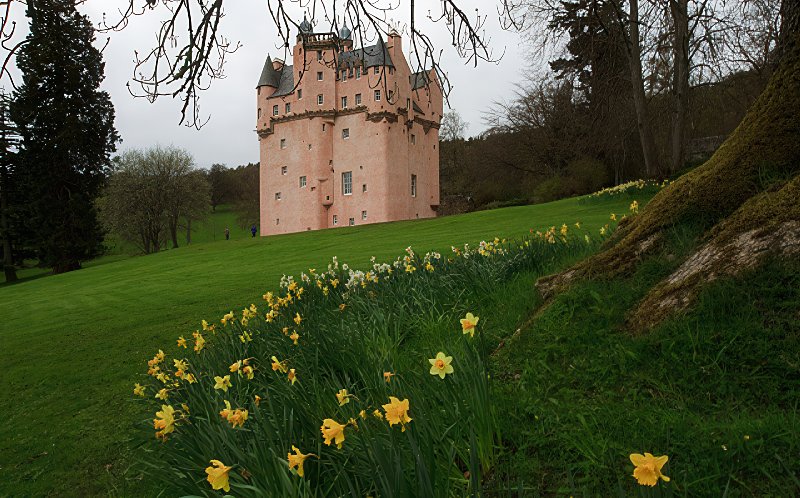
Craigievar
Craigievar, Hallhead, Lynturk
PRE-REFORMATION GOVERNANCE:
POST-REFORMATION GOVERNANCE:
The parishes of Leochel and Cushnie were united on 28 June 1795.
Leochel. The church of Leochel was dedicated to St Marnoch. It belonged to the Priory of Monymusk. A fair of St Marnoch was held at Leochel.
Cushnie. The church of Cushnie was dedicated to St Bride. Near it was St Bride's Well.
Includes ministers, licentiates, assistants, readers, and clerks.
Leochel (QO)
Cushnie (QO)
(1928: Fasti Ecclesiæ Scoticanæ, by Hew Scott, D. D.)
Parish registers turned over to the Registrar-General, as a result of the Registration of Births, Deaths, and Marriages (Scotland) Act of 1854. The letters B. D. and M. indicate Births (or Baptisms), Deaths (or Burials), and Marriages (or Proclamations of Banns) respectively. Numbers indicate separate volumes or books. Note: These records are by no means complete or without damage; consult the Detailed List of the Old Parochial Registers of Scotland (1872) to learn more about the condition of the records.
| OPR and RD Numbers | |||
|---|---|---|---|
| Date Range | Name | Number | Type |
| 1657-1854 | Leochel Cushnie | 214 | OPR |
| 1855-1967 | Leochel-Cushnie | 214 | RD |
| 2009 | Aberdeenshire, Alford | 326 | RD |
| 2026 | Aberdeenshire Council; Donside Community Council | ||
(2009: Parishes and Registration Districts of Scotland - Old and New, National Records of Scotland)
Local community councils (2026) are provided as a potential source of additional information for settlements within the original boundaries of the parish. (Source)
Statistics from informal and official censuses
Copland, Dunn, Ellis, Forbes, Gilbert, Hunter, Smith, Thomson, Walker, Williams
Note: Names appearing in research materials, other than censuses. Simple names (First name, surname only) have been omitted unless they appear associated with large properties. All women's names, and men's names with occupations, military ranks, or peerage titles are included.
By the Reverend Mr George Forbes.
"The number of souls in 1791 (exclusive of the estate of Corse) are 304, of whom 163 are male, and 141 female. On the estate of Corse are 267 total, of whom 126 are males, and 141 female. Total in the two districts, 571; 289 males and 282 females. There are 2 smiths, 6 wrights, 4 shoemakers, 4 weavers, 1 wheel-wright, and 3 tailors.
The knitting of worsted stockings is the principal manufacture of this parish. The language spoken in this parish is English, or rather a particular dialect of the Scottish, called the Aberdeenshire dialect. No Gaelic is spoken here, or nearer than Tullich and Corgars, about 15 English miles distant; though it seems to have been formerly the language of this country.
The inhabitants, since 1745, are much civilised, and little disposed to quarreling. In general, they are peaceable and well-behaved; not addicted to drinking, which may account for there not being a public-house in the parish. The people have no military turn, and when any of them enlist in the army, they return as soon as they can get their discharge.
The men dress plainly in short clothes and breeches of home-spun cloth, with tartan or shepherds plaids. The women appear at church as decently dressed as their circumstances will permit, in tartan plaids and duffle cloaks.
There are 12 poor families who occasionally get supply; and a common beggar is scarcely known in the parish. Rather than beg, the people would live in great misery at home: but the parish is much distressed with strolling importunate strangers."
(This section contains excerpts, at times restructured or paraphrased, from an article appearing in Statistical Account of Scotland, Sir John Sinclair, 1791-1799)
By the Reverend Mr Francis Adams.
"The number of souls at present is, by actual enumeration, 207 males, and 223 females; total 430. The inhabitants are in general healthy, and live to a considerable age; some to 80 and even 90 years, but few beyond that period. Nor have there been any murders or suicides, or any banishments; and but very few emigrations. Neither have any died from want, to my knowledge, in the parish.
The men are by no means fond of a military life. The women are employed in spinning and knitting; and, for the most part, both sexes are industrious and economical. The stature of the men is, from 5 feet 4 inches to 6 feet; and that of the women, from 5 feet 2 inches, to 5 feet 8 inches. It is difficult to say whether the people are, on the whole, contented with their situation. If I may hazard an opinion, I think they are not. The shortness of their leases, their high rents, and the exorbitant wages of the labouring servants, render the situation of the farmers very irksome. I observe, however, that the common people live rather better, and dress to more advantage than in former times; although every article of wearing apparel, particularly that most necessary one, shoes, are at least thrice the price for which they could have been procured about 40 years ago.
Superstition seems, if I mistake not, to lose ground, and the manners of the people are somewhat more polished. Natural children are by no means so frequent here, as formerly; although delinquents are much less harshly dealt by. English is the only language now known in the parish, the Gaelic having ceased to be understood."
(This section contains excerpts, at times restructured or paraphrased, from an article appearing in Statistical Account of Scotland, Sir John Sinclair, 1791-1799)
Primary Sources:
Statistical Account of Scotland (1791-1799), Volume 6, p. 212
New Statistical Account of Scotland (1834-1845), Volume 12, p. 1102
See Parish Page Sources for all source information and links.