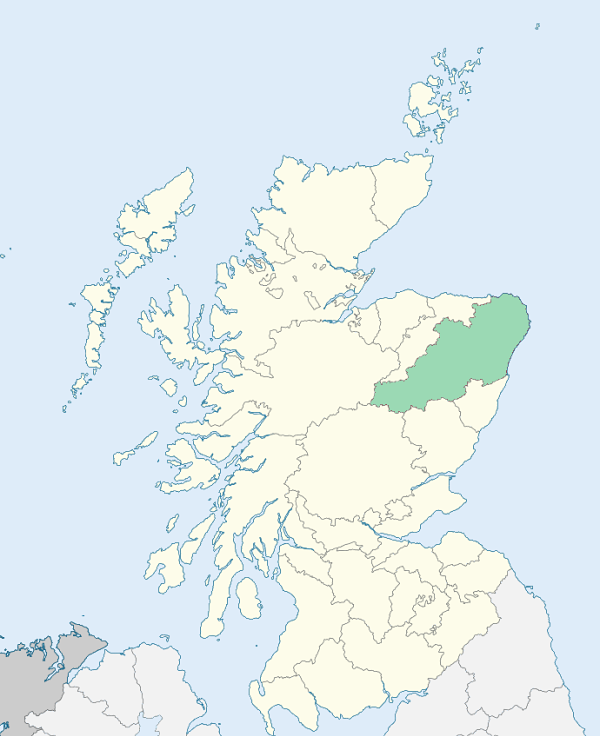
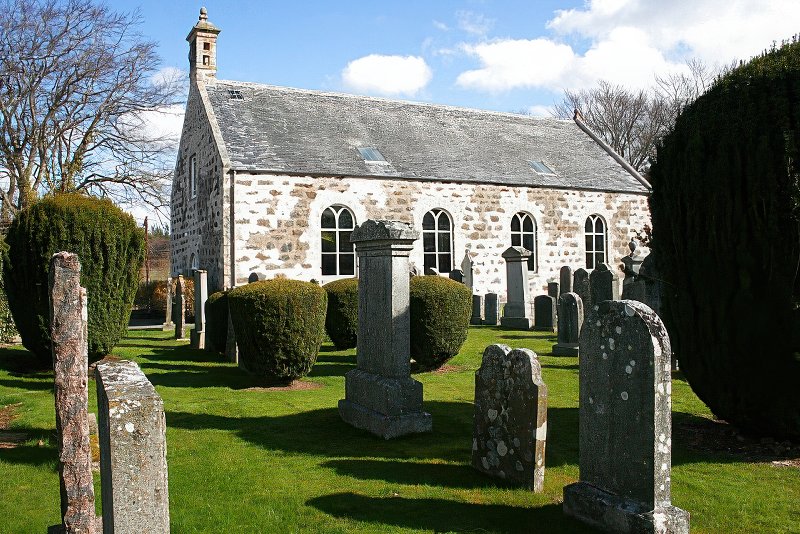
Cairnie is a parish partly in Banffshire, but chiefly in Aberdeenshire. It is bounded by the parishes of Keith, Grange, Rothiemay, Forgue, Huntly, and Glass. (1867: The Imperial Gazetteer of Scotland, by John Marius Wilson).
Cairnie, Ruthven
The parish of Cairnie was situated partly in the county of Aberdeen and partly in the county of Banff. No change was made on the county boundary, but the Banffshire part of the parish was transferred to the Banffshire parish of Keith. The parish of Cairnie, as altered in area, consists solely of the Aberdeenshire part of the old parish of Cairnie. (1892: Boundary of counties and parishes in Scotland as settled by the Boundary Commissioners under the Local Government Act, 1889, by Hay Shennan)
PRE-REFORMATION GOVERNANCE:
POST-REFORMATION GOVERNANCE:
The parishes of Botarie, Drumdelgie, and Ruthven were united in the early seventeenth century. The part of Drumdelgie on the north side of the Deveron was added to Botarie about 1615. The whole of Ruthven was added in 1618, and the united parish was thereafter called Botarie and Ruthven until about 1710, when the name Cairnie or Cairney was adopted.
Cairnie. The parish was originally called Botarie. The church was dedicated to St Martin. Botarie and Elchies together made a prebend of the Cathedral of Elgin.
Drumdelgie. This parish, whose church was locally known as Peter Kirk or the Burnt Kirk, was held by the minister of Gartly till about 1615, when a part of it, on the north side of the Deveron, was added to Botarie, and a part on the south of the Deveron was added to Kinnoir and Dunbennan (Huntly).
Rivan or Ruthven. The parish church of Rivan was dedicated to St Breandan. Dipple and Rivan together formed a prebend of Elgin Cathedral. Within the bounds there were chapels at Mortlach and Haddoch, and a Well of St Cyril. A fair of St Cyril was held at Rivan.
Includes ministers, licentiates, assistants, readers, and clerks.
Cairnie (QO)
Drumdelgie (QO)
Rivan, or Ruthven (QO)
(1928: Fasti Ecclesiæ Scoticanæ, by Hew Scott, D. D.)
Parish registers turned over to the Registrar-General, as a result of the Registration of Births, Deaths, and Marriages (Scotland) Act of 1854. The letters B. D. and M. indicate Births (or Baptisms), Deaths (or Burials), and Marriages (or Proclamations of Banns) respectively. Numbers indicate separate volumes or books. Note: These records are by no means complete or without damage; consult the Detailed List of the Old Parochial Registers of Scotland (1872) to learn more about the condition of the records.
| OPR and RD Numbers | |||
|---|---|---|---|
| Date Range | Name | Number | Type |
| 1731-1854 | Cairney | 178 | OPR |
| 1855-1967 | Cairney | 178 | RD |
| 2009 | Aberdeenshire, Huntly | 317 | RD |
| 2026 | Aberdeenshire Council; Strathbogie Community Council | ||
(2009: Parishes and Registration Districts of Scotland - Old and New, National Records of Scotland)
Local community councils (2026) are provided as a potential source of additional information for settlements within the original boundaries of the parish. (Source)
Statistics from informal and official censuses
Allan, Bremner, Christie, Milne, Morrison, Smith, Stewart, Taylor, Wilson
Note: Names appearing in research materials, other than censuses. Simple names (First name, surname only) have been omitted unless they appear associated with large properties. All women's names, and men's names with occupations, military ranks, or peerage titles are included.
By the Reverend Mr Alexander Chalmers.
"The population contains at present 2600 people. They consist of Presbyterians, Papists, and Episcopals. They were more numerous at my settlement here; the decrease is chiefly owing to their wishing to reside in the neighbouring manufacturing villages of Huntly and Keith. The manufacturers there always find employment for a number of servants.
The people in the parish of Cairny are naturally sober and industrious. The late inclement seasons have run them into arrear of rent. This hangs over, and much dispirits them."
(This section contains excerpts, at times restructured or paraphrased, from an article appearing in Statistical Account of Scotland, Sir John Sinclair, 1791-1799)
Primary Sources:
Statistical Account of Scotland (1791-1799), Volume 12, p. 127
New Statistical Account of Scotland (1834-1845), Volume 12, p. 1017
See Parish Page Sources for all source information and links.