Whitern
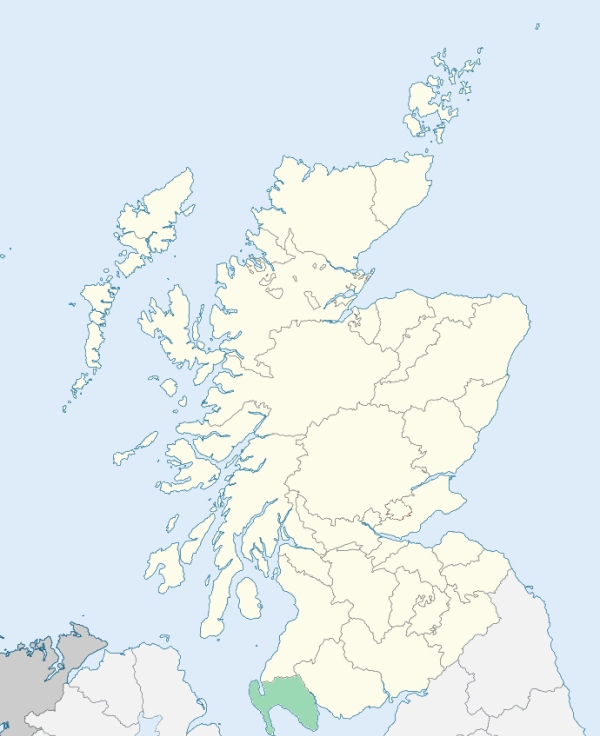
Whithorn is a parish in the Machars district of Wigtownshire. It is bounded on the north and east by Sorbie, on the east and south by the sea, and on the west by Glasserton. (1867: The Imperial Gazetteer of Scotland, by John Marius Wilson).
Bishopton, Broughton, Cutcloy, Isle of Whithorn, Portyerrock, Prestrie, Rispain, Whithorn
Carghadoun or Cargiedoun, Castlewigg, Tonderghie
PRE-REFORMATION GOVERNANCE:
POST-REFORMATION GOVERNANCE:
The church of Whitern was dedicated to St Martin. It belonged to the Priory of Whitern within the parish. This Premonstratensian monastery, known as Candida Casa, and dedicated to St Martin, was founded in 1153 by Fergus, Lord of Galloway, upon the site of St Ninian's earlier abbey. The priory church served as cathedral for the See of Galloway, and its canons formed the Chapter of the Diocese. After the Reformation the nave of the priory church was made the parish church. As such it was in use until 1822, when a parish church was built close by.
Includes ministers, licentiates, assistants, readers, and clerks.
(1928: Fasti Ecclesiæ Scoticanæ, by Hew Scott, D. D.)
Parish registers turned over to the Registrar-General, as a result of the Registration of Births, Deaths, and Marriages (Scotland) Act of 1854. The letters B. D. and M. indicate Births (or Baptisms), Deaths (or Burials), and Marriages (or Proclamations of Banns) respectively. Numbers indicate separate volumes or books. Note: These records are by no means complete or without damage; consult the Detailed List of the Old Parochial Registers of Scotland (1872) to learn more about the condition of the records.
| OPR and RD Numbers | |||
|---|---|---|---|
| Date Range | Name | Number | Type |
| 1712-1854 | Whithorn | 900 | OPR |
| 1855-1855 | Whithorn Burgh | 900-1 | RD |
| 1855-1855 | Whithorn Landward | 900-2 | RD |
| 1856-1971 | Whithorn | 900 | RD |
| 1972-2004 | Whithorn | 875 | RD |
| 2005-2009 | Dumfries and Galloway, Whithorn | 875 | RD |
| 2026 | Dumfries and Galloway Council; Royal Burgh of Whithorn and District Community Council | ||
(2009: Parishes and Registration Districts of Scotland - Old and New, National Records of Scotland)
Local community councils (2026) are provided as a potential source of additional information for settlements within the original boundaries of the parish. (Source)
Statistics from informal and official censuses
Bell, Douglas, Fulton, Gibson, Hannah, Hunter, Martin, Potts, Smith, Thomson
Note: Names appearing in research materials, other than censuses. Simple names (First name, surname only) have been omitted unless they appear associated with large properties. All women's names, and men's names with occupations, military ranks, or peerage titles are included.
By the Reverend Isaac Davidson, D. D..
"The population of this parish, about 55 years ago, was placed at 1300; now it is 1890. Of these there are 938 males, and 952 females. The town contains 345 males, 411 females, total 756. The Isle of Whithorn, the only village, contains 208 males,, 188 females; total 396. The country part of the parish contains 379 males, 359 females; total 738. There are a few sectaries of the Cameronian and Antiburgher descriptions.
There is 1 writer, 1 attorney, 1 plasterer, 1 saddler, 18 masons and 1 apprentice, 16 joiners and 11 apprentices, 2 slaters, 25 weavers and 2 apprentices, 22 shoemakers and 2 apprentices, 16 tailors and 2 apprentices, 8 blacksmiths and 1 apprentice, 1 landwaiter, and 1 tidesman, 12 shopkeepers, 2 coopers and 1 apprentice.
Whithorn is a Royal Burgh, governed by a provost, two baillies, and fifteen councillors. At Isle of Whithorn there is a good natural harbour; 8 or 9 small sloops belong to this place, in which about 30 mariners are employed. They bring coal and lime from England; carry seashells from the river Cree, and take away the grain, potatoes, with some fat cattle, sheep, and swine to the different markets.
Tanning of leather has been carried on here for several years to a considerable extent. Several cotton manufactures have commenced. Here also is a distillatory.
In the year 1775, a few people emigrated to America. They left their native country, their relatives, and abounding means of enjoyment, to settle in woods, among savages and wild beasts. Many of these deluded creatures were rich, and left very profitable leases, to bemoan their folly in uncultivated deserts."
(This section contains excerpts, at times restructured or paraphrased, from an article appearing in Statistical Account of Scotland, Sir John Sinclair, 1791-1799)
Primary Sources:
Statistical Account of Scotland (1791-1799), Volume 16, p. 275
New Statistical Account of Scotland (1834-1845), Volume 4, Section III, p. 52
See Parish Page Sources for all source information and links.