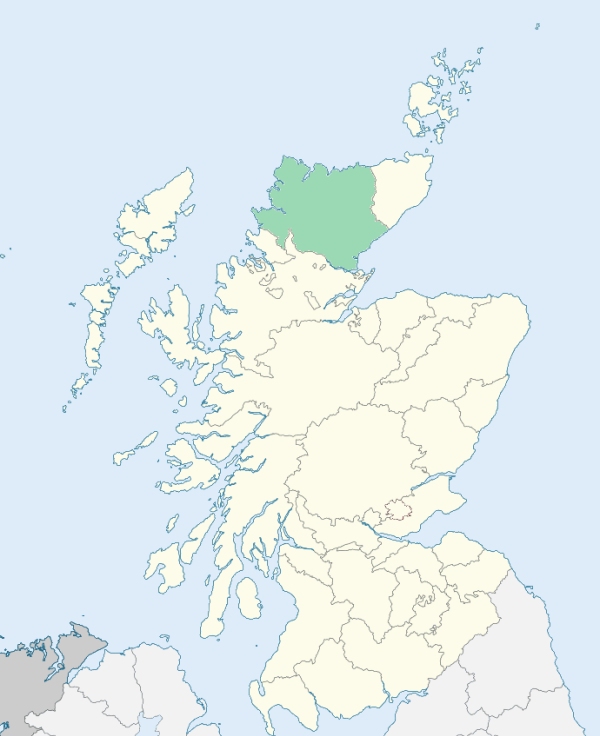
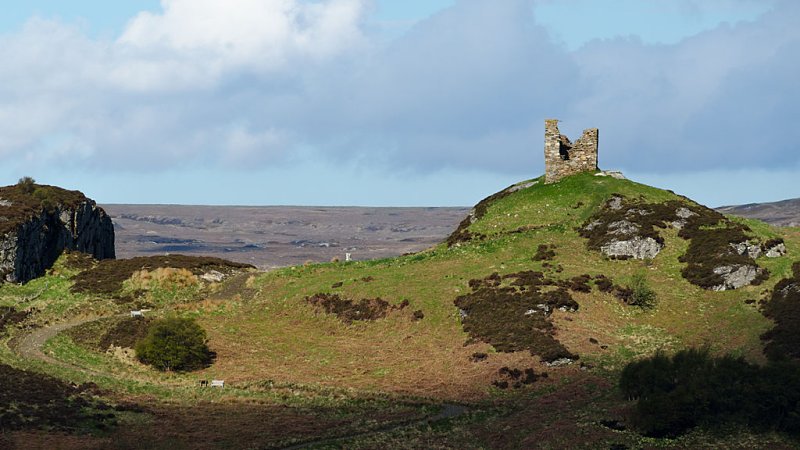
Tongue is a parish on the north coast of Sutherlandshire. It is bounded by the North Sea, and by the parishes of Farr, Eddrachillis, and Durness. (1867: The Imperial Gazetteer of Scotland, by John Marius Wilson).
Kirkiboll, Melness, Skinaid, Tlamin, Tongue, Torrisdale
PRE-REFORMATION GOVERNANCE:
POST-REFORMATION GOVERNANCE:
On 16 May 1724, the General Assembly appointed a collection to be made for building a church at Tongue. On 11 May 1726, the parish of Tongue was disjoined from that of Durness by the Lords Commissioners of Teinds. There was a chapel of St Columba within the bounds on Eilean Chaluim, an island in the Kyle of Tongue. There is a mission chapel at Melness, in this parish.
Includes ministers, licentiates, assistants, readers, and clerks.
(1928: Fasti Ecclesiæ Scoticanæ, by Hew Scott, D. D.)
Parish registers turned over to the Registrar-General, as a result of the Registration of Births, Deaths, and Marriages (Scotland) Act of 1854. The letters B. D. and M. indicate Births (or Baptisms), Deaths (or Burials), and Marriages (or Proclamations of Banns) respectively. Numbers indicate separate volumes or books. Note: These records are by no means complete or without damage; consult the Detailed List of the Old Parochial Registers of Scotland (1872) to learn more about the condition of the records.
| OPR and RD Numbers | |||
|---|---|---|---|
| Date Range | Name | Number | Type |
| 1780-1854 | Tongue | 56 | OPR |
| 1855-1971 | Tongue | 56 | RD |
| 1972-2001 | Tongue | 173 | RD |
| 2002-2006 | Kirkton and Tongue | 174 | RD |
| 2009 | Highland, Kirkton and Tongue | 174 | RD |
| 2026 | Highland Council; Tongue Community Council | ||
(2009: Parishes and Registration Districts of Scotland - Old and New, National Records of Scotland)
Local community councils (2026) are provided as a potential source of additional information for settlements within the original boundaries of the parish. (Source)
Statistics from informal and official censuses
Campbell, Gow, Gunn, MacKay, Mackenzie, MacLeod, Morrison, Munro, Ross, Sutherland
Note: Names appearing in research materials, other than censuses. Simple names (First name, surname only) have been omitted unless they appear associated with large properties. All women's names, and men's names with occupations, military ranks, or peerage titles are included.
By the Reverend Mr William M'Kenzie, and the Reverend Mr Hugh Ross.
"By an accurate enumeration, made, at last Spring survey, it was found that there were, at that period (anno 1791), 1439 souls in this parish, of whom about 200 were under 8 years of age; 23 between 60 and 70; 9 between 70 and 80; and 8 between 80 and 90. Gaelic is the language generally spoken, and from it the names of the principal parts of the parish are said to be derived. Hired servants are employed in agriculture; but as the wages in the country are low, many go to the southern part of the kingdom for service, and few of the young men stay at home, except those whose parents have employment for them. The number of male servants is 52; of female servants, 176. Such tacksmen as have sub-tenants, employ them in spring and harvest too frequently to cultivate their land, to the almost utter neglect of their own small farms."
(This section contains excerpts, at times restructured or paraphrased, from an article appearing in Statistical Account of Scotland, Sir John Sinclair, 1791-1799)
Primary Sources:
Statistical Account of Scotland (1791-1799), Volume 3, p. 517
New Statistical Account of Scotland (1834-1845), Volume 15, Section I, p. 164
See Parish Page Sources for all source information and links.