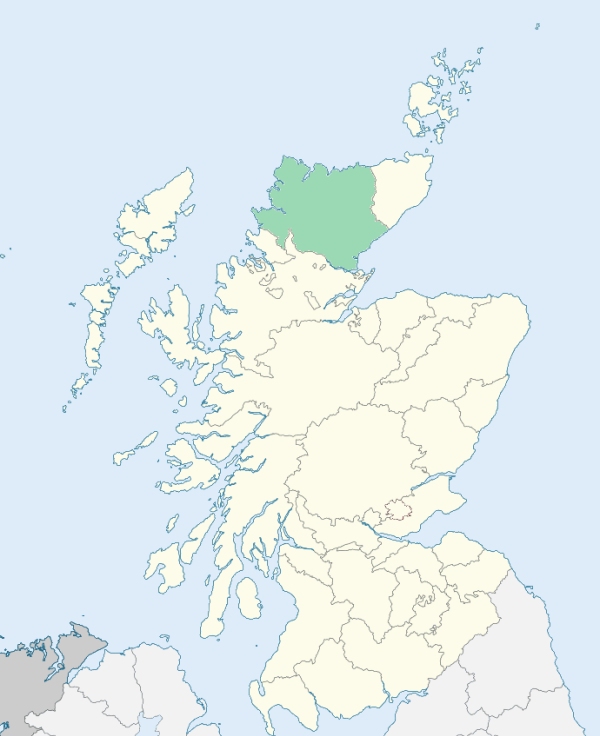
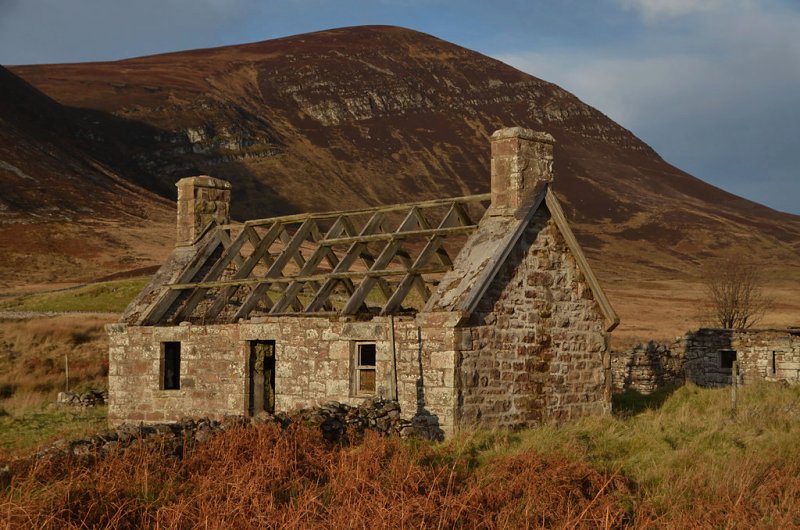
Loth is a parish on the east coast of Sutherlandshire. It is bounded by the Moray Firth, and by the parishes of Clyne and Kildonan. (1867: The Imperial Gazetteer of Scotland, by John Marius Wilson).
Easter Garty, Helmsdale, Kintradwell, Loth Navidale, Port Gower or Portgower
PRE-REFORMATION GOVERNANCE:
POST-REFORMATION GOVERNANCE:
The church of Loth was dedicated to St Curadan. It belonged to the Bishop of Caithness. At Helmsdale, in the north end of the parish, there was a Hospital of St John the Baptist. Within the bounds there were at least three chapels, St Tridwal's at Kintradwell, St Inan's at Easter Garty, and the chapel at Navidale, which was probably dedicated to St Naomhan. A fair of St Curadan was held at Loth. In 1927 Loth was suppressed as a separate charge and united with Kildonan and Clyne.
Includes ministers, licentiates, assistants, readers, and clerks.
(1928: Fasti Ecclesiæ Scoticanæ, by Hew Scott, D. D.)
Parish registers turned over to the Registrar-General, as a result of the Registration of Births, Deaths, and Marriages (Scotland) Act of 1854. The letters B. D. and M. indicate Births (or Baptisms), Deaths (or Burials), and Marriages (or Proclamations of Banns) respectively. Numbers indicate separate volumes or books. Note: These records are by no means complete or without damage; consult the Detailed List of the Old Parochial Registers of Scotland (1872) to learn more about the condition of the records.
| OPR and RD Numbers | |||
|---|---|---|---|
| Date Range | Name | Number | Type |
| 1795-1854 | Loth | 54 | OPR |
| 1855-1967 | Loth | 54 | RD |
| 2009 | Highland, Helmsdale | 176 | RD |
| 2026 | Highland Council; Helmsdale Community Council | ||
(2009: Parishes and Registration Districts of Scotland - Old and New, National Records of Scotland)
Local community councils (2026) are provided as a potential source of additional information for settlements within the original boundaries of the parish. (Source)
Statistics from informal and official censuses
Armstrong, Bruce, Campbell, Davidson, Duff, Murray, Rae, Reid, Ross, Sutherland
Note: Names appearing in research materials, other than censuses. Simple names (First name, surname only) have been omitted unless they appear associated with large properties. All women's names, and men's names with occupations, military ranks, or peerage titles are included.
By the Reverend Mr George M'Culloch.
"The people in general live to a good old age, though they are not instances of remarkable longevity here. The most common diseases, especially amongst those of advanced life, are coughs, asthmas, and the rheumatism. As to the moral and religious character of the common people, they are generally sober, serious, and industrious, attentive to their business and credit, humane in their deportment, respectful to their superiors, and ready to shew kindness to strangers."
(This section contains excerpts, at times restructured or paraphrased, from an article appearing in Statistical Account of Scotland, Sir John Sinclair, 1791-1799)
Primary Sources:
Statistical Account of Scotland (1791-1799), Volume 6, p. 311
New Statistical Account of Scotland (1834-1845), Volume 15, Section I, p. 188
See Parish Page Sources for all source information and links.