Goldspie, Culmalin, Kilmalie
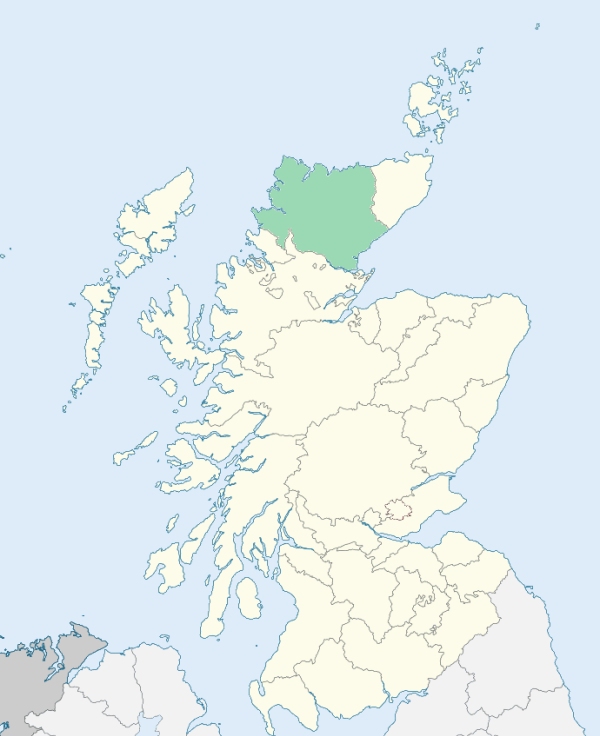
Golspie is a parish on the east coast of Sutherlandshire. It is bounded by the sea, by the Little Ferry, by the Fleet, and by the parishes of Rogart and Clyne. (1867: The Imperial Gazetteer of Scotland, by John Marius Wilson).
Bachies or Backies, Dunrobin, Golspie, Kilmalie, Little Ferry
PRE-REFORMATION GOVERNANCE:
POST-REFORMATION GOVERNANCE:
The ancient church of this parish, which stood at Kilmalie, was dedicated to St Maliew. It belonged to the Bishop of Caithness. That church having fallen out of repair, the parish church was removed from Kilmalie to the chapel of St Andrew at Golspie, in another part of the parish. At Golspie a fair of St Andrew was held. At Dunrobin, within the bounds, there was a Well of St John.
Includes ministers, licentiates, assistants, readers, and clerks.
(1928: Fasti Ecclesiæ Scoticanæ, by Hew Scott, D. D.)
Parish registers turned over to the Registrar-General, as a result of the Registration of Births, Deaths, and Marriages (Scotland) Act of 1854. The letters B. D. and M. indicate Births (or Baptisms), Deaths (or Burials), and Marriages (or Proclamations of Banns) respectively. Numbers indicate separate volumes or books. Note: These records are by no means complete or without damage; consult the Detailed List of the Old Parochial Registers of Scotland (1872) to learn more about the condition of the records.
| OPR and RD Numbers | |||
|---|---|---|---|
| Date Range | Name | Number | Type |
| 1739-1854 | Golspie | 51 | OPR |
| 1855-1971 | Golspie | 51 | RD |
| 1972-2006 | Golspie | 180 | RD |
| 2009 | Highland, Golspie | 180 | RD |
| 2026 | Highland Council; Golspie Community Council | ||
(2009: Parishes and Registration Districts of Scotland - Old and New, National Records of Scotland)
Local community councils (2026) are provided as a potential source of additional information for settlements within the original boundaries of the parish. (Source)
Statistics from informal and official censuses
Gordon, Gunn, MacDonald, MacKay, MacRae, Matheson, Munro, Murray, Ross, Sutherland
Note: Names appearing in research materials, other than censuses. Simple names (First name, surname only) have been omitted unless they appear associated with large properties. All women's names, and men's names with occupations, military ranks, or peerage titles are included.
By the Reverend Mr William Keith.
"About 100 years ago, the population is supposed not to have been above one half of what it is at present. In 1750 the number of inhabitants was 1302; at present they are 1700. Each marriage, at an average, produces 7 children. The population would still increase were manufactures established. Several go in spring to the South of Scotland, where they find better encouragement for labour, and most of them return in October or November following. None have been banished since the year 1746, when one suffered that punishment. There are 363 houses, 5 in each house at an average; but there are 42 of those houses with only 1 inhabitant in each, and several houses with but 2 inhabitants in each. In this parish there are 73 farmers, 5 wrights, 2 masons, 10 weavers, 12 tailors, 1 tinker, 10 apprentices, 20 fishermen, 4 ferrymen, 12 household servants, and 252 labouring servants."
(This section contains excerpts, at times restructured or paraphrased, from an article appearing in Statistical Account of Scotland, Sir John Sinclair, 1791-1799)
Primary Sources:
Statistical Account of Scotland (1791-1799), Volume 9, p. 26
New Statistical Account of Scotland (1834-1845), Volume 15, Section I, p. 24
See Parish Page Sources for all source information and links.