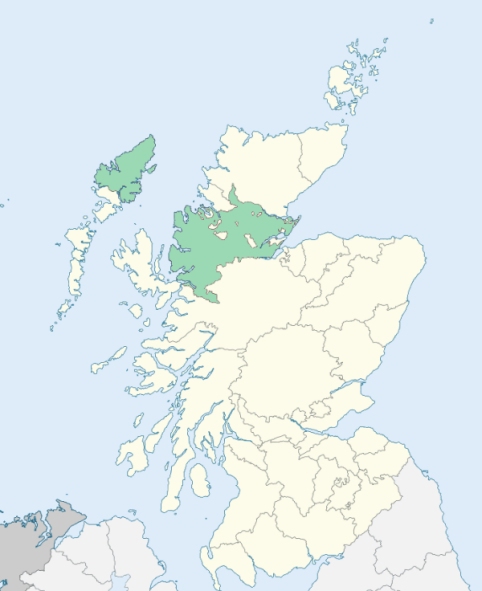
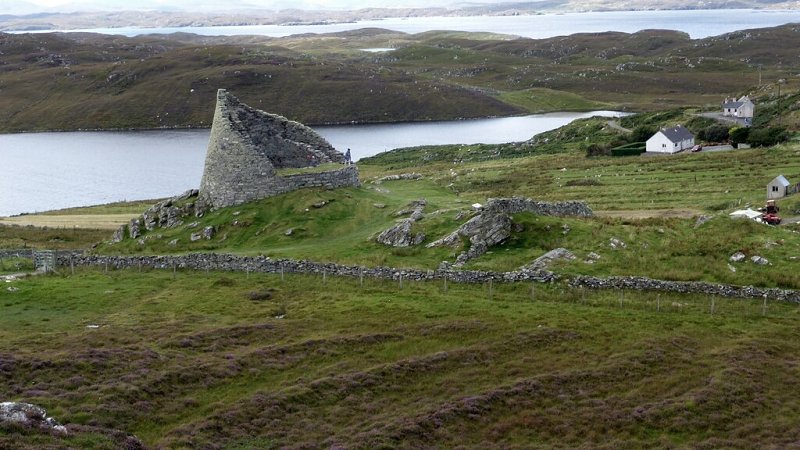
An Cladah and Carloway
Barvas is a parish in the north of the island of Lewis, Ross-shire. It is bounded on two sides by the Atlantic Ocean, and on other sides by the parishes of Stornoway and Lochs. (1867: The Imperial Gazetteer of Scotland, by John Marius Wilson).
Barvas, Borve, Bragar, Cross or Ness, Dail, Erropie or Eorabie, Habost, Knockard, Lionashadair, Shadair, Suainabost,
The parish of Lochs had a detached part situated at Carloway, and lying between the parishes of Barvas and Uig. This detached part has been divided between the parishes of Barvas and Uig. See affected properties and landholders. (1892: Boundary of counties and parishes in Scotland as settled by the Boundary Commissioners under the Local Government Act, 1889, by Hay Shennan)
PRE-REFORMATION GOVERNANCE:
POST-REFORMATION GOVERNANCE:
The church of Barvas was dedicated to St Mary. There were a number of chapels in this parish. Among these were St Bride's at Borve, St Peter's at Shadair, St Kiaran's at Lionashadair, and St John the Baptist's at Bragar. At Carloway there is now a mission chapel.
Disjoined Quoad Sacra Parishes:
Cross, previously Ness. The ancient parish of Ness was united to Barvas in the sixteenth century, or probably as early as the fifteenth. Its old church was dedicated to St Peter. The modern church is on another site, near the remains of an old chapel of the Holy Rood, whence is derived the name of Cross now given to the parish. A parliamentary church for the district of Ness was built in 1828. The parish of Cross was again disjoined from Barvas on 27 May 1857. In various parts of this parish there were chapels in times gone by. Two of these stood at Eorabie, near the north end of Lewis. One of them was dedicated to St Malrubh and the other to St Ronan. In the same part of the island were St Peter's Chapel at Suainabost, St Thomas's at Habost, and St Clement's at Dail.
Includes ministers, licentiates, assistants, readers, and clerks.
Barvas (QO)
Cross (QS)
(1928: Fasti Ecclesiæ Scoticanæ, by Hew Scott, D. D.)
Parish registers turned over to the Registrar-General, as a result of the Registration of Births, Deaths, and Marriages (Scotland) Act of 1854. The letters B. D. and M. indicate Births (or Baptisms), Deaths (or Burials), and Marriages (or Proclamations of Banns) respectively. Numbers indicate separate volumes or books. Note: These records are by no means complete or without damage; consult the Detailed List of the Old Parochial Registers of Scotland (1872) to learn more about the condition of the records.
| OPR and RD Numbers | |||
|---|---|---|---|
| Date Range | Name | Number | Type |
| 1810-1854 | Barvas | 86 | OPR |
| 1855-1858 | Barvas | 86 | RD |
| 1859-1971 | Barvas | 86a | RD |
| 1859-1971 | Carloway | 86b | RD |
| 1972-2006 | Carloway | 222 | RD |
| 2009 | (Barvas) Comhairle Nan Eilean Siar, Stornoway | 221 | RD |
| 2009 | (Carloway) Comhairle Nan Eilean Siar, Carloway | 222 | RD |
| 2026 | (Barvas) Comhairle Nan Eilean Siar, Barvas and Brue Community Council | ||
| 2026 | (Carloway) Comhairle Nan Eilean Siar, Carloway Community Council | ||
(2009: Parishes and Registration Districts of Scotland - Old and New, National Records of Scotland)
Local community councils (2026) are provided as a potential source of additional information for settlements within the original boundaries of the parish. (Source)
Statistics from informal and official censuses
Campbell, Gillies, Graham, Gunn, MacDonald, MacIver, Mackenzie, MacLeod, Matheson, Murray
Note: Names appearing in research materials, other than censuses. Simple names (First name, surname only) have been omitted unless they appear associated with large properties. All women's names, and men's names with occupations, military ranks, or peerage titles are included.
By the Reverend Mr Donald MacDonald, Minister.
"There are in the parish, 439 families, 2006 souls, 914 males, 1092 females: Souls under 6 years old, 334; ditto betwixt 6 and 14 years, 407; ditto betwixt 14 and 60 year, 1067; and above 60, 198. There are 14 weavers, 5 tailors, 7 blacksmiths, 340 fishers, and 1 miller. There is not one man by profession a shoemaker; the most of the inhabitants supply themselves with shoes or brogues; nor, indeed do any of the above tradesmen depend wholly upon their occupations, all of them having small farms. There are two women living in the parish, one of whom says that she is 100 years old, and the other 102."
(This section contains excerpts, at times restructured or paraphrased, from an article appearing in Statistical Account of Scotland, Sir John Sinclair, 1791-1799)
Primary Sources:
Statistical Account of Scotland (1791-1799), Volume 19, p. 263
New Statistical Account of Scotland (1834-1845), Volume 14, Section II, p. 141
See Parish Page Sources for all source information and links.