Kinnaird in Gowrie
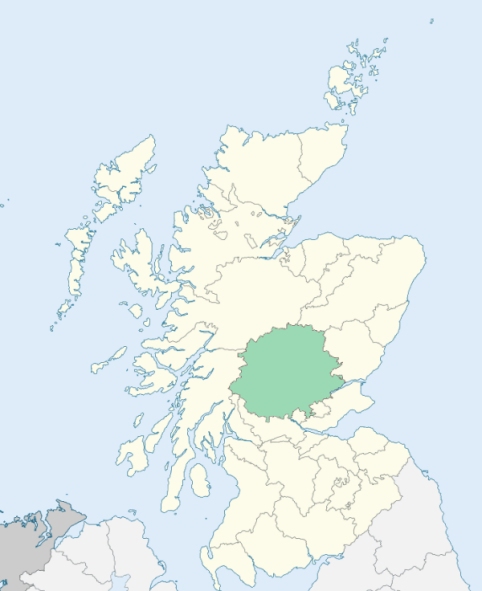
Kinnaird is a parish in the Gowrie district of Perthshire. It is bounded by the parishes of Collace, Abernyte, Inchture, Errol, and Kilspindie. (1867: The Imperial Gazetteer of Scotland, by John Marius Wilson).
Craigdallie, Flawcraig, Kinnaird, Nethermains, Pitmiddie
PRE-REFORMATION GOVERNANCE:
POST-REFORMATION GOVERNANCE:
To distinguish this parish from several other places of the same name, it is styled Kinnaird in Gowrie.
Includes ministers, licentiates, assistants, readers, and clerks.
(1928: Fasti Ecclesiæ Scoticanæ, by Hew Scott, D. D.)
Parish registers turned over to the Registrar-General, as a result of the Registration of Births, Deaths, and Marriages (Scotland) Act of 1854. The letters B. D. and M. indicate Births (or Baptisms), Deaths (or Burials), and Marriages (or Proclamations of Banns) respectively. Numbers indicate separate volumes or books. Note: These records are by no means complete or without damage; consult the Detailed List of the Old Parochial Registers of Scotland (1872) to learn more about the condition of the records.
| OPR and RD Numbers | |||
|---|---|---|---|
| Date Range | Name | Number | Type |
| 1632-1854 | Kinnaird | 368 | OPR |
| 1855-1969 | Kinnaird | 368 | RD |
| 2009 | Perth and Kinross, Longforgan | 392 | RD |
| 2026 | Perth and Kinross Council; Longforgan Community Council | ||
(2009: Parishes and Registration Districts of Scotland - Old and New, National Records of Scotland)
Local community councils (2026) are provided as a potential source of additional information for settlements within the original boundaries of the parish. (Source)
Statistics from informal and official censuses
Anton, Bruce, Clarke, Duncan, Ellis, Forsyth, Gillies, Hutchison, Mitchell, Reid
Note: Names appearing in research materials, other than censuses. Simple names (First name, surname only) have been omitted unless they appear associated with large properties. All women's names, and men's names with occupations, military ranks, or peerage titles are included.
By the Reverend Mr David Spence.
"The number of inhabitants, 31st December 1790, was 404, of whom 206 were males and 198 females. The number of household and labouring servants, chiefly the latter, employed by the farmers, exclusive of their children, is 88; that of artificers, 57, of whom 44 are weavers, who not only work for the inhabitants of the parish, and others who may employ them, but also manufacture for sale, a great deal chiefly of that they call Harn, the coarse packing cloth, for which they find a ready market in the town of Dundee. Only one family in the parish, and an individual of another, are Seceders.
The farmers in general are intelligent and industrious in their business, and therefore prosperous and contented. The tradesmen in the parish are in general industrious and well employed; and it adds much to the comfort and health of the weavers, especially, that along with their houses, they have so much good land divided among them, as enables them to keep cows and small horses, and gives enough of wholesome exercise, without taking too much time and attention from their principal business.
The different orders of people in this place are in general sober, honest, and industrious; and as their external circumstances, so their natural genius and temper, are favourable to tranquility and contentment of mind. They are little susceptible either of the pleasures or pains which result from a lively imagination and delicate sensibility of temper; but though not remarkable for vivacity, they are judicious and discerning, especially in farming. Their religion may be often tinctured with superstition, but is seldom heated with enthusiasm. If, where it is in truth, it is accompanied with little fervour, it however operates as a calm, rational, steady principle of wise and virtuous conduct."
(This section contains excerpts, at times restructured or paraphrased, from an article appearing in Statistical Account of Scotland, Sir John Sinclair, 1791-1799)
Primary Sources:
Statistical Account of Scotland (1791-1799), Volume 6, p. 233
New Statistical Account of Scotland (1834-1845), Volume 10, p. 228
See Parish Page Sources for all source information and links.