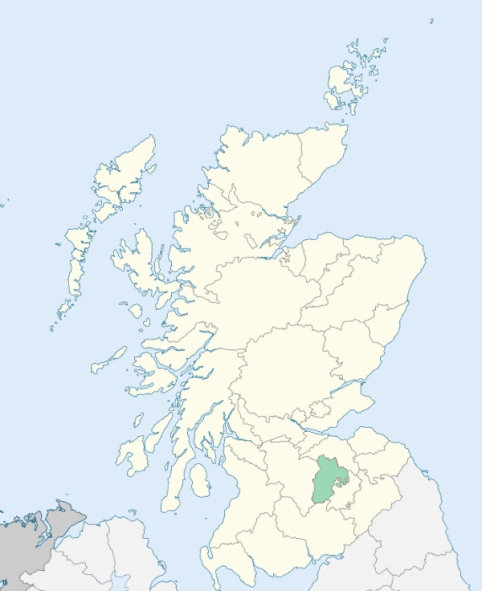
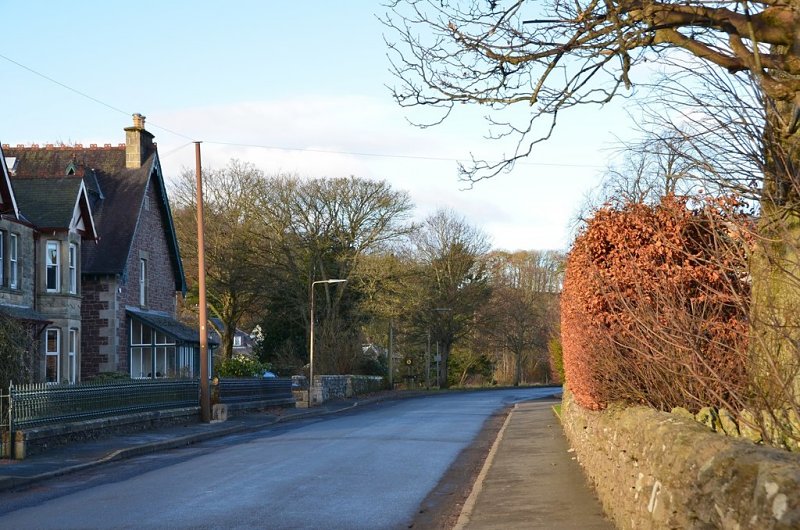
West Linton is a parish in the northwest of Peeblesshire. It is bounded by the counties of Lanark and Edinburgh, and by the parishes of Newlands and Kirkurd. (1867: The Imperial Gazetteer of Scotland, by John Marius Wilson)
Carlops, Linton or West Linton
PRE-REFORMATION GOVERNANCE:
POST-REFORMATION GOVERNANCE:
Previous to the Reformation the church belonged to the Abbey of Kelso.
Includes ministers, licentiates, assistants, readers, and clerks.
(1928: Fasti Ecclesiæ Scoticanæ, by Hew Scott, D. D.)
Parish registers turned over to the Registrar-General, as a result of the Registration of Births, Deaths, and Marriages (Scotland) Act of 1854. The letters B. D. and M. indicate Births (or Baptisms), Deaths (or Burials), and Marriages (or Proclamations of Banns) respectively. Numbers indicate separate volumes or books. Note: These records are by no means complete or without damage; consult the Detailed List of the Old Parochial Registers of Scotland (1872) to learn more about the condition of the records.
| OPR and RD Numbers | |||
|---|---|---|---|
| Date Range | Name | Number | Type |
| 1656-1854 | West Linton | 773 | OPR |
| 1855-1892 | West Linton | 773 | RD |
| 1893-1967 | West Linton | 773a | RD |
| 1893-1948 | Ashkirk | 773b | RD |
| 1968-1971 | West Linton | 773 | RD |
| 1972-2006 | West Linton | 800 | RD |
| 2007-2009 | Scottish Borders, West Linton | 800 | RD |
| 2026 | Scottish Borders Council; West Linton Community Council, Carlops Community Council | ||
(2009: Parishes and Registration Districts of Scotland - Old and New, National Records of Scotland)
Local community councils (2026) are provided as a potential source of additional information for settlements within the original boundaries of the parish. (Source)
Statistics from informal and official censuses
Alexander, Bain, Brown, Laidlaw, Millar, Robertson, Small, Thomson, Veitch, Watson
Note: Names appearing in research materials, other than censuses. Simple names (First name, surname only) have been omitted unless they appear associated with large properties. All women's names, and men's names with occupations, military ranks, or peerage titles are included.
By the Reverend Mr Charles Findlater, Minister of Newlands, formerly of Linton.
"The population, taken at a visitation in 1777 was 102 inhabited houses by separate families in the village, and 134 in the country, total 236 inhabited houses. There were 353 souls in the village, 650 in the country, 1003 total. Of these 490 were males, and 513 females, and 202 under 10 years of age. The whole of the seceders (all Burghers) including young children of seceding parents was 400.
The population in 1791 was 59 inhabited houses in the village of Linton, 12 in the village of Blyth, and 107 in the country, total 178 inhabited houses. Of inhabitants in Linton there were 149 males, 202 females, 351 persons; in Blyth 26 males, 28 females, 54 persons; in the country there were 274 males, 249 females, 523 persons. Total inhabitants in the parish, 928, of whom 218 were under 10 years of age. The Seceders are 339 Burghers, 2 Antiburgheers, and 35 Relief; in all, 376. There are no other religious sectaries in the parish.
The people are either farmers, or mechanics and shopkeepers; generally one, and sometimes two surgeons, formerly an exciseman, lead carters and carriers, no lawyers. Two or three looms work cotton cloth independently, or linen for the manufacturers in Edinburgh, or even Glasgow. There are about two dozen of looms in the village.
The situation of every class of people is much improved. In the memory of old people, the mode of living is much altered. The great expense formerly was in drinking two-penny. The farmers ate no flesh but what died of itself; onions were a common relish to their bread. Their clothes were homespun and coarse. More flesh is now consumed even by cottagers, than formerly by farmers."
(This section contains excerpts, at times restructured or paraphrased, from an article appearing in Statistical Account of Scotland, Sir John Sinclair, 1791-1799)
Primary Sources:
Statistical Account of Scotland (1791-1799), Volume 1, p. 126
New Statistical Account of Scotland (1834-1845), Volume 3, Section II, p. 156
See Parish Page Sources for all source information and links.