Stromness and Sandwick
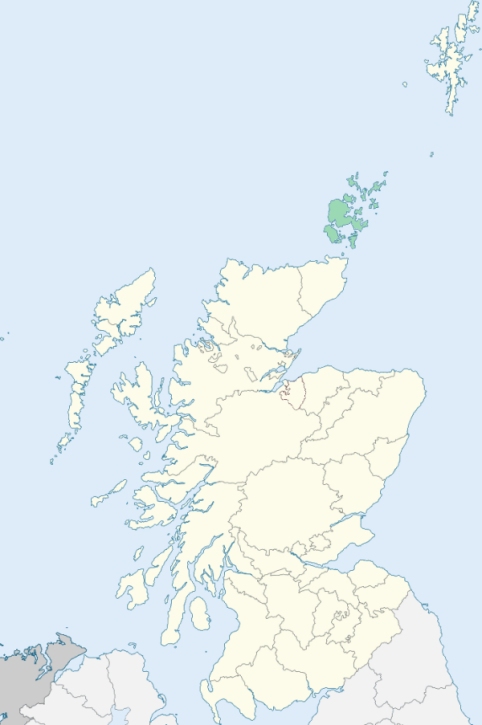
Stromness is a parish in the south-west of Pomona, Orkney. It is bounded on the north by Sandwick, on the north-east and east by Loch Stenness, which divides it from Harray and Stenness, on the southeast and south by the sound of Hoy, and on the west by the Atlantic Ocean. (1867: The Imperial Gazetteer of Scotland, by John Marius Wilson).
Stromness
Brackness, Cairston
PRE-REFORMATION GOVERNANCE:
POST-REFORMATION GOVERNANCE:
In the sixteenth century the parishes of Sandwick and Stromness were united. In 1814 the parish church of Stromness was rebuilt. This parish was severed again from Sandwick in 1832.
Includes ministers, licentiates, assistants, readers, and clerks.
Sandwick and Stromness (QO)
Stromness (QO)
(1928: Fasti Ecclesiæ Scoticanæ, by Hew Scott, D. D.)
Parish registers turned over to the Registrar-General, as a result of the Registration of Births, Deaths, and Marriages (Scotland) Act of 1854. The letters B. D. and M. indicate Births (or Baptisms), Deaths (or Burials), and Marriages (or Proclamations of Banns) respectively. Numbers indicate separate volumes or books. Note: These records are by no means complete or without damage; consult the Detailed List of the Old Parochial Registers of Scotland (1872) to learn more about the condition of the records.
| OPR and RD Numbers | |||
|---|---|---|---|
| Date Range | Name | Number | Type |
| 1695-1854 | Stromness | 30 | OPR |
| 1855-1971 | Stromness | 30 | RD |
| 1972-2003 | Stromness | 142 | RD |
| 2009 | Orkney Islands, Stromness | 142 | RD |
| 2026 | Orkney Islands Council; Stromness Community Council | ||
(2009: Parishes and Registration Districts of Scotland - Old and New, National Records of Scotland)
Local community councils (2026) are provided as a potential source of additional information for settlements within the original boundaries of the parish. (Source)
Statistics from informal and official censuses
Brown, Clouston, Flett, Irvine, Johnston, Linklater, Robertson, Scott, Sinclair, Spence
Note: Names appearing in research materials, other than censuses. Simple names (First name, surname only) have been omitted unless they appear associated with large properties. All women's names, and men's names with occupations, military ranks, or peerage titles are included.
By the Reverend Mr William Clouston.
"Among a body of 3000 people, it may be presumed that there are some of vicious character and depraved manners; but, in general, they are decent in their behavior, respectful to their superiors, and modest in their carriage and conversation, especially the women. In a seaport such as Stromness, to which there is a great resort of shipping, it might be conjectured, that immoralities and a depravity of manners might prevail; but it is to be observed to their honour, that there has been only one bastard child to a stranger for 10 years past. They are regular in attending divine service, and are neither enthusiastic nor superstitious in their religious principles. They are fond of dress, the most venial of all modern luxuries; but their regard to their interest keeps them from excess in this.
They live pretty close and quietly at home. Their habits of life leading them to affairs of interest, there are few inclined to reading, and their genius is not turned to poetry. They are fond of music and dancing, and a dancing-master is sure to meet with encouragement at the village of Stromness. They excel in the knowledge of sea-affairs and what respects shipping, and their genius seems to be turned this way. Those who make some little fortune in the mercantile line at the village of Stromness, are perhaps envied by others not so industrious; but the people in general, are satisfied with their situation."
(This section contains excerpts, at times restructured or paraphrased, from an article appearing in Statistical Account of Scotland, Sir John Sinclair, 1791-1799)
Primary Sources:
Statistical Account of Scotland (1791-1799), Volume 16, p. 409
New Statistical Account of Scotland (1834-1845), Volume 15, Section III, p. 26
See Parish Page Sources for all source information and links.