Ham (Holm)
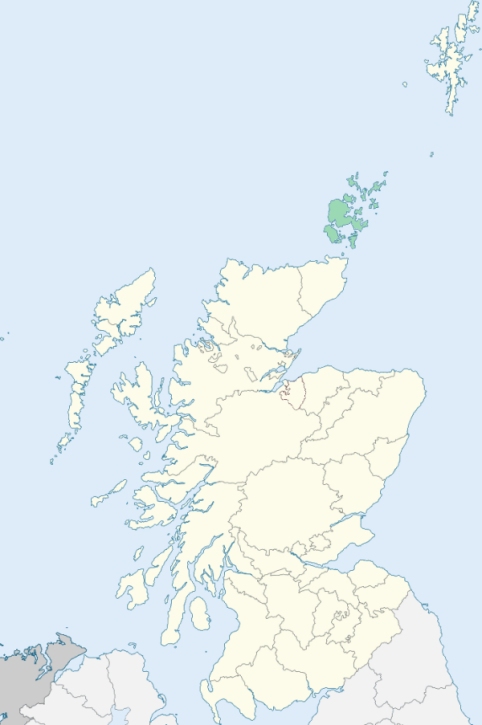
Holm and Paplay is a parish in Orkney. The parish comprises a tract in the south-east of Pomona (the mainland of Orkney), and the island of Lambholm. The tract in Pomona is bounded on the east, the south, and the south-west by the sea, and on other sides by the parishes of Kirkwall and St Andrews. This tract is separated from the island of Burray on the south by Holm sound, in the middle of which lies the island of Lambholm. (1867: The Imperial Gazetteer of Scotland, by John Marius Wilson).
St Mary
PRE-REFORMATION GOVERNANCE:
POST-REFORMATION GOVERNANCE:
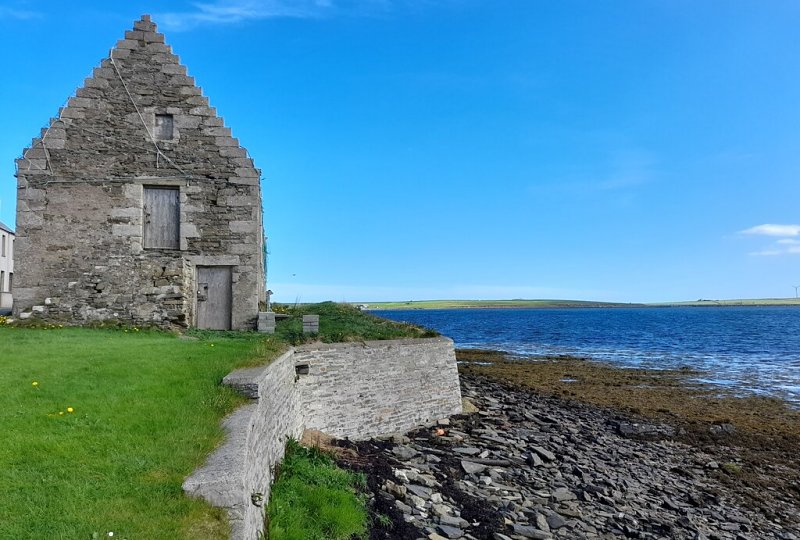
The old name of this parish is Ham and in common speech it is so called. Ham is however a frequent place name. In the Northern Counties it is the old common term for a haven. Therefore, to aid identification, there has arisen a custom of writing this local name Holm. The church of Ham was dedicated to St Nicholas. There was a chapel in the parish at Paplay.
Includes ministers, licentiates, assistants, readers, and clerks.
(1928: Fasti Ecclesiæ Scoticanæ, by Hew Scott, D. D.)
Parish registers turned over to the Registrar-General, as a result of the Registration of Births, Deaths, and Marriages (Scotland) Act of 1854. The letters B. D. and M. indicate Births (or Baptisms), Deaths (or Burials), and Marriages (or Proclamations of Banns) respectively. Numbers indicate separate volumes or books. Note: These records are by no means complete or without damage; consult the Detailed List of the Old Parochial Registers of Scotland (1872) to learn more about the condition of the records.
| OPR and RD Numbers | |||
|---|---|---|---|
| Date Range | Name | Number | Type |
| 1654-1854 | Holm and Paplay | 19 | OPR |
| 1855-1971 | Holm and Paplay | 19 | RD |
| 1972-2003 | Holm and Paplay | 148 | RD |
| 2009 | Orkney Islands, Holm and Paplay | 148 | RD |
| 2026 | Orkney Islands Council; Holm Community Council | ||
(2009: Parishes and Registration Districts of Scotland - Old and New, National Records of Scotland)
Local community councils (2026) are provided as a potential source of additional information for settlements within the original boundaries of the parish. (Source)
Statistics from informal and official censuses
Anderson, Davidson, Gorn, Laughton, Muir, Petrie, Shearer, Sinclair, Slater, Tait
Note: Names appearing in research materials, other than censuses. Simple names (First name, surname only) have been omitted unless they appear associated with large properties. All women's names, and men's names with occupations, military ranks, or peerage titles are included.
By the Reverend Mr John Anderson, Minister.
"There are a sufficient number of artists, to answer the demands of the place, viz. weavers, tailors, shoemakers, house and ship carpenters, smiths and coopers. There are none of the medical fraternity, - temperance rendering their aid unnecessary. There being no villages in this parish, the people are less corrupted in their morals, than those in towns and cities. They are patient, hardy and industrious, decent in their demeanour, rational in their religious sentiments, and regular in their attendance upon divine ordinances. No person has been criminally prosecuted or banished from this parish in the annals of time."
(This section contains excerpts, at times restructured or paraphrased, from an article appearing in Statistical Account of Scotland, Sir John Sinclair, 1791-1799)
Primary Sources:
Statistical Account of Scotland (1791-1799), Volume 5, p. 406
New Statistical Account of Scotland (1834-1845), Volume 15, Section III, p. 204
See Parish Page Sources for all source information and links.