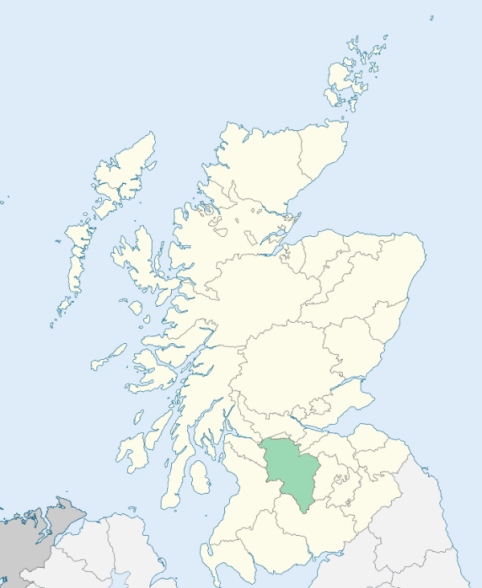
Carnwath is a parish on the north-east border of the upper ward of Lanarkshire. It is bounded on the north and north-east by Edinburghshire, and on the other sides by the parishes of Dunsyre, Libberton, Pettinain, and Carstairs. (1867: The Imperial Gazetteer of Scotland, by John Marius Wilson).
Auchengray, Braehead, Camend, Carnwath, Carstairs Junction, Forth, Heywood, Newbigging, Wilsontown,
Kersewell
PRE-REFORMATION GOVERNANCE:
POST-REFORMATION GOVERNANCE:
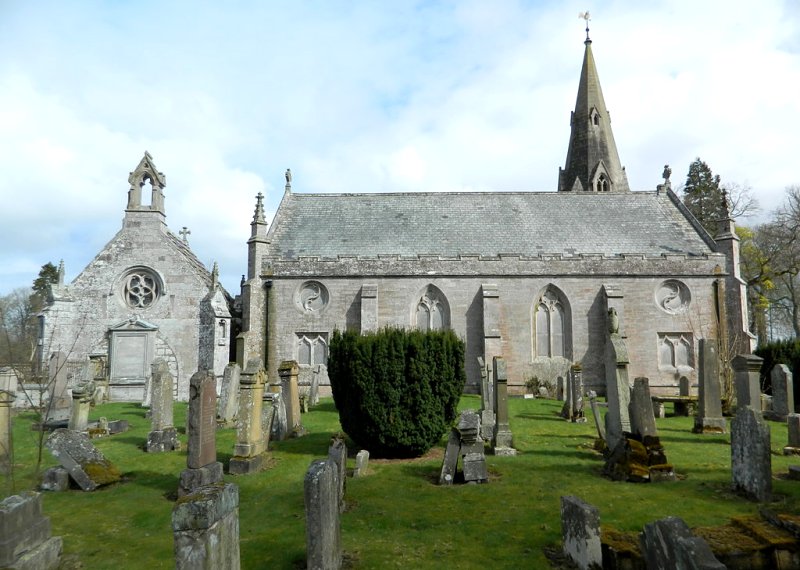
The church of Carnwath was dedicated to St Mary. It formed a prebend for the treasurer of the Chapter of Glasgow. In 1424 Sir Thomas Somerville of Carnwath rebuilt the church, and endowed it with a collegiate foundation. There was a chapel in the parish at Muirhall. Carnwath Church was rebuilt in 1798, and again in 1866. There are mission chapels within the bounds at Auchengray and Tarbrax.
Disjoined Quoad Sacra Parishes:
Forth. The parish of Forth was disjoined from Carnwath on 14 March 1881.
Haywood. The parish of Haywood was disjoined from Carnwath on 28 May 1897.
Includes ministers, licentiates, assistants, readers, and clerks.
Carnwath (QO)
Forth (QS)
Haywood (QS)
(1928: Fasti Ecclesiæ Scoticanæ, by Hew Scott, D. D.)
Parish registers turned over to the Registrar-General, as a result of the Registration of Births, Deaths, and Marriages (Scotland) Act of 1854. The letters B. D. and M. indicate Births (or Baptisms), Deaths (or Burials), and Marriages (or Proclamations of Banns) respectively. Numbers indicate separate volumes or books. Note: These records are by no means complete or without damage; consult the Detailed List of the Old Parochial Registers of Scotland (1872) to learn more about the condition of the records.
| OPR and RD Numbers | |||
|---|---|---|---|
| Date Range | Name | Number | Type |
| 1705-1854 | Carnwath | 632 | OPR |
| 1855-1883 | Carnwath | 632 | RD |
| 1884-1968 | Carnwath | 632-1 | RD |
| 1885-1924 | Forth | 632-2 | RD |
| 1898-1914 | Haywood | 632-3 | RD |
| 1915-1924 | Haywood and Tarbrax | 632-3 | RD |
| 1925-1968 | Forth and Haywood | 632-2 | RD |
| 1925-1968 | Tarbrax | 632-3 | RD |
| 1969-1971 | Forth | 646 | RD |
| 1972-2004 | Forth | 582 | RD |
| 2005-2008 | Forth, South Lanarkshire | 582 | RD |
| 2009 | South Lanarkshire, Forth | 582 | RD |
| 2026 | (Carnwath) South Lanarkshire Council; Carnwath Community Council | ||
| 2026 | (Forth) South Lanarkshire Council; Forth Community Council | ||
| 2026 | (Haywood) South Lanarkshire Counci; Forth Community Council | ||
| 2026 | (Tarbrax) South Lanarkshire Council; Tarbrax Community Council | ||
(2009: Parishes and Registration Districts of Scotland - Old and New, National Records of Scotland)
Local community councils (2026) are provided as a potential source of additional information for settlements within the original boundaries of the parish. (Source)
Statistics from informal and official censuses
Brown, Forrest, Hamilton, Prentice, Robertson, Russell, Smith, Watson, Weir, Wilson
Note: Names appearing in research materials, other than censuses. Simple names (First name, surname only) have been omitted unless they appear associated with large properties. All women's names, and men's names with occupations, military ranks, or peerage titles are included.
By the Reverend Mr George Mark.
"There are about 3000 in the parish, of these there are 1397 males, 1603 females, and of the whole number there are 432 below 8 years of age. The Dissenters of different denominations such as, Burghers, Antiburghers, of the Relief congregation, and Cameronians, amount to about one in ten of the whole number of parishioners.
The inhabitants of the village of Carnwath are greatly diminished within these 5 years. In 1793 the present incumbent made up an exact list of the number of souls, and found the whole to be no more than 500; so that in little more than 5 years the number of inhabitants had decreased about 70. Newbigging, another considerable village in the parish, is also diminished in the number of its inhabitants, though not to such a degree as Carnwath. The population of the parish would have suffered a very great decrease, had there not been a considerable influx of strangers to the Wilsontown works.
At Wilsontown, in the northern part of the parish, an extensive iron-foundry was some years ago erected, and workmen, of different descriptions employed, such as, furnace-men, forge-men, miners, colliers, &c. with their families, may be computed at upwards of 400. There are no manufactures carried on in this parish, Wilsontown excepted, but what are necessary for supplying the consumpt of the inhabitants. There are considerable numbers of weavers both in the village, and in different parts of the parish; but their sole employment is to weave the cloth wanted for the private use of their neighbours. There are a few stockings-weavers in the place who work for the Glasgow manufacturers."
(This section contains excerpts, at times restructured or paraphrased, from an article appearing in Statistical Account of Scotland, Sir John Sinclair, 1791-1799)
Primary Sources:
Statistical Account of Scotland (1791-1799), Volume 10, p. 326
New Statistical Account of Scotland (1834-1845), Volume 6, p. 76
See Parish Page Sources for all source information and links.