Dundrennan, Monktoun, Rerwick
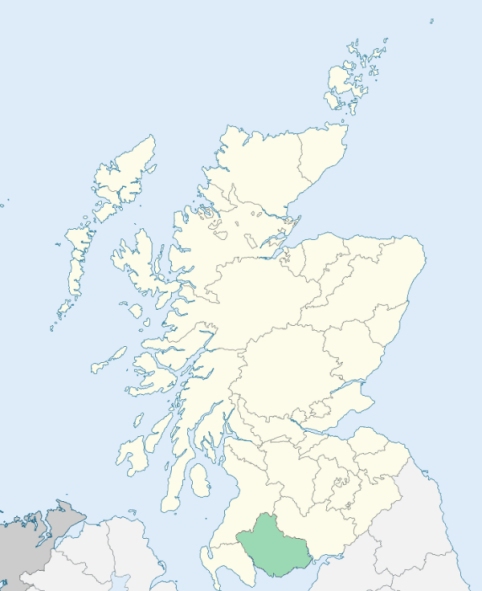
Rerrick is a parish on the coast of Kirkcudbrightshire. It is bounded by the Solway Firth, and by the parishes of Kirkcudbright, Kelton, and Buittle. (1867: The Imperial Gazetteer of Scotland, by John Marius Wilson).
Auchencairn, Barlocco, Burnfoot, Dundrennan, Kirkcarsel, Netherlaw, Portmary
Auchengool, Barlocco, Collin, Netherlaw, Portmary
PRE-REFORMATION GOVERNANCE:
POST-REFORMATION GOVERNANCE:
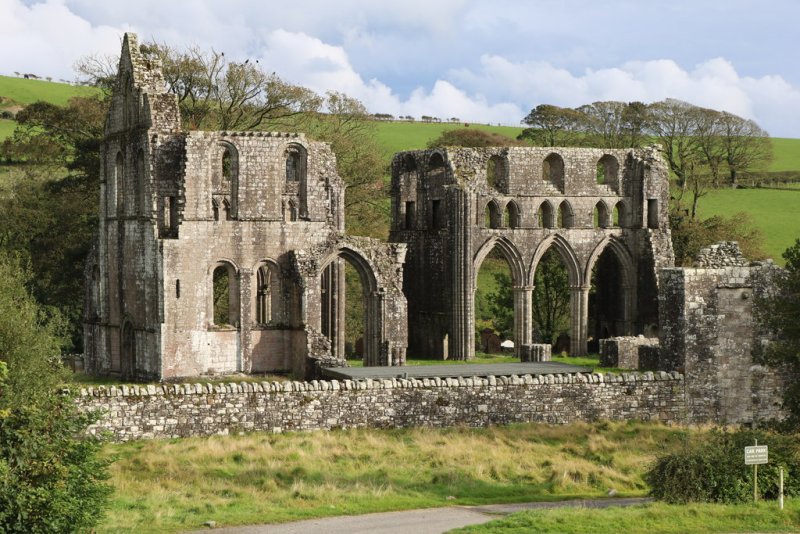
The church of this parish was dedicated to St Glastian, whose holy well is near. It belonged to the Abbey of Dundrennan, situated within the parish and close to the church. After the Reformation, part of the abbey building was made the parish church. When this ancient structure fell so far into decay as to be no longer suitable for the purpose, a new church was built adjoining the village of Rerrick, and very near the abbey. Until this change took place the parish was called Dundrennan, but since then it is generally termed Rerrick. Whie the church was within the abbey, both church and abbey were frequently spoken of as the Monktoun. The Cistercian Abbey of Dundrennan, dedicated to St Mary, was founded in 1142 by Fergus, Lord of Galloway.
Disjoined Quoad Sacra Parishes:
Auchencairn. A mission, served by licentiates, was started in the village of Auchencairn in 1847. Largely owing to the generosity of David Welsh of Collin and Miss Mary Culton of Auchenatony, a church was opened, 12 August 1855. The same donors were the chief contributors to the endowment of the parish, which was disjoined from Rerrick, and erected 11 June 1856.
Includes ministers, licentiates, assistants, readers, and clerks.
Rerrick (QO)
Auchencairn (QS)
(1928: Fasti Ecclesiæ Scoticanæ, by Hew Scott, D. D.)
Parish registers turned over to the Registrar-General, as a result of the Registration of Births, Deaths, and Marriages (Scotland) Act of 1854. The letters B. D. and M. indicate Births (or Baptisms), Deaths (or Burials), and Marriages (or Proclamations of Banns) respectively. Numbers indicate separate volumes or books. Note: These records are by no means complete or without damage; consult the Detailed List of the Old Parochial Registers of Scotland (1872) to learn more about the condition of the records.
| OPR and RD Numbers | |||
|---|---|---|---|
| Date Range | Name | Number | Type |
| 1736-1854 | Rerrick | 879 | OPR |
| 1855-1968 | Rerrick | 879 | RD |
| 2009 | Dumfries and Galloway, Dalbeattie | 864 | RD |
| 2026 | Dumfries and Galloway Council; Dundrennan Community Council | ||
(2009: Parishes and Registration Districts of Scotland - Old and New, National Records of Scotland)
Local community councils (2026) are provided as a potential source of additional information for settlements within the original boundaries of the parish. (Source)
Statistics from informal and official censuses
Brown, Clark, Currie, Gibson, Grierson, Henry, Jardine, Rae, Smith, Thomson
Note: Names appearing in research materials, other than censuses. Simple names (First name, surname only) have been omitted unless they appear associated with large properties. All women's names, and men's names with occupations, military ranks, or peerage titles are included.
By the Reverend Mr James Thomson.
"The present number of the inhabitants of the parish is 1050. There are six farms in the parish where about 30 souls live. There are two villages in the parish, one at the old Abbey, and another at the head of Heston Bay. There are families residing in several other places of the parish, which formerly were wild, and without an inhabitant. Tradesmen, mechanics, and all sorts of labourers are scarce.
The people here, till of late, lived what may be considered a kind of pastoral life; with that attention to agriculture only which was absolutely necessary to mere subsistence. But now they have taken a different turn, and assumed the appearance of activity, taste, opulence, and gaiety.
The farmers here, as well as through the country at large, are a set of civilized, conversible, and well informed men, far superior to those in the same station in many other places of the kingdom. Their line of business, being chiefly in the cattle branch, by which they are often led out into the world, and frequently into the company of gentlemen, who, here, are all either speculative or practical dealers in cattle, gives an illumination to their minds, and a polish to their manners, which those, in a mere grain country, are absolute strangers to.
All ranks, both in their appearance and manner of living, make a very different figure from their immediate forefathers. The people here, in general, are peaceable, humane, and hospitable; have a lively sense of decorum and character; and many of them give indubitable proofs, that their minds are deeply influenced with rational piety. As an evidence of their sobriety and temperance, there are not two men in the whole parish, who are so far enslaved by a habit of drinking, as not to provide for their families, notwithstanding the many temptations they are exposed to, from the variety and abundance of foreign spirits, illegally imported on the coast; and (what is perhaps the cause of a still more general debauchery), the cheapness of whisky."
(This section contains excerpts, at times restructured or paraphrased, from an article appearing in Statistical Account of Scotland, Sir John Sinclair, 1791-1799)
Primary Sources:
Statistical Account of Scotland (1791-1799), Volume 11, p. 45
New Statistical Account of Scotland (1834-1845), Volume 4, Section II, p. 354
See Parish Page Sources for all source information and links.