Newabbey, Kirkindeloch, Kinderloch, Lochkindeloch
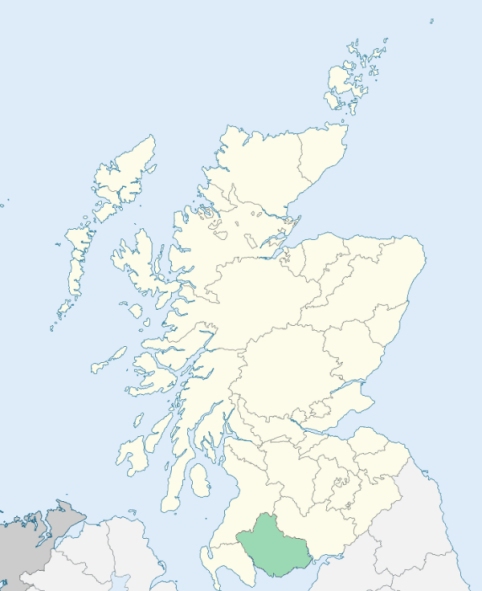
New Abbey is a parish on the eastern border of Kirkcudbrightshire. It is bounded on the east by the estuary of the Nith, expanding into the Solway Firth, and on other sides by the parishes of Kirkbean, Colvend, Kirkgunzeon, Lochrutton, and Troqueer. (1867: The Imperial Gazetteer of Scotland, by John Marius Wilson).
Beeswing, Craigieside, Drumbarn or Drumburn, Ingleston, Loch Arthur, New Abbey or Newabbey
PRE-REFORMATION GOVERNANCE:
POST-REFORMATION GOVERNANCE:
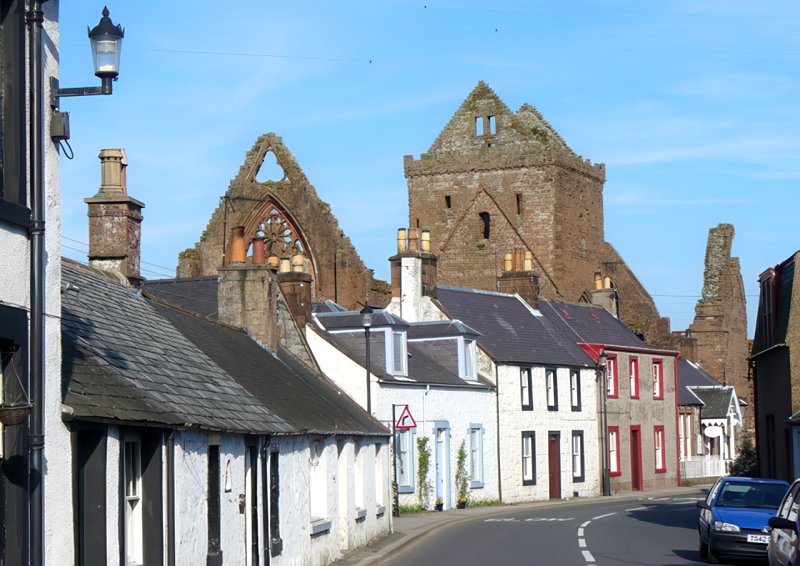
The ancient parish church, remains of which are still to be seen on an island in Loch Kinder, belonged to the Cistercian Abbey of Sweetheart. After this monastery had been suppressed, the parish church was removed from Loch Kinder to the refectory of the Abbey. This building continued to be used for worship until 1731, when a parish church was built. In 1877 a new church was built on a site a short distance to the south-west of the village. In the reign of Charles I part of the adjoining parish of Kirkconnel was annexed to New Abbey.
Includes ministers, licentiates, assistants, readers, and clerks.
(1928: Fasti Ecclesiæ Scoticanæ, by Hew Scott, D. D.)
Parish registers turned over to the Registrar-General, as a result of the Registration of Births, Deaths, and Marriages (Scotland) Act of 1854. The letters B. D. and M. indicate Births (or Baptisms), Deaths (or Burials), and Marriages (or Proclamations of Banns) respectively. Numbers indicate separate volumes or books. Note: These records are by no means complete or without damage; consult the Detailed List of the Old Parochial Registers of Scotland (1872) to learn more about the condition of the records.
| OPR and RD Numbers | |||
|---|---|---|---|
| Date Range | Name | Number | Type |
| 1691-1854 | New Abbey | 877 | OPR |
| 1855-1971 | New Abbey | 877 | RD |
| 1972-2001 | New Abbey | 861 | RD |
| 2009 | Dumfries and Galloway, Dumfries | 834 | RD |
| 2026 | Dumfries and Galloway Council; New Abbey Community Council | ||
(2009: Parishes and Registration Districts of Scotland - Old and New, National Records of Scotland)
Local community councils (2026) are provided as a potential source of additional information for settlements within the original boundaries of the parish. (Source)
Statistics from informal and official censuses
Allan, Carruthers, Dobie, Hunter, Ireland, Milligan, Newall, Smith, Thomson, Wilson
Note: Names appearing in research materials, other than censuses. Simple names (First name, surname only) have been omitted unless they appear associated with large properties. All women's names, and men's names with occupations, military ranks, or peerage titles are included.
By the Reverend Mr William Wright.
"The population in 1790 was 649, of whom 318 were males, 331 were females; 152 were below 10 years of age. Of these, there were 210 in the village of Newabbey, and 439 in the country. There were 16 to 20 Seceders and M'Millanites, 10 or 12 of the Relief congregation, and 27 individuals (6 families) of Roman Catholics. In the parish, there were 3 or 5 Irishmen and 2 Irishwomen.
There were 54 farmers, 5 sub-tenants, 89 heads of families among the farmers and sub-tenants, their children numbered 113; their servants, male and female, 91. There were 40 male-servants and 63 female servants in families (of all ranks and employments). There were 7 weavers, 1 smith, 4 shopkeepers, 3 shoemakers, 1 tanner, 1 cooper, 6 joiners, 8 masons, 4 tailors, 1 clogger, 1 baker, 1 tinker, 7 dry-stone dykers, and 15 journeymen and apprentices to the different trades.
There are only two alehouses in this parish, both in the village of Newabbey; through which a public road passes, and they are more frequented by strangers than by the parishioners, whose morals are in no degree hurt by them. Newabbey is a pleasant village of 50 houses, adjoining to the ruins of the abbey that gives name to it.
There has been little or no emigration from the parish within the last 20 years, excepting a very few ill-advised people, both married and single, who went to St John's, in North America, and, in the issue, had abundant reason to repent leaving their native country.
The inhabitants of Newabbey, are, in general, about the middle stature, of 5 feet 6 or 7 inches, healthy, active, and inured to labour. The genius and employment of the inhabitants turn to agriculture, in which they are very industrious and judicious. They are a sober, obliging, honest and intelligent set of people, hospitable to strangers, charitable to the poor, just in their dealings, and obliging to one another. They affect not elegance or expense in their dress or diet, but are cleanly and comfortable in both, and are truly a set of very worthy and respectable people. Very few incline to sea, and fewer still to the army. To the credit of the parish, it may be added, that not a single individual from it has been confined in jail, either on account of debt, or even suspicion of any criminal action, for these 20 years past."
(This section contains excerpts, at times restructured or paraphrased, from an article appearing in Statistical Account of Scotland, Sir John Sinclair, 1791-1799)
Primary Sources:
Statistical Account of Scotland (1791-1799), Volume 2, p. 125
New Statistical Account of Scotland (1834-1845), Volume 4, Section II, p. 244
See Parish Page Sources for all source information and links.