Moreham
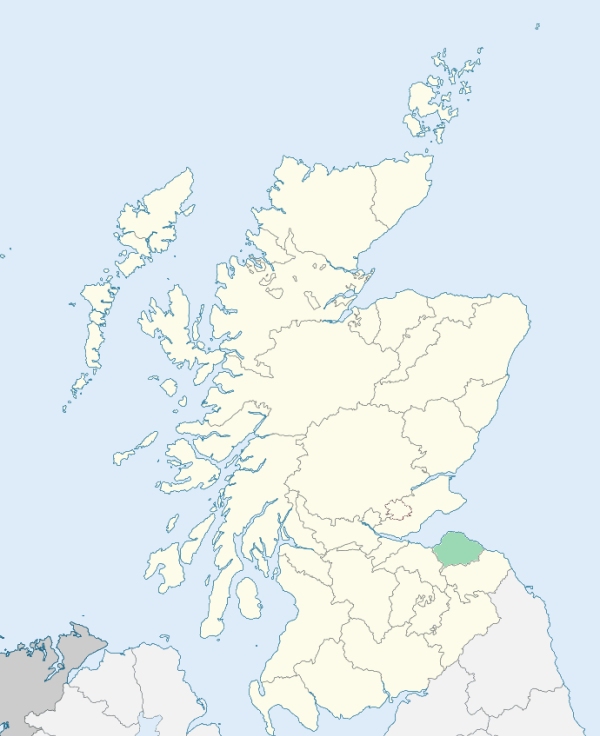
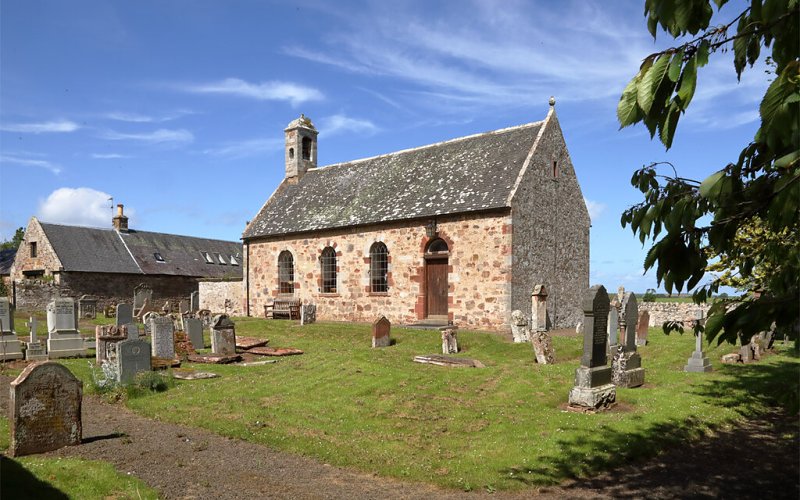
Morham is a parish in the centre of Haddingtonshire. It is bounded by Haddington, Prestonkirk, Whittingham, and Garvald. (1867: The Imperial Gazetteer of Scotland, by John Marius Wilson).
Morham
Rentonhall
PRE-REFORMATION GOVERNANCE:
POST-REFORMATION GOVERNANCE:
A proposal was made to unite the parish to Bara, but the heritors objected.
Includes ministers, licentiates, assistants, readers, and clerks.
(1928: Fasti Ecclesiæ Scoticanæ, by Hew Scott, D. D.)
Parish registers turned over to the Registrar-General, as a result of the Registration of Births, Deaths, and Marriages (Scotland) Act of 1854. The letters B. D. and M. indicate Births (or Baptisms), Deaths (or Burials), and Marriages (or Proclamations of Banns) respectively. Numbers indicate separate volumes or books. Note: These records are by no means complete or without damage; consult the Detailed List of the Old Parochial Registers of Scotland (1872) to learn more about the condition of the records.
| OPR and RD Numbers | |||
|---|---|---|---|
| Date Range | Name | Number | Type |
| 1712-1854 | Morham | 712 | OPR |
| 1855-1967 | Morham | 712 | RD |
| 2009 | East Lothian, Haddington | 722 | RD |
| 2026 | East Lothian Council; Garvald and Morham Community Council | ||
(2009: Parishes and Registration Districts of Scotland - Old and New, National Records of Scotland)
Local community councils (2026) are provided as a potential source of additional information for settlements within the original boundaries of the parish. (Source)
Statistics from informal and official censuses
Aitken, Amos, Clark, Dickson, Hamilton, Hunter, Purves, Robertson, Tait, Wilson
Note: Names appearing in research materials, other than censuses. Simple names (First name, surname only) have been omitted unless they appear associated with large properties. All women's names, and men's names with occupations, military ranks, or peerage titles are included.
By the Reverend Mr Patrick Carfrae.
"The parish of Morham is, perhaps, the smallest, both with respect to population, and extent, in Scotland. It has neither trade, nor manufactures of any kind, it has neither towns, nor villages. The population, as it stood in March 1791, was as follows: 32 under 8 years of age; 158 at and above that age; total 190. Agriculture is the prevailing, and almost the only occupation in the parish.
In general, it may be observed, that the inhabitants of this, like those of other country parishes, detached from great towns, the nurseries of licentiousness and dissipation, are sober and industrious: As a proof of which, it may be said, in their favour, that during the last 24 years, and probably for a period still more remote, that nothing has happened to call for the intervention of the civil magistrate."
(This section contains excerpts, at times restructured or paraphrased, from an article appearing in Statistical Account of Scotland, Sir John Sinclair, 1791-1799)
Primary Sources:
Statistical Account of Scotland (1791-1799), Volume 2, p. 333
New Statistical Account of Scotland (1834-1845), Volume 2, Section II, p. 261
See Parish Page Sources for all source information and links.