
Plaidwerx


Features: Scottish Parishes » Historic Shires » Forfarshire » Montrose

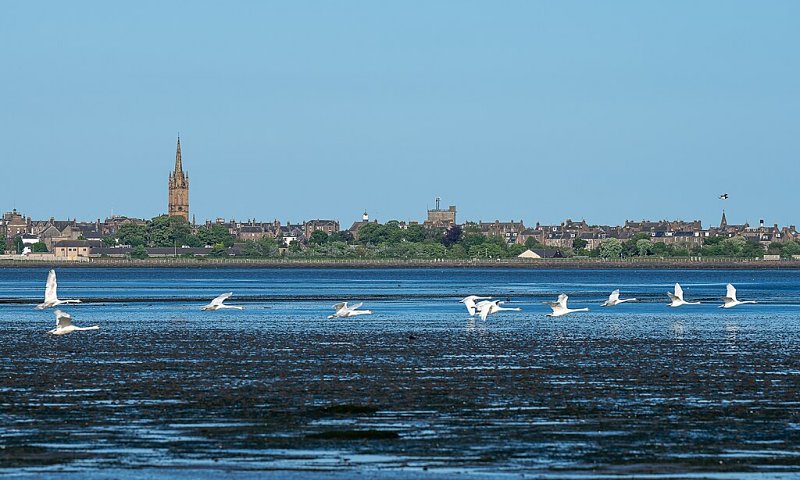
Montrose Basin, Angus by Thomas Andy Branson
Montrose Basin, Angus © 2021, Thomas Andy Branson

MONTROSE PARISH

TABLE OF CONTENTS


ALTERNATE NAMES AND SPELLING:

Salorch


LOCATION

Location Description:

Montrose is a parish at the north-east extremity of the maritime district of Forfarshire. It is bounded on the north by Logie-Pert and Kincardineshire, on the east by the German Ocean (North Sea), on the south by the South Esk, which divides it from Craig, and on the west by the Montrose Basin and by Dun. (1867: The Imperial Gazetteer of Scotland, by John Marius Wilson).

Shire, District, and Region Timeline:

  • Shire: Forfarshire (Before 1707)
  • County: Forfar (After 1707)
  • District: Forfar (Before 1928)
  • County: Angus (1928)
  • District: Angus (After 1928)
  • Landward District: Montrose (1930-1975)
  • Region: Tayside (1975-1996)
  • District: Angus (1975-1996)

Burghs:

  • Name: Montrose
  • Royal Burgh (c. 1124)
  • Small Burgh (1929)
  • Burgh system abolished (1975-1996)

Cities, Towns, Villages, and Hamlets:

Charleton, Ferryden, Hillside, Kinnaber, Montrose

Estates:

Rosemount


PARISH TIMELINE

PRE-REFORMATION GOVERNANCE:

  • Diocese: Brechin

POST-REFORMATION GOVERNANCE:

  • Synod: Angus and Mearns
  • Presbytery: Brechin

PAROCHIAL OVERVIEW:

The church of Montrose was dedicated to St John the Evangelist. The parish was a prebend of Brechin. There were within the bounds chapels of the Holy Rood and St John the Baptist. There were also Wells of the Holy Rood and St Fergus. St Mary's Convent of the Black Friars at Montrose was founded by Alan Durward in 1230. A Roodmas Fair was held in Montrose.

Disjoined Quoad Sacra Parishes:
Hillside. The parish of Hillside was disjoined from Montrose on 17 March 1879.
Melville. This parish was disjoined from Montrose on 27 June 1855. It was named Melville as a memorial of Andrew Melville, the Reformer, who was born at Baldovie in the parish of Craig.

CHURCH OF SCOTLAND CLERGY:

Includes ministers, licentiates, assistants, readers, and clerks.

Montrose (QO)

  • Thomas Anderson, 1566
  • John Beattie, 1566
  • John Craig, 1571
  • John Durie, 1585
  • George Gledstanes, 1586
  • Joshua Durie, 1594
  • Samuel Ramsay, 1601
  • John Oswald, 1626
  • Archibald Symmer, 1631
  • James Duncan, 1633
  • James Granger, 1635
  • William Forbes, 1640
  • Thomas Couper, 1642
  • Patrick Symson, 1643
  • John Rait, 1647
  • James Middleton, 1659
  • David Strachan, 1662
  • James Strachan, 1663
  • George Strachan, 1669
  • Alexander Mylne, 1672
  • David Lyell, 1673
  • John Milne, 1684
  • William Arrott, 1697
  • George Stephen, 1698
  • James Trail, 1709
  • John Couper, 1724
  • William Hopper, 1732
  • George Aitken, 1735
  • Charles Nisbet, 1764
  • Alexander Mollison, 1776
  • James Mitchell, 1786
  • James Esdaile, 1805
  • Joseph Paterson, 1811
  • Robert Smith, 1825
  • Colin M'Culloch, 1853
  • George Stewart Burns, 1863
  • Malcolm Campbell Taylor, 1865
  • Donald MacLeod, 1867
  • William Ewan Bull Gunn, 1870
  • John Methven Robertson, 1871
  • George Brown, 1873
  • Robert Duncan, 1874
  • William Workman, 1875
  • Hugh Cameron, 1882
  • James Niblock-Stuart, 1894
  • Hugh Callan, 1899
  • John Stewart Robertson, 1918

Hillside (QS)

  • Alexander Milne, 1870
  • Thomas Mitchell, 1872
  • Michael Cunningham Wilson, 1907

Melville (QS)

  • Robert Smith, 1852
  • James Dodds, 1856
  • David Skinner Maxwell, 1858
  • William Anderson, 1864
  • William John Steven, 1867
  • Thomas Burns, 1877
  • John Archibald St Clair (Sinclair), 1882
  • William Taylor, 1891
  • Julius M'Callum, 1917

(1928: Fasti Ecclesiæ Scoticanæ, by Hew Scott, D. D.)


RECORDS

Parochial Registers:

Parish registers turned over to the Registrar-General, as a result of the Registration of Births, Deaths, and Marriages (Scotland) Act of 1854. The letters B. D. and M. indicate Births (or Baptisms), Deaths (or Burials), and Marriages (or Proclamations of Banns) respectively. Numbers indicate separate volumes or books. Note: These records are by no means complete or without damage; consult the Detailed List of the Old Parochial Registers of Scotland (1872) to learn more about the condition of the records.

  • (1) B. 1615-74
  • (2) B. 1670-96
  • (3) B. 1697-1732
  • (4) B. 1733-82
  • (5) B. 1782-1819
  • (6) M. 1633-1755
  • (7) M. 1756-1819
  • (8) D. 1670-1766
  • (9) D. 1767-1819
  • (10) B. 1820-54
  • (11) M. 1820-54
  • (12) D. 1820-54

OPR and RD Numbers
Date RangeNameNumberType
1615-1854Montrose312OPR
1855-1856Montrose Burgh312-1RD
1855-1856Montrose Landward312-2RD
1857-1960Montrose312RD
1960-1962Montrose, Dun and Maryton312RD
1963-1971Montrose312RD
1972-2004Montrose367RD
2009Angus, Montrose367RD
2026Angus Council; Royal Burgh of Montrose Community Council

(2009: Parishes and Registration Districts of Scotland - Old and New, National Records of Scotland)

Local community councils (2026) are provided as a potential source of additional information for settlements within the original boundaries of the parish. (Source)

Population:

Statistics from informal and official censuses

  • 1755: 4,150
  • 1790: 6,194
  • 1801: 7,974
  • 1811: 8,955
  • 1821: 10,338
  • 1831: 12,055
  • 1841: 15,096
  • 1861: 15,668
  • 1881: 16,402
  • 1901: 14,027
  • 1911: 12,669

RESIDENTS


Common Surnames:

Clark, Davidson, Duncan, Middleton, Milne, Mitchell, Scott, Smith, Strachan, Thomson

Land-owners, teachers, and other professionals:

Note: Names appearing in research materials, other than censuses. Simple names (First name, surname only) have been omitted unless they appear associated with large properties. All women's names, and men's names with occupations, military ranks, or peerage titles are included.

  • Thomas ANDERSON, Schoolmaster (circa 1566)
  • George Fullerton CARNEGY, of Charlton and Kinaber
  • James CRUICKSHANK, of Newbigging
  • John DUNCAN, of Rosemount
  • George Robertson SCOTT, of Hedderwick
  • Alexander Renny TAILYOUR, of Borrowfield and Newmanswalls

Other residents:

By the Reverend Mr Alexander Molleson.
"The following were extracted from the minister's parish rolls, which are made up with all possible accuracy: In 1790, number of souls in town, 5194; in the country, 1000; total 6194. When it is considered, that the manufacture of canvas, since the peace of 1783, has been, in a great measure, given up, and that trade, since that time, has not been very brisk in Montrose, it will be acknowledged, that the population in this town, has, of late, increased more than might have been expected. Gloomy speculatists predicted, at the conclusion of the American war, that many would emigrate from this corner. A very few did emigrate, and these few have given no encouragement to others to follow their example."
(This section contains excerpts, at times restructured or paraphrased, from an article appearing in Statistical Account of Scotland, Sir John Sinclair, 1791-1799)


NOTES:

Primary Sources:
Statistical Account of Scotland (1791-1799), Volume 5, p. 23
New Statistical Account of Scotland (1834-1845), Volume 11, Section I, p. 271

See Parish Page Sources for all source information and links.
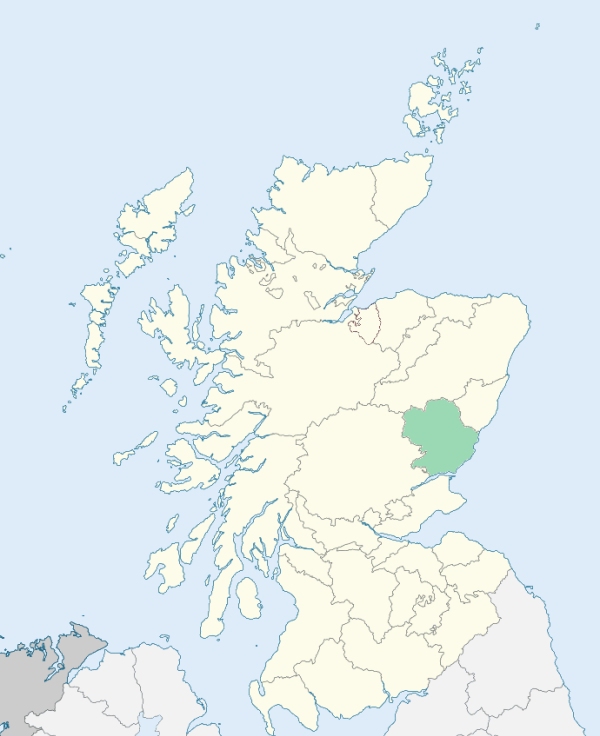

Photo credits: (Featured) Montrose Basin, Angus, © 2021 Thomas Andy Branson, used under Creative Commons License CC BY-SA 4.0, (Related Resources) Forfarshire Locator Map, © 2025, Elianfoo, used under Creative Commons License CC BY-SA 4.0.
Related Resources
Map of Scotland with Forfarshire highlighted
Location of Forfarshire
See more maps at Wikimedia Commons
Glossary
  • Burghs:
  • Royal - Towns on royal lands
  • Regality - Towns granted to noblemen/landowners
  • Barony - Towns granted to tenant-in-chief (laird)
  • Police - Towns with elected officials
  • Small - Population under 20,000
  • Large - Population over 20,000
  •  
  • Chapel-of-Ease: Small church for those living far from the main church
  • Collegiate church: See What is a Collegiate Church?
  • Commune kirk: Owned by a larger church
  • Court of Teinds: Controlled funds for support of clergy
  •  
  • Friars:
  • Black - Dominican
  • Grey - Franciscan
  • Red - Trinitarian
  • White - Carmelite
  •  
  • Iron chapel: Building made of corrugated galvanized iron
  •  
  • Landward District: Rural part of a district
  •  
  • Mensal: Source of income to support clergy member (Roman Catholic)
  •  
  • OPR: Old Parochial Register
  •  
  • Pre-Reformation: Before 1560
  • Prebend: Source of income to support a clergy member
  •  
  • QO: Quoad Omnia - Civil and church control
  • QS: Quoad Sacra - Church control only
  •  
  • RD: Registration District - Civil control
  •  
  • Tryst: Large-scale market or fair, particularly for livestock
  •