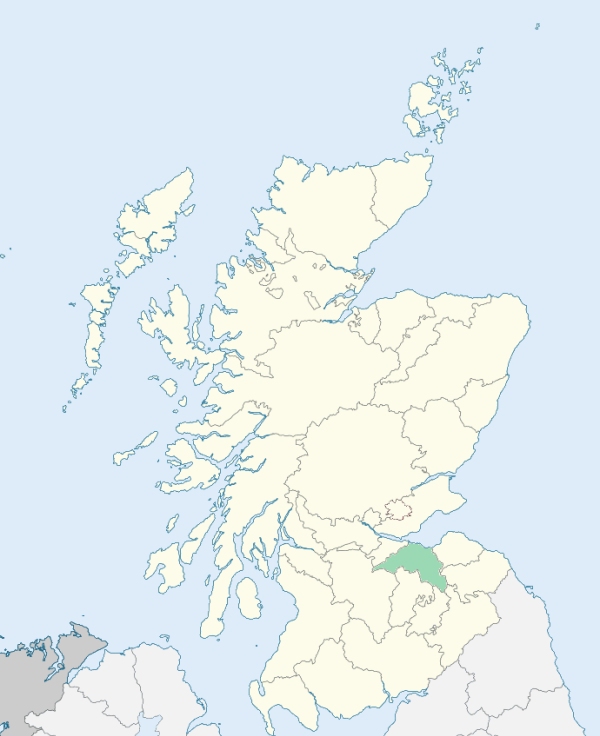
North Leith - North Leith is a parish bounded on the north by the Firth of Forth, on the east and south-east by the water of Leith, which divides it from the parish of South Leith, and on the south and west by the parish of St Cuthberts. (1867: The Imperial Gazetteer of Scotland, by John Marius Wilson).
South Leith - South Leith is a parish bounded on the north-east by the Firth of Forth, on the south by Duddingston and Canongate, and on the west by some parishes of the royalty of Edinburgh, and by St Cuthberts and North Leith. (1867: The Imperial Gazetteer of Scotland, by John Marius Wilson).
Bonnington, Leith, Newhaven, Restalrig
Craigentinny, Nether Gogar
PRE-REFORMATION GOVERNANCE:
POST-REFORMATION GOVERNANCE:
North Leith. Formerly the Chapel of St Ninian, built July 1493; erected by Parliament 9 July 1606. New church erected 1815-16, after sale of old church, which had become too small; opened 1 September 1816. Halls erected in 1866.
South Leith, previously Restalrig. Around 1560, the first General Assembly of the Reformed Kirk of Scotland found "it was found reasonable and expedient that the parishioners of Restalrig should repair to the Kirk of Leith, and that the Kirk of Restalrig should be razed and utterly destroyed as a monument of idolatry." On 28 June 1687 a meeting-house was established in Sheriffbrae; a minister was settled in 1688.
Disjoined Quoad Sacra Parishes:
Newhaven. Church opened 30 October 1836. Disjoined from St Cuthbert's and erected into a parish quoad sacra, 20 July 1859.
Restalrig. Prior to the Reformation Restalrig was a collegiate parish church, founded by King James II, with a dean and nine prebendaries. It was a noted place of pilgrimage. After the Reformation the church fell into decay, but in recent times it was partially restored.
St John's. Opened as a Chapel-of-Ease in parish of South Leith, 12 December 1773, and declared a parish quoad sacra, 31 May 1834. From 1843-46 it was held by the Free Church, when the Civil Courts declared it to belong to the Church of Scotland. Erected by the Court of Teinds, 19 July 1869.
St Paul's. Erected into a parish quoad sacra, 23 January 1893.
St Thomas's. Erected from South Leith, and endowed by Sir John Gladstone of Fasque, Bart. Declared a parish quoad sacra, 27 May 1839. Built in 1840, opened 6 May 1841, and erected by the Court of Teinds, 8 December 1847.
Includes ministers, licentiates, assistants, readers, and clerks.
North Leith (QO)
South Leith (QO)
Newhaven (QS)
Restalrig (QS)
St John's (QS)
St Paul's (QS)
St Thomas's (QS)
(1928: Fasti Ecclesiæ Scoticanæ, by Hew Scott, D. D.)
Parish registers turned over to the Registrar-General, as a result of the Registration of Births, Deaths, and Marriages (Scotland) Act of 1854. The letters B. D. and M. indicate Births (or Baptisms), Deaths (or Burials), and Marriages (or Proclamations of Banns) respectively. Numbers indicate separate volumes or books. Note: These records are by no means complete or without damage; consult the Detailed List of the Old Parochial Registers of Scotland (1872) to learn more about the condition of the records.
| OPR and RD Numbers | |||
|---|---|---|---|
| Date Range | Name | Number | Type |
| 1588-1854 | South Leith | 692-2 | OPR |
| 1605-1854 | North Leith | 691-1 | OPR |
| 1855-1920 | North Leith | 692-1 | RD |
| 1855-1920 | South Leith | 692-2 | RD |
| 1921-1929 | Leith North (City of Edinburgh) | 685-10 | RD |
| 1921-1929 | Leith South (City of Edinburgh) | 685-11 | RD |
| 1930-1935 | Leith North | 685-9 | RD |
| 1930-1935 | Leith South | 685-10 | RD |
| 1936-1938 | Leith | 685-9 | RD |
| 1939-1971 | Leith | 685-8 | RD |
| 1972-2002 | Leith | 732 | RD |
| 2003-2006 | Edinburgh, Leith | 732 | RD |
| 2007-2008 | Leith, City of Edinburgh | 732 | RD |
| 2009 | City of Edinburgh, Leith | 732 | RD |
| 2026 | City of Edinburgh Council; Leith Harbour and Newhaven Community Council Leith Links Community Council Leith Central Community Council | ||
(2009: Parishes and Registration Districts of Scotland - Old and New, National Records of Scotland)
Local community councils (2026) are provided as a potential source of additional information for settlements within the original boundaries of the parish. (Source)
Statistics from informal and official censuses
North Leith: Anderson, Brown, Carnie, Johnston, Liston, Robertson, Scott, Smith, Thomson, Wilson
South Leith: Anderson, Brown, Campbell, Henderson, Robertson, Scott, Smith, Stewart, Thomson, Wilson
Note: Names appearing in research materials, other than censuses. Simple names (First name, surname only) have been omitted unless they appear associated with large properties. All women's names, and men's names with occupations, military ranks, or peerage titles are included.
North Leith.
By David Johnstone, D. D..
"For 25 years past, the incumbent has taken up a roll of the inhabitants every year, in course of ministerial visitation, and finds the souls amount at present to about 2400. This year, 1791, the number of families is 642, and the individuals are 2409, of which 1350 are females, and 1059 are males. About 12 months ago, 100 families were dispossessed, and their houses pulled down to open a passage to the new bridge; but the people seem to have got lodgings in the town, as the numbers are not diminished. Two large houses are erected in place of the old ones, which will accommodate 20 families. 1800 of the parishioners live in North Leith, Coalhill and Citadel; the other 600 reside in the fishing town of Newhaven and in detached houses in the country.
The principal manufacture in the place is ship-building; there are 5 master-builders, who employ about 152 carpenters. The great bulk of the inhabitants are carpenters, sailors, and fishermen; there are a few anchor smiths, and weavers."
South Leith.
By the ministers and elders of six parishes of the city of Edinburgh (the High Church, Old Church, Little Church, Lady Yester's, Old-Grayfriars, and St Andrew's).
"In this parish are 5142 heads of families, 2439 male children, 2432 female children, 484 male servants, 935 female servants, in all 11432 individuals, and 2893 families. Of these, 423 individuals reside in Restalrig, 447 in Abbeyhill, and 1497 in Calton of Edinburgh."
(This section contains excerpts, at times restructured or paraphrased, from an article appearing in Statistical Account of Scotland, Sir John Sinclair, 1791-1799)
Primary Sources:
Statistical Account of Scotland (1791-1799), Volume 6, p. 559
New Statistical Account of Scotland (1834-1845), Volume 1, p. 760
See Parish Page Sources for all source information and links.