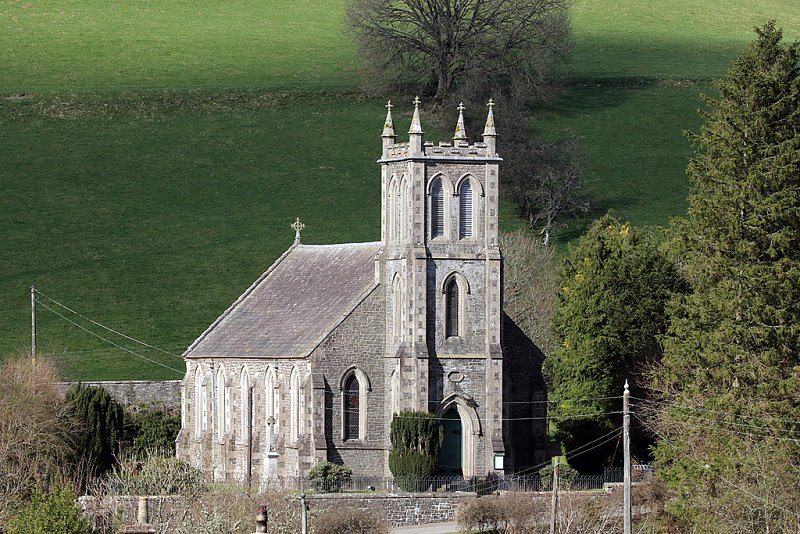
Westerker
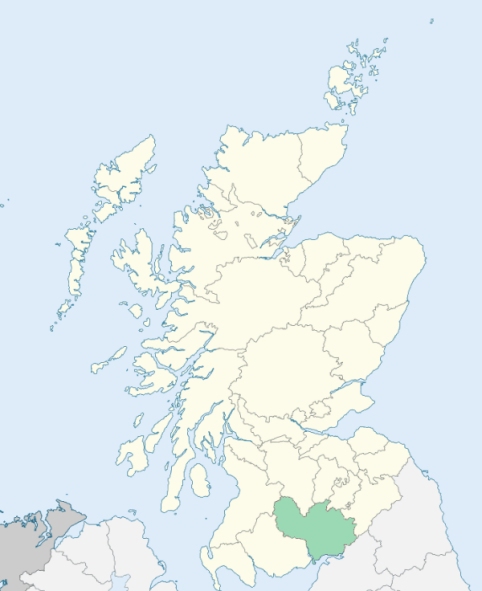
Westerkirk is a parish in Eskdale, Dumfriesshire. It is bounded on the north by Roxburghshire, and on other sides by the parishes of Ewes, Langholm, Tundergarth, Hutton and Corrie, and Eskdalemuir. (1867: The Imperial Gazetteer of Scotland, by John Marius Wilson).
Bentpath, Kirktonhill, Knock
Glendinning
PRE-REFORMATION GOVERNANCE:
POST-REFORMATION GOVERNANCE:
The church belonged to the Abbey of Melrose. In 1391 at Boykin, in the parish, Adam of Glendonyng founded a chapel of St Martin.
Includes ministers, licentiates, assistants, readers, and clerks.
(1928: Fasti Ecclesiæ Scoticanæ, by Hew Scott, D. D.)
Parish registers turned over to the Registrar-General, as a result of the Registration of Births, Deaths, and Marriages (Scotland) Act of 1854. The letters B. D. and M. indicate Births (or Baptisms), Deaths (or Burials), and Marriages (or Proclamations of Banns) respectively. Numbers indicate separate volumes or books. Note: These records are by no means complete or without damage; consult the Detailed List of the Old Parochial Registers of Scotland (1872) to learn more about the condition of the records.
| OPR and RD Numbers | |||
|---|---|---|---|
| Date Range | Name | Number | Type |
| 1693-1854 | Westerkirk | 854 | OPR |
| 1855-1968 | Westerkirk | 854 | RD |
| 2009 | Dumfries and Galloway, Langholm | 838 | RD |
| 2026 | Dumfries & Galloway Council; Langholm, Ewes and Westerkirk Community Council | ||
(2009: Parishes and Registration Districts of Scotland - Old and New, National Records of Scotland)
Local community councils (2026) are provided as a potential source of additional information for settlements within the original boundaries of the parish. (Source)
Statistics from informal and official censuses
Anderson, Armstrong, Bell, Hastie, Irving, Johnstone, Knox, Little, Pringle, Thomson
Note: Names appearing in research materials, other than censuses. Simple names (First name, surname only) have been omitted unless they appear associated with large properties. All women's names, and men's names with occupations, military ranks, or peerage titles are included.
By the Reverend Mr William Little, Minister.
"The number of souls in 1793 was 655, of whom 313 were males, 342 were females, and 140 were under 10 years of age. The Dissenters, of all denominations, do not amount to more than 10.
There are 27 farms, besides what one of the heritors retains in his own possession, and what is rented by a miller and a smith, who possess each a few acres. The professions are 2 shopkeepers, 1 miller, 1 baker, 1 cooper, 2 shoemakers, 3 tailors, 3 smiths, 7 carpenters, and 13 weavers. In the above, journeymen and apprentices are included, and they all find sufficient employment in working for the inhabitants, except the weavers, who sometimes make cloth for people who do not reside in the parish.
In the year 1788, metal was discovered; but, upon trial, it was found to be antimony. There are 40 people, exclusive of an overseer, employed at present in the mines, and in preparing antimony. The company has built a village, named James' Town, in which every miner is provided with a comfortable lodging for himself and his family, at a moderate rent. The miners are at work only 6 hours a-day; and, to encourage them to read, a present was, some months ago, made them in books, by the company. The company has built a schoolhouse for the purpose of having their children educated.
The inhabitants of Westerkirk have long been remarked for decency and regularity of conduct. They are, in general, religious without superstition, and charitable without ostentation, and temperate almost without exception. None of the poor are reduced to the necessity of begging bread."
(This section contains excerpts, at times restructured or paraphrased, from an article appearing in Statistical Account of Scotland, Sir John Sinclair, 1791-1799)
Primary Sources:
Statistical Account of Scotland (1791-1799), Volume 11, p. 514
New Statistical Account of Scotland (1834-1845), Volume 4, Section I, p. 429
See Parish Page Sources for all source information and links.