Mordington and Lamberton
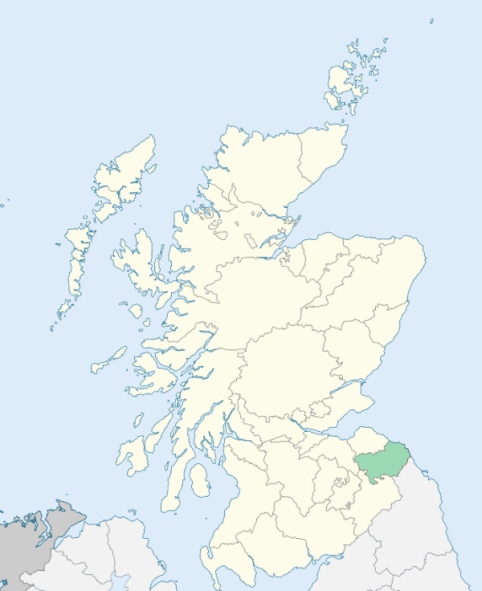
Mordington is a parish in the extreme east of the coast of Berwickshire. The parish is bounded by the German Ocean (North Sea), the Liberties of Berwick, and the parishes of Hutton, Foulden, and Ayton. (1867: The Imperial Gazetteer of Scotland, by John Marius Wilson).
Lamberton, Mordington, Ross
Edington
PRE-REFORMATION GOVERNANCE:
POST-REFORMATION GOVERNANCE:
The parishes of Mordington and Lamberton were united in 1650.
Mordington. Longformacus was conjoined with Mordington for a time, but the two became separate parishes in 1666. The ancient church is now represented by a burial vault in a disused churchyard near Mordington House. A new church was built in 1869.
Lamberton. Originally a chapel of Coldingham, Lamberton was united to Foulden in 1616, to Ayton in 1627, and finally to Mordington, 8 February 1650. The church was dedicated to St Lambert. Here in 1502 the Princess Margaret, daughter of Henry VIII, was received by the Scottish Commissioners on her entry into Scotland previous to her marriage to James IV.
Includes ministers, licentiates, assistants, readers, and clerks.
(1928: Fasti Ecclesiæ Scoticanæ, by Hew Scott, D. D.)
Parish registers turned over to the Registrar-General, as a result of the Registration of Births, Deaths, and Marriages (Scotland) Act of 1854. The letters B. D. and M. indicate Births (or Baptisms), Deaths (or Burials), and Marriages (or Proclamations of Banns) respectively. Numbers indicate separate volumes or books. Note: These records are by no means complete or without damage; consult the Detailed List of the Old Parochial Registers of Scotland (1872) to learn more about the condition of the records.
| OPR and RD Numbers | |||
|---|---|---|---|
| Date Range | Name | Number | Type |
| 1721-1854 | Mordington | 752 | OPR |
| 1855-1966 | Mordington | 752 | RD |
| 2009 | Scottish Borders, Eyemouth | 782 | RD |
| 2026 | Scottish Borders Council; Foulden, Mordington and Lamberton Community Council | ||
(2009: Parishes and Registration Districts of Scotland - Old and New, National Records of Scotland)
Local community councils (2026) are provided as a potential source of additional information for settlements within the original boundaries of the parish. (Source)
Statistics from informal and official censuses
Allan, Anderson, Cockburn, Dickson, Edgar, Hunter, Johnston, Shearer, Skeldon, Wightman
Note: Names appearing in research materials, other than censuses. Simple names (First name, surname only) have been omitted unless they appear associated with large properties. All women's names, and men's names with occupations, military ranks, or peerage titles are included.
By the Reverend Mr George Drummond, Minister.
"The number of souls at present in the parish is 335. Of these 148 are males, 187 females. The number of families is exactly 62.
The chief employment of the inhabitants is husbandry. There are a few who follow such mechanical occupations, as are requisite for the accommodation of the inhabitants; such as joiners and smiths, for manufacturing the utensils of husbandry, tailors, weavers, &c. There is one fishing boat, which gives employment to 5 fishermen. On the estate of Edington, besides a mill for other kinds of grain, there are two mills for grinding wheat.
Till of late, there were two manufactures carried on within the bounds of the parish, though none of them on an extensive scale, the one a starch, and the other a soap manufacture. They are both, however, given up, at least for the present.
The inhabitants of this parish are industrious, frugal and orderly, submissive to the laws, and attentive to the wish of their superiors. No inhabitant has been convicted of a crime before a Court of Justice, in the memory of man.
(This section contains excerpts, at times restructured or paraphrased, from an article appearing in Statistical Account of Scotland, Sir John Sinclair, 1791-1799)
Primary Sources:
Statistical Account of Scotland (1791-1799), Volume 15, p. 173
New Statistical Account of Scotland (1834-1845), Volume 2, Section III, p. 337
See Parish Page Sources for all source information and links.