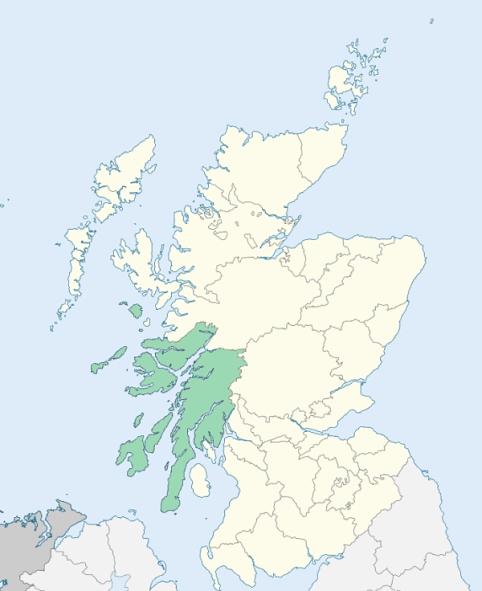
Lochgoilhead and Kilmorich is a united parish in the north of Cowal, Argyleshire. It is bounded by Perthshire and Dumbartonshire, by Loch Long and Loch Fyne, and by the parishes of Kilmun, Strachur, Inverary, and Glenorchy. (1867: The Imperial Gazetteer of Scotland, by John Marius Wilson).
Cairndow, Carrick Castle, Clachan, Lochgoilhead
Ardkinglass, Drimsynie
PRE-REFORMATION GOVERNANCE:
POST-REFORMATION GOVERNANCE:
The parishes of Lochgoilhead and Kilmorich were united before the sixteenth century.
Lochgoilhead. Lochgoilhead was a prebend of Lismore belonging to the Archdeacon of Argyll. There is a mission chapel in this parish at Carrick Castle.
Kilmorich. The church of Kilmorich belonged to the Abbey of Inchaffray. It was dedicated to St Muireach. There is a mission chapel within the bounds at Cairndow.
Disjoined Quoad Sacra Parishes:
Ardentinny. Ardentinny Church was built in 1838. The parish of Ardentinny was disjoined from Dunoon, Kilmun, and Lochgoilhead on 6 July 1874.
Includes ministers, licentiates, assistants, readers, and clerks.
Lochgoilhead and Kilmorich (QO)
Ardentinny (QS)
(1928: Fasti Ecclesiæ Scoticanæ, by Hew Scott, D. D.)
Parish registers turned over to the Registrar-General, as a result of the Registration of Births, Deaths, and Marriages (Scotland) Act of 1854. The letters B. D. and M. indicate Births (or Baptisms), Deaths (or Burials), and Marriages (or Proclamations of Banns) respectively. Numbers indicate separate volumes or books. Note: These records are by no means complete or without damage; consult the Detailed List of the Old Parochial Registers of Scotland (1872) to learn more about the condition of the records.
| OPR and RD Numbers | |||
|---|---|---|---|
| Date Range | Name | Number | Type |
| 1692-1854 | Lochgoilhead and Kilmorich | 527 | OPR |
| 1855-1860 | Lochgoilhead and Kilmorich | 527 | RD |
| 1861-1969 | Lochgoilhead | 527-1 | RD |
| 1861-1969 | Kilmorich | 527-2 | RD |
| 1970-1971 | Lochgoilhead | 527 | RD |
| 1972-2006 | Lochgoilhead | 529 | RD |
| 2007-2009 | Argyll and Bute, Lochgoilhead | 529 | RD |
| 2026 | Argyll and Bute Council; Lochgoil Community Council | ||
(2009: Parishes and Registration Districts of Scotland - Old and New, National Records of Scotland)
Local community councils (2026) are provided as a potential source of additional information for settlements within the original boundaries of the parish. (Source)
Statistics from informal and official censuses
Lochgoilhead: Blair, Cameron, Campbell, Crawford, Ferguson, Jackson, Morrison, Monroe, Stewart, Thomson
Kilmorich: Black, Brodie, Grant, Jones, Livingstone, Luke, Menzies, Morrison, Murray, Reid
Note: Names appearing in research materials, other than censuses. Simple names (First name, surname only) have been omitted unless they appear associated with large properties. All women's names, and men's names with occupations, military ranks, or peerage titles are included.
By the Reverend Mr Dugal M'Dougal.
"From a survey of the parish, which was finished the 24th day of March 1791, it appears, that the number of inhabitants at that time was 1012. Of the great number of people who have been deprived of their farms in this parish, for 30 years past, few or none have settled out of the kingdom; they generally went to sea, or to the populous towns upon the Clyde. The greatest part of them betook themselves to a seafaring life, and there are many vessels belonging to Clyde, and to other places in the West India, American, and coasting trades, and in the fisheries, at present commanded and partly navigated, by men who were born in this country, and the greatest number of whom would have remained in the same state of indolence and insignificance with their ancestors, if they had not been obliged to go in search of better fortunes.
Such of the people as went to towns, and had no stock to lay out in trade, found employment, partly as day-labourers, porters, barrowmen, boatmen, &c. but the greatest number of those who left the country for 15 years past, support themselves by working in bleachfields, printfields, cotton mills, and many other ranches of manufactures, in which much previous instruction or preparation is not required.
The tacksmen of this parish are in general very respectable, both with regard to information and morals; the tenants are sober and industrious; the cottagers are rather indolent, especially after they are successful in the herring fishing; and too many of them spend their time, from the beginning of January to the beginning of April, without any employment, but preparing their nets for the ensuing season. It is much to be wished, that the cottagers would carry on the white fishing, during these months of the year, in which so many of them are at present idle. The people of this parish have long been remarkable for their strict honesty, the regularity of their manners, their humanity, and their courtesy to strangers.
The Gaelic language is most generally spoken in this district. The greater number of the people speak English, but not in general with so much ease and fluency as they speak Gaelic. Many of the old people understand no English."
(This section contains excerpts, at times restructured or paraphrased, from an article appearing in Statistical Account of Scotland, Sir John Sinclair, 1791-1799)
Primary Sources:
Statistical Account of Scotland (1791-1799), Volume 3, p. 160
New Statistical Account of Scotland (1834-1845), Volume 7, Section II, p. 701
See Parish Page Sources for all source information and links.