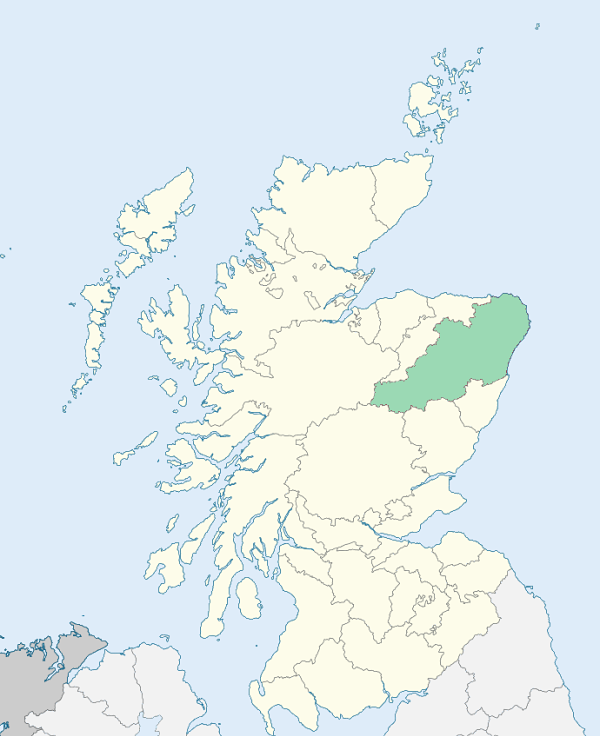
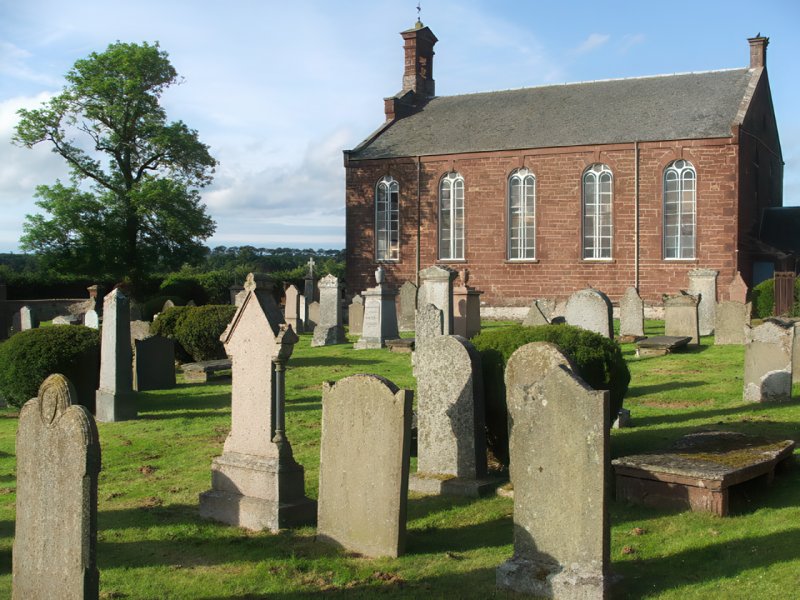
Monquhitter is a parish in the Turriff district of Aberdeenshire. It is bounded by King Edward, New Deer, Methlick, Fyvie, and Turriff. (1867: The Imperial Gazetteer of Scotland, by John Marius Wilson).
Cuminestown, Garmond
Auchry
PRE-REFORMATION GOVERNANCE:
POST-REFORMATION GOVERNANCE:
The parish of Monquhitter was disjoined from Turriff in 1649.
Disjoined Quoad Sacra Parishes:
Millbrex. A chapel was built at Millbrex in 1833. The parish was disjoined from Fyvie and Monquhitter, 14 July 1858.
Includes ministers, licentiates, assistants, readers, and clerks.
Monquhitter (QO)
Millbrex (QS)
(1928: Fasti Ecclesiæ Scoticanæ, by Hew Scott, D. D.)
Parish registers turned over to the Registrar-General, as a result of the Registration of Births, Deaths, and Marriages (Scotland) Act of 1854. The letters B. D. and M. indicate Births (or Baptisms), Deaths (or Burials), and Marriages (or Proclamations of Banns) respectively. Numbers indicate separate volumes or books. Note: These records are by no means complete or without damage; consult the Detailed List of the Old Parochial Registers of Scotland (1872) to learn more about the condition of the records.
| OPR and RD Numbers | |||
|---|---|---|---|
| Date Range | Name | Number | Type |
| 1670-1854 | Monquhitter | 223 | OPR |
| 1855-1967 | Monquhitter | 223 | RD |
| 2009 | Aberdeenshire, Turriff | 314 | RD |
| 2026 | Aberdeenshire Council; Fyvie, Rothienorman and Monquhitter Community Council | ||
(2009: Parishes and Registration Districts of Scotland - Old and New, National Records of Scotland)
Local community councils (2026) are provided as a potential source of additional information for settlements within the original boundaries of the parish. (Source)
Statistics from informal and official censuses
Clark, Cruickshank, Duncan, Gordon, Milne, Moir, Reid, Smith, Thomson, Walker
Note: Names appearing in research materials, other than censuses. Simple names (First name, surname only) have been omitted unless they appear associated with large properties. All women's names, and men's names with occupations, military ranks, or peerage titles are included.
By the Reverend Mr Alexander Johnston.
"The number of souls in 1791 was 1470; 1066 in the country, and 404 in Cuminestown village. In the village there are 110 families, of whom 171 are males and 233 females. There are 5 merchants, 2 manufacturers, 51 handicraftsmen with 7 apprentices, and 16 servants. In the country there are 233 families, of whom 510 are males and 556 female. There are 6 merchants, 41 handicraftsmen, 43 farmers, 2 household servants, and 170 labouring servants.
The rage of emigration never agitates the bosoms of the people, and every hovel boasts a suitable inhabitant. Strangers, upon settling here, find themselves much at home, and those who have been born in the parish are fondly attached to their native soil.
The people are generally middle sized, raw boned, sinewy, and not a little distinguished by the characteristic feature of Scotland. Few exceed 6 feet in height, almost none are below 5 feet 5 inches. The men, for the most part acute, sagacious, sober, industrious, are now educated in a style superior to their station. Very few choose the sea-faring or military line; but those who do, are esteemed for steadiness and bravery. The women are well shaped, active, and trained to manufacture from childhood. The Norman blood still flames on the heads of some; not a few are adorned by fair and yellow locks; but, in general the animated countenance is shaded by black or by dusky hair.
A very great change, as to diet and dress, has taken place during the 50 years last past. Prior to that era, neither teakettle nor tea could be found but in two families. Two hats only appeared at church. A lady adorned herself with the plaid; and a gentleman was not ashamed of home spun cloth. But now, most families drink tea once, and many twice a day. The farmer, merchant, and tradesman, enjoy in a moderate degree the comforts and accommodations of life. The ploughman turns out to church and market with his hat, good linen, and broad-cloth; and it may be taken for granted, that the country belles will exert themselves to outshine the country beaus."
(This section contains excerpts, at times restructured or paraphrased, from an article appearing in Statistical Account of Scotland, Sir John Sinclair, 1791-1799)
Primary Sources:
Statistical Account of Scotland (1791-1799), Volume 6, p. 121
New Statistical Account of Scotland (1834-1845), Volume 12, p. 762
See Parish Page Sources for all source information and links.