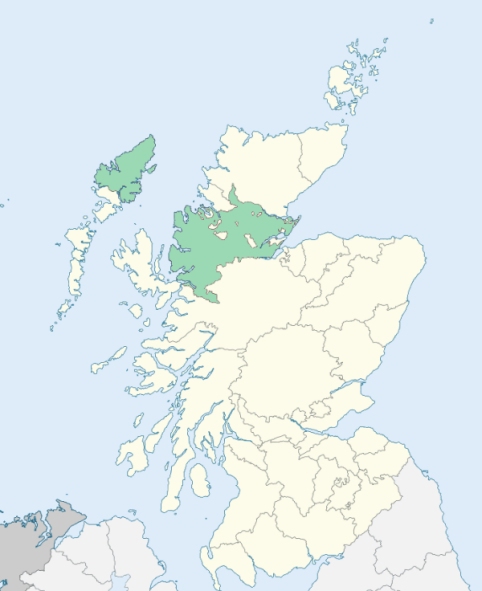
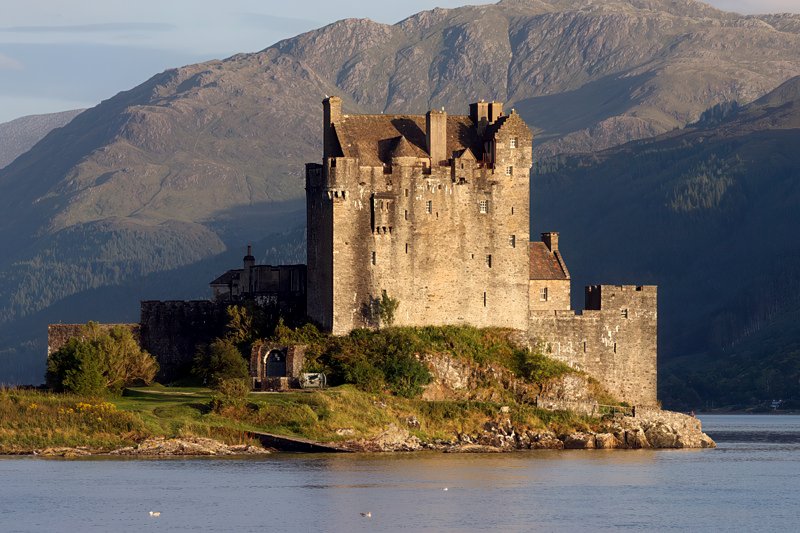
Lochalsh is a parish in the south-west of the mainland of Ross-shire. It is bounded by Loch Carron, Loch Alsh, Loch Long, the streams running into the heads of Loch Carron and Loch Long, and the mountain line of watershed near the sources of these streams. (1867: The Imperial Gazetteer of Scotland, by John Marius Wilson).
Ardelve, Avernich, Balmacarra, Lochalsh, Plockton, Strome
PRE-REFORMATION GOVERNANCE:
POST-REFORMATION GOVERNANCE:
St Fillan built the earliest church here about the year 600. He dedicated it to his uncle St Coan. The church of Lochalsh was a commune kirk of the Cathedral of Ross. There is a mission chapel in this parish at Kyle of Lochalsh.
Disjoined Quoad Sacra Parishes:
Plockton: A parliamentary church was erected here in 1828. The parish of Plockton was disjoined from Lochalsh by the Court of Teinds, 19 February 1897. There is a mission chapel at Strome.
Includes ministers, licentiates, assistants, readers, and clerks.
Lochalsh (QO)
Plockton (QS)
(1928: Fasti Ecclesiæ Scoticanæ, by Hew Scott, D. D.)
Parish registers turned over to the Registrar-General, as a result of the Registration of Births, Deaths, and Marriages (Scotland) Act of 1854. The letters B. D. and M. indicate Births (or Baptisms), Deaths (or Burials), and Marriages (or Proclamations of Banns) respectively. Numbers indicate separate volumes or books. Note: These records are by no means complete or without damage; consult the Detailed List of the Old Parochial Registers of Scotland (1872) to learn more about the condition of the records.
| OPR and RD Numbers | |||
|---|---|---|---|
| Date Range | Name | Number | Type |
| 1775-1854 | Lochalsh | 74 | OPR |
| 1855-1971 | Lochalsh | 74 | RD |
| 1972-2006 | Lochalsh | 207 | RD |
| 2009 | Highland, Lochalsh | 207 | RD |
| 2026 | Highland Council; Lochalsh Community Council | ||
(2009: Parishes and Registration Districts of Scotland - Old and New, National Records of Scotland)
Local community councils (2026) are provided as a potential source of additional information for settlements within the original boundaries of the parish. (Source)
Statistics from informal and official censuses
Cameron, Finlayson, MacDonald, MacKay, Mackenzie, MacLennan, MacRae, Matheson, Murchison, Ross
Note: Names appearing in research materials, other than censuses. Simple names (First name, surname only) have been omitted unless they appear associated with large properties. All women's names, and men's names with occupations, military ranks, or peerage titles are included.
By the Reverend Mr Alexander Downie, Minister.
"Within these 40 years, the population is more than doubled. As there was a considerable emigration from this country to North America, in 1770, and a large drain of young men to recruit the army during the late war, it is difficult to assign adequate causes for this rapid increase of population. It cannot be accounted for, from any change in the division of farms, most of which have been bounded by the same marches for upwards of a century, and still possessed by what may be called the Aborigines of the country, often descending, from father to son, in the same family, to the fourth generation. All the people come to the Established Church, excepting 62 Roman Catholics, who attend a Popish meeting-house in the neighbouring parish of Kintail."
(This section contains excerpts, at times restructured or paraphrased, from an article appearing in Statistical Account of Scotland, Sir John Sinclair, 1791-1799)
Primary Sources:
Statistical Account of Scotland (1791-1799), Volume 11, p. 422
New Statistical Account of Scotland (1834-1845), Volume 14, Section II, p. 260
See Parish Page Sources for all source information and links.