Kilmuir Wester and Suddie
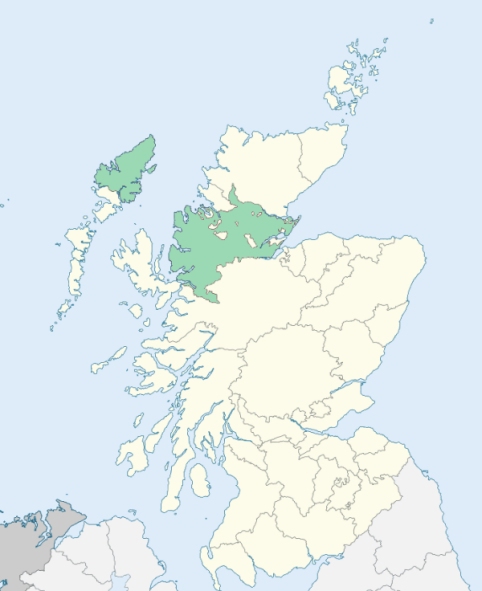
Knockbain is a parish in the south-east corner of Ross-shire. It is bounded by the Moray Firth, and by the parishes of Avoch, Urquhart, and Killearnan. (1867: The Imperial Gazetteer of Scotland, by John Marius Wilson).
Allangrange, Belmaduthy, Bogallan, Charleston, Kessock, Kilmuir, Munlochy
Belmaduthy, Drynie
The parish of Killearnan had a detached part situated at Tore. It contained 2,007 acres, and was separated from the main portion of the parish by an intervening strip of the parish of Knockbain. It may be explained that the parish marked on the maps as Kilmuir-Wester & Suddie is commonly known as the parish of Knockbain.
The following alterations were made on the boundaries of these two parishes:
(1.) The main portion and the detached part of Killearnan were united by annexing to that parish the intervening portion of Knockbain.
(2.) Gallowhill Wood (with croft), which formerly lay partly in Knockbain, was placed entirely in the parish of Killearnan.
(3.) That part of Killearnan which lay east of the centre of the road leading from Allanglach past Artafallie to North Kessock was transferred to Knockbain.
(4.) The whole farm of Bellfield was placed in Knockbain.
See affected properties and landholders. (1892: Boundary of counties and parishes in Scotland as settled by the Boundary Commissioners under the Local Government Act, 1889, by Hay Shennan)
PRE-REFORMATION GOVERNANCE:
POST-REFORMATION GOVERNANCE:
The parishes of Kilmuir Wester and Suddie were united by the Lords Commissioners of Teinds on 14 July 1756.
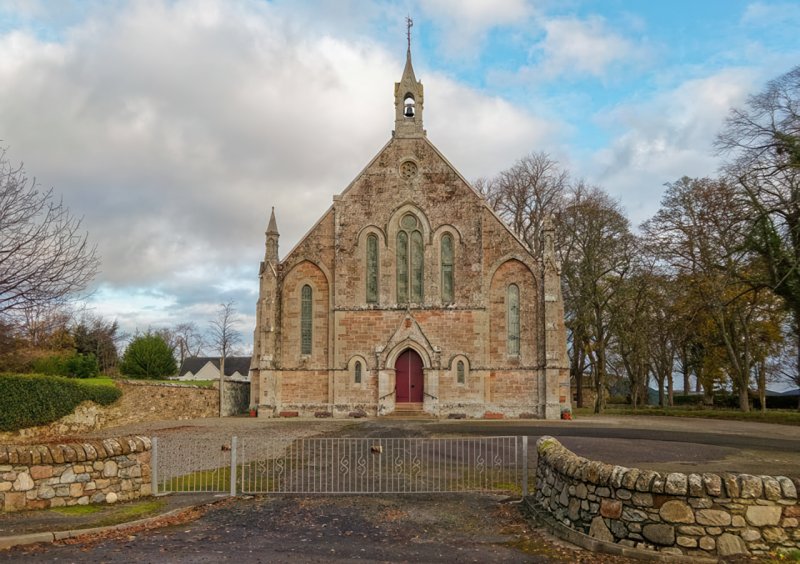
Kilmuir Wester. The parish church was dedicated to St Mary. It was removed from Kilmuir to Knockbain in 1762. At Munlochy, within the bounds, there was a chapel of St. John. Another chapel, on the seashore, was dedicated to St Kessog, and gave its name to Kessock Ferry.
Suddie. The parish church was dedicated to St Duthac. Suddie was a prebend of the Cathedral of Fortrose. A small part of the parish of Killearnan was annexed to Suddie by the Lords Commissioners of Teinds, 14 July 1756, when the parish was united with Kilmuir Wester.
Includes ministers, licentiates, assistants, readers, and clerks.
Kilmuir Wester (QO)
Suddie (QO)
(1928: Fasti Ecclesiæ Scoticanæ, by Hew Scott, D. D.)
Parish registers turned over to the Registrar-General, as a result of the Registration of Births, Deaths, and Marriages (Scotland) Act of 1854. The letters B. D. and M. indicate Births (or Baptisms), Deaths (or Burials), and Marriages (or Proclamations of Banns) respectively. Numbers indicate separate volumes or books. Note: These records are by no means complete or without damage; consult the Detailed List of the Old Parochial Registers of Scotland (1872) to learn more about the condition of the records.
| OPR and RD Numbers | |||
|---|---|---|---|
| Date Range | Name | Number | Type |
| 1759-1854 | Knockbain | 73 | OPR |
| 1855-1967 | Knockbain | 73 | RD |
| 2009 | Highland, Black Isle | 200 | RD |
| 2026 | Highland Council; Knockbain Community Council | ||
(2009: Parishes and Registration Districts of Scotland - Old and New, National Records of Scotland)
Local community councils (2026) are provided as a potential source of additional information for settlements within the original boundaries of the parish. (Source)
Statistics from informal and official censuses
Cameron, Campbell, Fraser, MacDonald, Mackenzie, MacLeod, MacLennan, MacRae, Paterson, Ross
Note: Names appearing in research materials, other than censuses. Simple names (First name, surname only) have been omitted unless they appear associated with large properties. All women's names, and men's names with occupations, military ranks, or peerage titles are included.
By the Reverend Mr Roderick M'Kenzie.
"The number of souls at present in this parish is 1805: of these there are above the age of 10 years 1355, and below 10 years 450; of which there are males 704, females 1101: of the above 704 there are 341 above the age of 15. The number of tenants is 106, cottagers and mealers* 404; of these there are 62 widows, 13 widowers, 49 shoe and brogue-makers, 1 merchant, 5 smiths, 17 square and cart-wrights and millers, 11 maiden lasses keeping house, 3 bachelors keeping house, 41 weavers, 18 tailors, 1 fiddler, 4 pipers, 3 gardeners, 1 exciseman, 9 whisky sellers, 1 regular inn at Kessockferry, 6 distillers of whisky, 1 ferry, with a sufficient number of boatmen. The Gaelic is the language commonly spoken here; and though there are a few who have no Gaelic, yet most of the inhabitants speak and understand both languages."
*Maillar: A tenant-famer who pays his rent in money.
(This section contains excerpts, at times restructured or paraphrased, from an article appearing in Statistical Account of Scotland, Sir John Sinclair, 1791-1799)
Primary Sources:
Statistical Account of Scotland (1791-1799), Volume 12, p. 262
New Statistical Account of Scotland (1834-1845), Volume 14, Section II, p. 57
See Parish Page Sources for all source information and links.