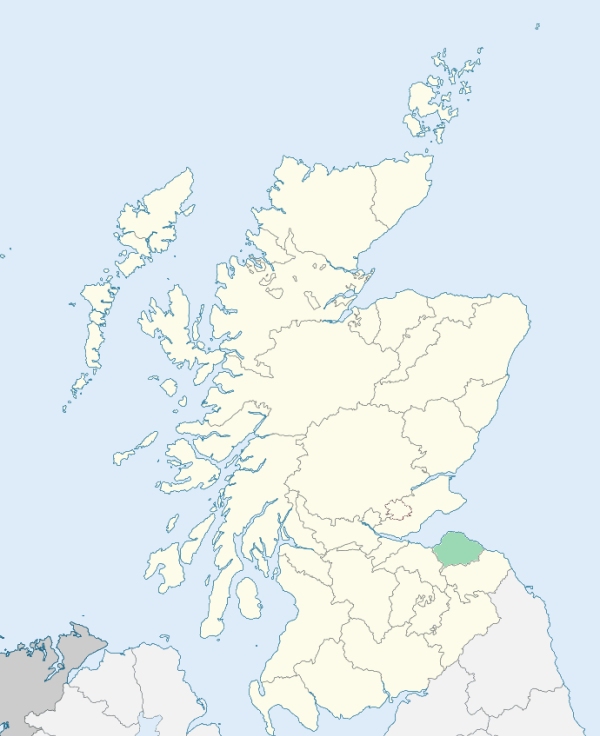
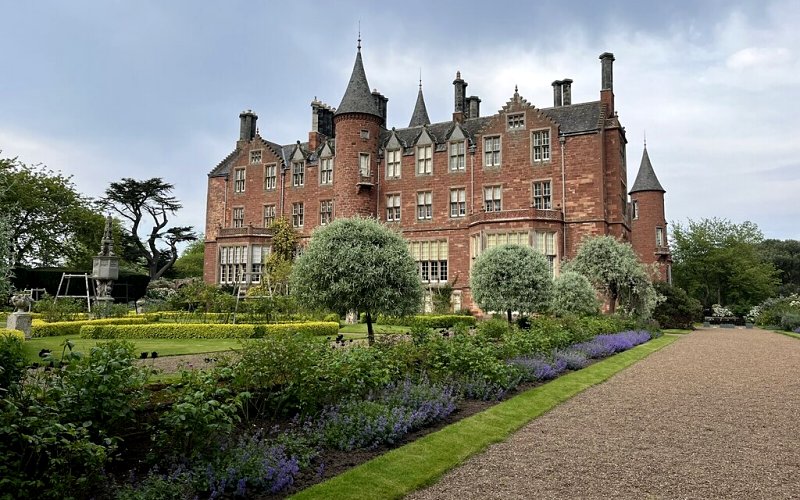
Whitekirk. Whitekirk is a parish on the coast of Haddingtonshire. It is bounded on the north by North Berwick, on the east by the German Ocean (North Sea), on the south by the estuary of the River Tyne and Dunbar, and on the west by Prestonkirk. (1867: The Imperial Gazetteer of Scotland, by John Marius Wilson).
Tyninghame. Tyninghame is an ancient parish on the coast of Haddingtonshire. It forms the southern district of the united parish of Whitekirk and Tyninghame. (1867: The Imperial Gazetteer of Scotland, by John Marius Wilson).
Aldham or Haldame, Tyninghame, Whitekirk
Newbyth, Seacliff House
PRE-REFORMATION GOVERNANCE:
POST-REFORMATION GOVERNANCE:
The parish of Whitekirk and Tyninghame comprises the three ancient parishes of Hamer, Aldhame, dedicated to St Baldred, and united after the Reformation; and Tyninghame, united in 1760.
Whitekirk. Whitekirk, dedicated to our Lady of Fairknowe with its Holy Well, belonged to the Abbey of Holyrood. The traditions of the church and the reputation of the Well drew many pilgrims to the spot. Whitekirk Church was destroyed by fire (the work of suffragettes), 26 February 1914.
Tyninghame. Dedicated to St Baldred; belonged to St Mary's College, St Andrews, previous to the Reformation. The parish was united to Whitekirk, 20 December 1760.
Includes ministers, licentiates, assistants, readers, and clerks.
Whitekirk (QO)
Tyninghame (QO)
(1928: Fasti Ecclesiæ Scoticanæ, by Hew Scott, D. D.)
Parish registers turned over to the Registrar-General, as a result of the Registration of Births, Deaths, and Marriages (Scotland) Act of 1854. The letters B. D. and M. indicate Births (or Baptisms), Deaths (or Burials), and Marriages (or Proclamations of Banns) respectively. Numbers indicate separate volumes or books. Note: These records are by no means complete or without damage; consult the Detailed List of the Old Parochial Registers of Scotland (1872) to learn more about the condition of the records.
| OPR and RD Numbers | |||
|---|---|---|---|
| Date Range | Name | Number | Type |
| 1695-1854 | Whitekirk and Tyninghame | 723 | OPR |
| 1855-1967 | Whitekirk and Tyninghame | 723 | RD |
| 2009 | East Lothian, North Berwick | 721 | RD |
| 2026 | East Lothian Council; Dunpender Community Council | ||
(2009: Parishes and Registration Districts of Scotland - Old and New, National Records of Scotland)
Local community councils (2026) are provided as a potential source of additional information for settlements within the original boundaries of the parish. (Source)
Statistics from informal and official censuses
Anderson, Bell, Fortune, Howden, Hume, Prentice, Tait, Watt, White, Wood
Note: Names appearing in research materials, other than censuses. Simple names (First name, surname only) have been omitted unless they appear associated with large properties. All women's names, and men's names with occupations, military ranks, or peerage titles are included.
By Mr James Williamson, Junior, of Whitekirk.
"In the account in 1792, which, from the indisposition of the minister, is the latest account that has been taken of the parish, the number of families was 231, of souls 994, of males 475, of females 519, all of whom are member of the national church, excepting 13 families which are Seceders.
It is said that the population at the beginning of this century was greater than at present. The parish then contained 3 villages, of which the least vestige is not now to be seen. In one of them were numbers of fishers, and houses for the curing of herrings. At present the number of fishing boats in the parish is reduced to one.
There are no manufactures or trades people, but such as are necessary for carrying on the business of agriculture. There are 16 farms, which vary in size, from about 100 to 380 acres. There are two alehouses, and three others licensed to retail British spirits. There are two schools in the parish, the one at Whitekirk, the other at Tynninghame.
The people, with a very few exceptions, are sober, honest, and industrious; their dress and mode of living are much altered within these 20 years."
(This section contains excerpts, at times restructured or paraphrased, from an article appearing in Statistical Account of Scotland, Sir John Sinclair, 1791-1799)
Primary Sources:
Statistical Account of Scotland (1791-1799), Volume 17, p. 574
New Statistical Account of Scotland (1834-1845), Volume 2, Section II, p. 29
See Parish Page Sources for all source information and links.