Hormeston
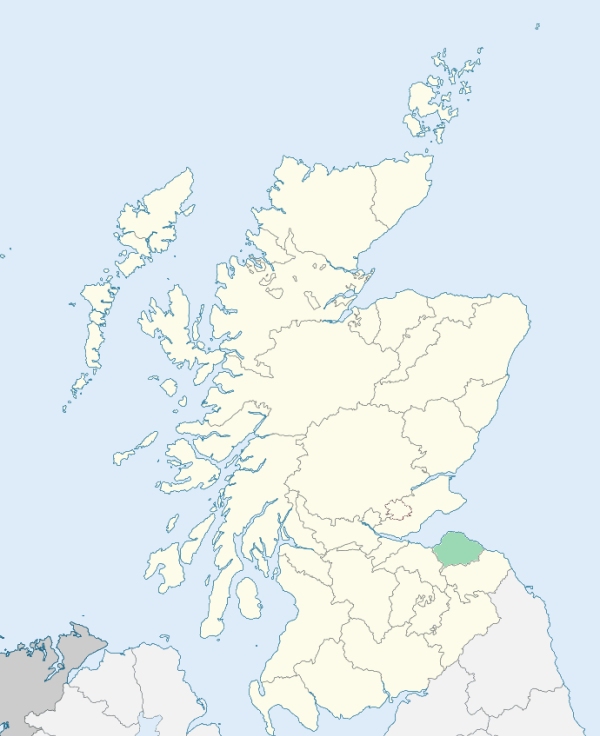
Ormiston is a parish in the middle of the western verge of Haddingtonshire. It is bounded on the west by Edinburghshire, and on other sides by the parishes of Tranent, Pencaitland, and Humbie. (1867: The Imperial Gazetteer of Scotland, by John Marius Wilson).
House of Muir, Ormiston, Peaston
PRE-REFORMATION GOVERNANCE:
POST-REFORMATION GOVERNANCE:
The church was dedicated to St Giles, and previous to the Reformation belonged to the Trinity College Hospital at Edinburgh.
Includes ministers, licentiates, assistants, readers, and clerks.
(1928: Fasti Ecclesiæ Scoticanæ, by Hew Scott, D. D.)
Parish registers turned over to the Registrar-General, as a result of the Registration of Births, Deaths, and Marriages (Scotland) Act of 1854. The letters B. D. and M. indicate Births (or Baptisms), Deaths (or Burials), and Marriages (or Proclamations of Banns) respectively. Numbers indicate separate volumes or books. Note: These records are by no means complete or without damage; consult the Detailed List of the Old Parochial Registers of Scotland (1872) to learn more about the condition of the records.
| OPR and RD Numbers | |||
|---|---|---|---|
| Date Range | Name | Number | Type |
| 1637-1854 | Ormiston | 715 | OPR |
| 1855-1967 | Ormiston | 715 | RD |
| 2009 | East Lothian, Tranent | 723 | RD |
| 2026 | East Lothian Council; Ormiston Community Council | ||
(2009: Parishes and Registration Districts of Scotland - Old and New, National Records of Scotland)
Local community councils (2026) are provided as a potential source of additional information for settlements within the original boundaries of the parish. (Source)
Statistics from informal and official censuses
Anderson, Christie, Dickson, Gordon, Hamilton, Johnston, Robertson, Ross, Smith, Thomson
Note: Names appearing in research materials, other than censuses. Simple names (First name, surname only) have been omitted unless they appear associated with large properties. All women's names, and men's names with occupations, military ranks, or peerage titles are included.
By the Reverend Mr Alexander Colvill.
"It does not appear that the population of this parish has either been much increased or diminished for at least 100 years past. The return to Dr Webster (1755) was 810. There are at present 193 families, 141 below 7 years of age, the amount of the whole 864, including all sectarists. A few persons have emigrated in quest of better encouragement.
The village of Ormistoun is the only one in this parish which deserves the name. It contains between 500 and 600 persons, who enjoy almost every natural and moral advantage for domestic comfort. This is chiefly a farming village. Though attempts have been made, the linen manufacture never succeeded here. At present we have two distilleries, and a starch-work, employing between 30 and 40 hands.
The people in general are economical, but for their circumstances have rather too expensive a taste."
(This section contains excerpts, at times restructured or paraphrased, from an article appearing in Statistical Account of Scotland, Sir John Sinclair, 1791-1799)
Primary Sources:
Statistical Account of Scotland (1791-1799), Volume 4, p. 166
New Statistical Account of Scotland (1834-1845), Volume 2, Section II, p. 130
See Parish Page Sources for all source information and links.