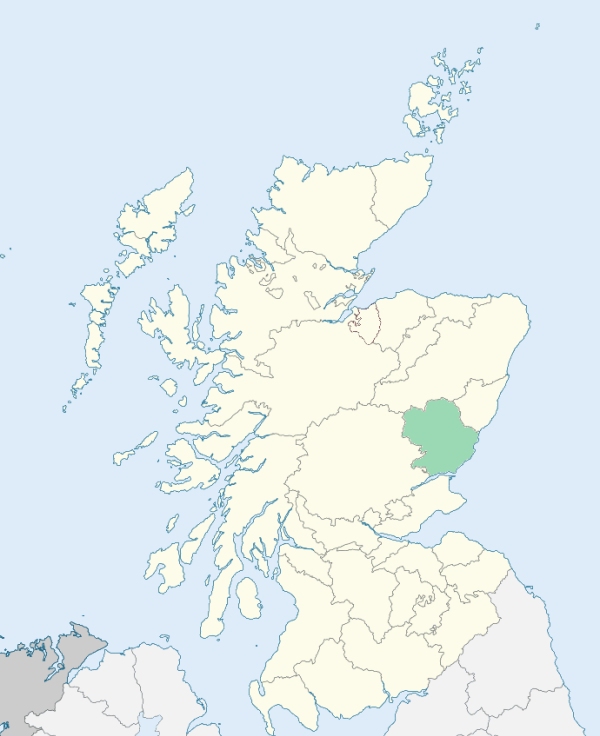
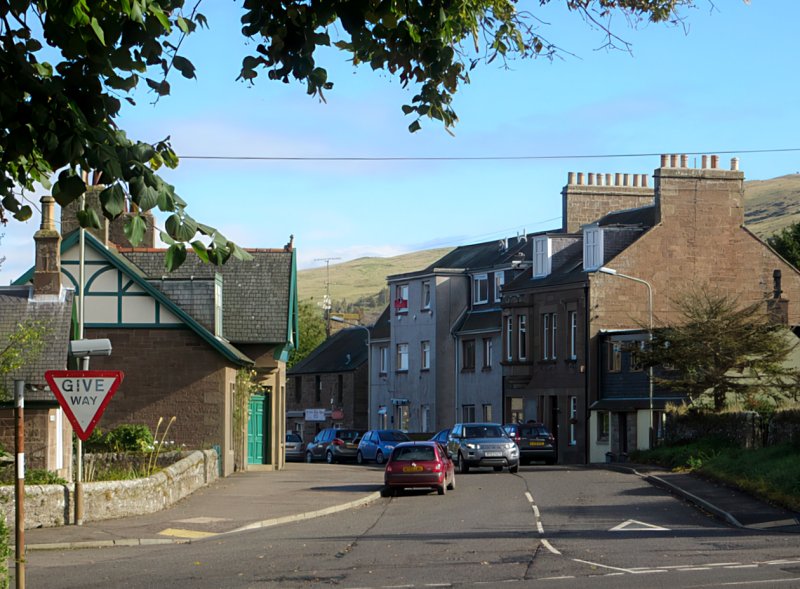
Newtyle is a parish on the south-west border of Forfarshire. It is bounded on the northwest by Perthshire, and on other sides by the parishes of Nevay, Glamis, Auchterhouse, Lundie, and Kettins. (1867: The Imperial Gazetteer of Scotland, by John Marius Wilson).
Auchtertyre, Chapel of Keillor, Hill of Keillor, Newbigging, Newtyle
PRE-REFORMATION GOVERNANCE:
POST-REFORMATION GOVERNANCE:
The church of Newtyle belonged to the Abbey of Arbroath. There was a chapel in the parish at Keilor, and at Templeton a Well of St Bride.
Includes ministers, licentiates, assistants, readers, and clerks.
(1928: Fasti Ecclesiæ Scoticanæ, by Hew Scott, D. D.)
Parish registers turned over to the Registrar-General, as a result of the Registration of Births, Deaths, and Marriages (Scotland) Act of 1854. The letters B. D. and M. indicate Births (or Baptisms), Deaths (or Burials), and Marriages (or Proclamations of Banns) respectively. Numbers indicate separate volumes or books. Note: These records are by no means complete or without damage; consult the Detailed List of the Old Parochial Registers of Scotland (1872) to learn more about the condition of the records.
| OPR and RD Numbers | |||
|---|---|---|---|
| Date Range | Name | Number | Type |
| 1685-1854 | Newtyle | 314 | OPR |
| 1855-1960 | Newtyle | 314 | RD |
| 1961-1968 | Newtyle and Nevay | 314 | RD |
| 2009 | Dundee City | 350-353 | RD |
| 2026 | Angus Council; Newtyle and Eassie Community Council | ||
(2009: Parishes and Registration Districts of Scotland - Old and New, National Records of Scotland)
Local community councils (2026) are provided as a potential source of additional information for settlements within the original boundaries of the parish. (Source)
Statistics from informal and official censuses
Anderson, Brown, Gray, Martin, Mitchell, Petrie, Reid, Robertson, Stewart, Whitton
Note: Names appearing in research materials, other than censuses. Simple names (First name, surname only) have been omitted unless they appear associated with large properties. All women's names, and men's names with occupations, military ranks, or peerage titles are included.
By the Reverend Mr Alexander Small.
"The number of inhabitants in 1791 was 594, of whom 306 were males, and 288 were females. Inhabitants of the villages, chiefly weavers, 230; inhabitants in the country, 364. The number of merchants 3, manufacturers, about 230, 3 tailors, 3 shoemakers, 3 wrights, 3 lint-dressers, 300 persons born in other parishes, 149 inhabited houses. There is only one family of Seceders, and no other sectaries.
The general size of the people, in this parish, is about 5 feet 6 inches; A few individuals have attained the height of 6 feet. They are very industrious, in general, and more than one half of the householders are weavers, and possess a small portion of land. They are not fond of a military life, and few enlist in any corps. They are in general sober and economical; enjoy, in a reasonable degree, the comforts and advantages of society, and, on the whole, seem pretty well satisfied with their condition. Their situation, however, might be meliorated by greater exertions of industry, and by superior knowledge of agriculture, and the other arts of civil life."
(This section contains excerpts, at times restructured or paraphrased, from an article appearing in Statistical Account of Scotland, Sir John Sinclair, 1791-1799)
Primary Sources:
Statistical Account of Scotland (1791-1799), Volume 3, p. 399
New Statistical Account of Scotland (1834-1845), Volume 11, Section I, p. 558
See Parish Page Sources for all source information and links.