
Plaidwerx


Features: Scottish Parishes » Historic Shires » Forfarshire » Mains & Strathmartine

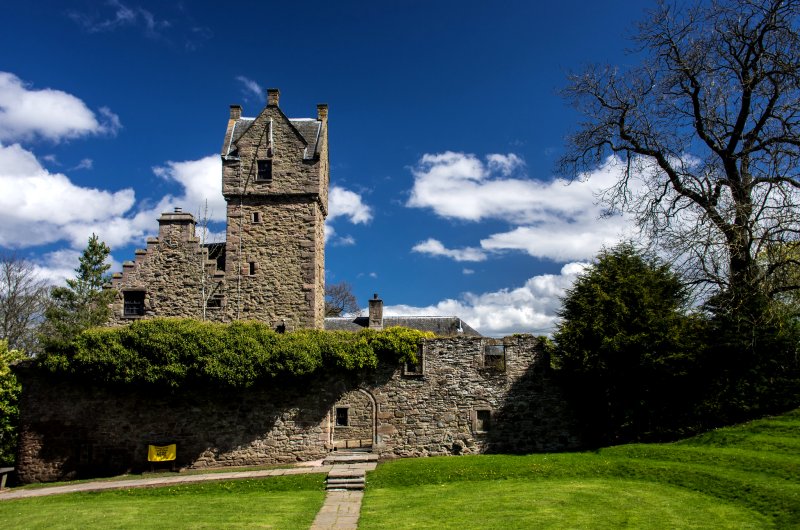
Fintry Castle, Mains by Neil Williamson
Fintry Castle, Mains © 2015, Neil Williamson

MAINS & STRATHMARTINE PARISH

TABLE OF CONTENTS


ALTERNATE NAMES AND SPELLING:

Strathdighty, Mains of Fintry (Mains)


LOCATION

Location Description:

Mains and Strathmartine are two parishes politically united to each other, and lying mutually contiguous, Mains on the east and Strathmartine on the west, near the south-western extremity of Forfarshire. The united parish is bounded by Tealing, Murroes, Dundee, Liff, and Auchterhouse. (1867: The Imperial Gazetteer of Scotland, by John Marius Wilson).

Shire, District, and Region Timeline:

  • Shire: Forfarshire (Before 1707)
  • County: Forfar (After 1707)
  • District: Forfar (Before 1928)
  • County: Angus (1928)
  • District: Angus (After 1928)
  • Landward District: Monifieth (1930-1975)
  • Region: Tayside (1975-1996)
  • District: City of Dundee (1975-1996)

Cities, Towns, Villages, and Hamlets:

Baldovan, Claverhouse, Downfield, Kirkton, Pitempton

Estates:

Fintry


PARISH TIMELINE

PRE-REFORMATION GOVERNANCE:

  • Diocese: St Andrews
  • Deanery: Angus

POST-REFORMATION GOVERNANCE:

  • Synod: Angus and Mearns
  • Presbytery: Dundee

PAROCHIAL OVERVIEW:

The parishes of Mains and Strathmartin were united on 21 November 1792.
Mains, previously Strathdighty. The church of Strathdighty was dedicated to St Ninian. It belonged to the Abbey of Arbroath. There was here a Well of St Ninian.
Strathmartine. The church of this parish was dedicated to St Martin.

Disjoined Quoad Sacra Parishes:
Downfield. The parish of Downfield was disjoined from Mains and Strathmartine, 23 February 1912. The church was built in 1893.
Fairmuir. A mission station called Victoria Chapel was opened here in 1899. The parish of Fairmuir was disjoined from St Mary's, Dundee, and Mains and Strathmartine on 20 December 1907.

CHURCH OF SCOTLAND CLERGY:

Includes ministers, licentiates, assistants, readers, and clerks.

Mains and Strathmartine (QO)

  • William Auchmowtie, 1568
  • Ninian Cook, 1572
  • Alexander Tyrie, 1574
  • William Bruce, 1585
  • William Rait, 1590
  • Henry Fithie, 1633
  • Henry Auchenleck, 1652
  • James Fithie (son of Henry, above), 1663
  • Patrick Strachan, 1673
  • James Hodge, 1707
  • Andrew Ronaldson, 1710
  • John Ker, 1723
  • John Gibson, 1760
  • Alexander Strachan, 1795
  • Francis Nicoll, 1799
  • David Cannan, 1820
  • John Robertson, 1848
  • John M'Murtrie, 1858
  • William Boyd, 1866
  • Alexander Stewart, 1873
  • Richard Spencer Ritchie, 1888
  • Alexander Anderson, 1918

Strathmartine (QO)

  • James Weicht, 1567
  • William Auchmowtie, 1572
  • David Tyrie, 1572
  • William Rait, 1594
  • William Rollock, 1620
  • David Jameson, 1626
  • Alexander Ramsay, 1638
  • James Fraser, 1653
  • John Mow, 1655
  • David Fergusson, 1664
  • Thomas Ogilvie, 1697
  • James Goodsir, 1706
  • William Thomson, 1718
  • Hugh Maxwell, 1744
  • David Maxwell, 1751
  • Alexander Strachan, 1775

Downfield (QS)

  • David Duthie M'Laren, 1891
  • David Harrower Lochhead, 1896
  • William Simpson, 1908
  • Henry Dodd, 1919

Fairmuir (QS)

  • Donald Dewar MacDonald, 1908

(1928: Fasti Ecclesiæ Scoticanæ, by Hew Scott, D. D.)


RECORDS

Parochial Registers:

Parish registers turned over to the Registrar-General, as a result of the Registration of Births, Deaths, and Marriages (Scotland) Act of 1854. The letters B. D. and M. indicate Births (or Baptisms), Deaths (or Burials), and Marriages (or Proclamations of Banns) respectively. Numbers indicate separate volumes or books. Note: These records are by no means complete or without damage; consult the Detailed List of the Old Parochial Registers of Scotland (1872) to learn more about the condition of the records.

  • (1) B. 1635-48; M. 1635-72 (Mains)
  • (2) B. 1649-1740; M. 1673-1740 (Mains)
  • (3) B. 1740-1819; M. 1740-1805; D. 1746-59 (Mains)
  • (4) B. 1820-54; M. and D. 1826-54 (Mains)
  • (1) B. 1744-1819; M. 1783-1821; D. 1783-89 (Strathmartine)
  • (2) B. and M. 1820-54 (Strathmartine)

OPR and RD Numbers
Date RangeNameNumberType
1635-1854Mains and Strathmartine307OPR
1855-1908Mains307-1RD
1855-1908Strathmartine307-2RD
1909-1951Mains and Strathmartine307RD
2009Dundee City350-353RD
2026(Mains) Angus Council; Muirhead, Birkhill and Liff Community Council
2026(Strathmartine) Angus Council; Strathmartine Community Council

(2009: Parishes and Registration Districts of Scotland - Old and New, National Records of Scotland)

Local community councils (2026) are provided as a potential source of additional information for settlements within the original boundaries of the parish. (Source)

Population:

Statistics from informal and official censuses

  • 1755: 1,077 (Mains: 709; Strathmartine: 368)
  • 1801: 1,442
  • 1811: 1,738
  • 1821: 1,779
  • 1831: 2,011 (Mains: 1,156; Strathmartine: 855)
  • 1841: 2,110
  • 1861: 2,181 (Mains: 1,392; Strathmartine: 789)
  • 1881: 3,500 (Mains: 2,300; Strathmartine: 1,200)
  • 1901: 6,554
  • 1911: 6,631

RESIDENTS


Common Surnames:

Mains: Anderson, Barrie, Brown, Campbell, Christie, Millar, Mitchell, Robertson, Smith, Stewart

Strathmartine: Boyd, Cameron, Gibson, Henderson, Mitchell, Robertson, Ross, Smith, Taylor, Watson

Land-owners, teachers, and other professionals:

Note: Names appearing in research materials, other than censuses. Simple names (First name, surname only) have been omitted unless they appear associated with large properties. All women's names, and men's names with occupations, military ranks, or peerage titles are included.

  • John GRAHAM, Lord Dundee, of Claverhouse
  • Sir John OGILVY, Bart., of Inverquharity

Other residents:

By the Reverend Mr Alexander Strachan.
"There are 340 souls in the parish. The people in general are quiet, peaceable, and well disposed. In the parish are 2 Antiburghers, and 1 Episcopalian. There is a remarkable alteration to the better, in the dress of the parishioners, since the year 1780."
(This section contains excerpts, at times restructured or paraphrased, from an article appearing in Statistical Account of Scotland, Sir John Sinclair, 1791-1799)


NOTES:

Primary Sources:
Statistical Account of Scotland (1791-1799), Volume 5, p. 218
New Statistical Account of Scotland (1834-1845), Volume 11, Section I, p. 54

See Parish Page Sources for all source information and links.
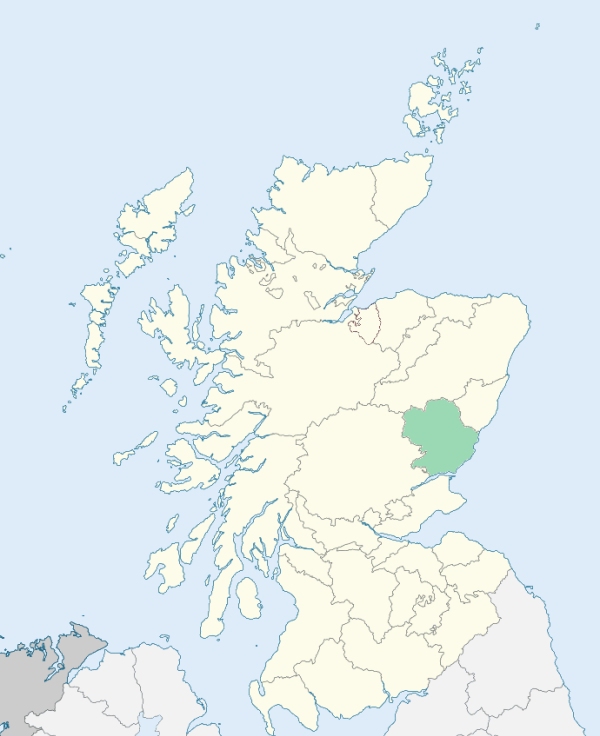

Photo credits: (Featured) Fintry Castle, Mains, Dundee, © 2015 Neil Williamson, used under Creative Commons License CC BY-SA 2.0, (Related Resources) Forfarshire Locator Map, © 2025, Elianfoo, used under Creative Commons License CC BY-SA 4.0.
Related Resources
Map of Scotland with Forfarshire highlighted
Location of Forfarshire
See more maps at Wikimedia Commons
Glossary
  • Burghs:
  • Royal - Towns on royal lands
  • Regality - Towns granted to noblemen/landowners
  • Barony - Towns granted to tenant-in-chief (laird)
  • Police - Towns with elected officials
  • Small - Population under 20,000
  • Large - Population over 20,000
  •  
  • Chapel-of-Ease: Small church for those living far from the main church
  • Collegiate church: See What is a Collegiate Church?
  • Commune kirk: Owned by a larger church
  • Court of Teinds: Controlled funds for support of clergy
  •  
  • Friars:
  • Black - Dominican
  • Grey - Franciscan
  • Red - Trinitarian
  • White - Carmelite
  •  
  • Iron chapel: Building made of corrugated galvanized iron
  •  
  • Landward District: Rural part of a district
  •  
  • Mensal: Source of income to support clergy member (Roman Catholic)
  •  
  • OPR: Old Parochial Register
  •  
  • Pre-Reformation: Before 1560
  • Prebend: Source of income to support a clergy member
  •  
  • QO: Quoad Omnia - Civil and church control
  • QS: Quoad Sacra - Church control only
  •  
  • RD: Registration District - Civil control
  •  
  • Tryst: Large-scale market or fair, particularly for livestock
  •