Forgrund
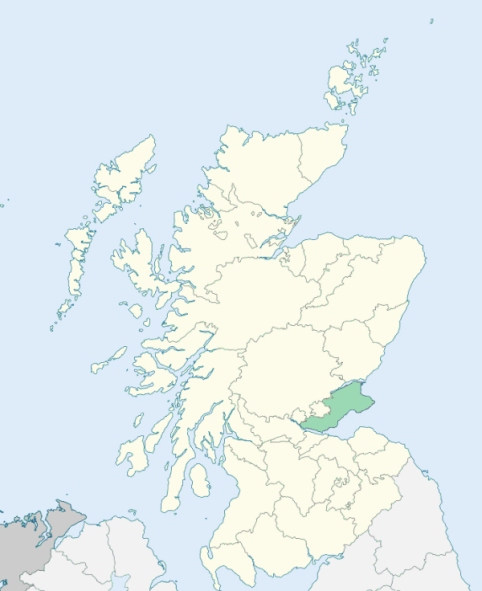
Forgan is a parish on the northern border of Fife. It lies on the River Tay, opposite Dundee, and is bounded on the inland sides by Ferry-Port-on-Craig, Leuchars, Logie, Kilmany, and Balmerino. (1867: The Imperial Gazetteer of Scotland, by John Marius Wilson).
Newport, Marytown, Woodhaven
PRE-REFORMATION GOVERNANCE:
POST-REFORMATION GOVERNANCE:
The church of Forgan ws dedicated to St Fillan. It belonged to the Priory of St Andrews. The present church was built in 1841.
Disjoined Quoad Sacra Parishes:
Newport-St Thomas. A church was built in 1870, and the parish of Newport was erected, 15 February 1875.
Wormit. In 1895 a mission hall was erected by the Kirk-Session of Forgan to provide religious services for the community that had begun to gather at Wormit subsequent to the re-opening of the Tay Bridge. A Chapel-of-Ease was constituted here in 1898. The parish of Wormit was disjoined from Forgan, 9 March 1911.
(1928: Fasti Ecclesiæ Scoticanæ, by Hew Scott, D. D.)
Includes ministers, licentiates, assistants, readers, and clerks.
Forgan (QO)
Newport-St Thomas (QS)
Wormit (QS)
(1928: Fasti Ecclesiæ Scoticanæ, by Hew Scott, D. D.)
Parish registers turned over to the Registrar-General, as a result of the Registration of Births, Deaths, and Marriages (Scotland) Act of 1854. The letters B. D. and M. indicate Births (or Baptisms), Deaths (or Burials), and Marriages (or Proclamations of Banns) respectively. Numbers indicate separate volumes or books. Note: These records are by no means complete or without damage; consult the Detailed List of the Old Parochial Registers of Scotland (1872) to learn more about the condition of the records.
| OPR and RD Numbers | |||
|---|---|---|---|
| Date Range | Name | Number | Type |
| 1695-1854 | Forgan | 431 | OPR |
| 1855-1967 | Forgan | 431 | RD |
| 1972-2002 | Newport on Tay | 411 | RD |
| 2003-2005 | Newport on Tay | 411 | RD |
| 2009 | Fife, Newport on Tay | 411 | RD |
| 2026 | Fife Council; Newport, Wormit and Forgan Community Council | ||
(2009: Parishes and Registration Districts of Scotland - Old and New, National Records of Scotland)
Local community councils (2026) are provided as a potential source of additional information for settlements within the original boundaries of the parish. (Source)
Statistics from informal and official censuses
Anderson, Brown, Duncan, Melville, Robertson, Scott, Smith, Stewart, Walker, Wilson
Note: Names appearing in research materials, other than censuses. Simple names (First name, surname only) have been omitted unless they appear associated with large properties. All women's names, and men's names with occupations, military ranks, or peerage titles are included.
By the Reverend Mr James Burn, Minister.
"The number of examinable persons in the parish at present (1793), is about 875. There are 7 resident heritors, 4 non-resident heritors, 1 schoolmaster, 9 tenants, 16 pendiclers or sub-tenants, 6 tailors, 3 shoemakers, 3 wrights, 4 masons, and 14 weavers.
There are several villages in the parish. The female inhabitants are generally employed in spinning coarse yarn. Many of these people are employed in cutting down the corns in harvest.
There are not many Dissenters in the parish; only two Episcopalians, and a few Antiburgher Seceders, most of whom had left the Established Church before the present incumbent was settled here. They are sober and industrious, not at all so bigoted as are many of that sect; they are very useful members of society.
The people are generally sober and industrious. A few years ago a spirit of smuggling too much prevailed in this corner, than which nothing is more ruinous to the health and morals of those who are addicted to it. This ruinous traffic is now nearly annihilated among us; and happy were it for the nation that the temptations to it were less frequent and powerful than they sometimes are. None of the people of this parish have been the subject of a criminal process, nor have any of them emigrated."
(This section contains excerpts, at times restructured or paraphrased, from an article appearing in Statistical Account of Scotland, Sir John Sinclair, 1791-1799)
Primary Sources:
Statistical Account of Scotland (1791-1799), Volume 16, p. 88
New Statistical Account of Scotland (1834-1845), Volume 9, Section I, p. 505
See Parish Page Sources for all source information and links.