Balingray, Ballingray, Bingry
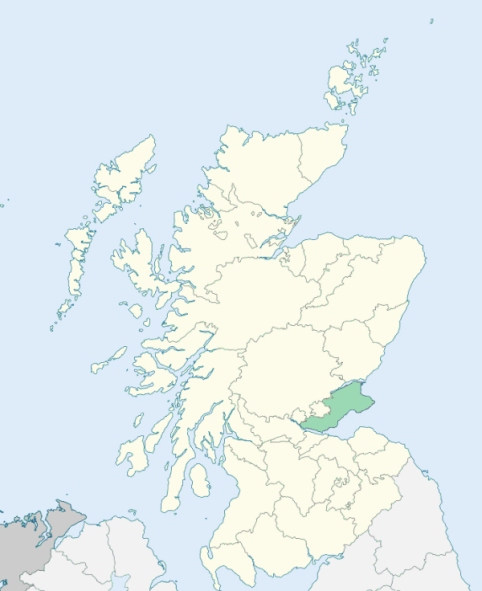
Ballingry is a parish in the south-west of Fife, locally called Bingry. It is bounded by Portmoak, Kinglassie, Auchterderran, Beath, and Cleish. (1867: The Imperial Gazetteer of Scotland, by John Marius Wilson).
Ballingry, Lochore, Lumphinnans
Whereas a part of the parish of Ballingry in the county of Fife, containing 649 acres or thereby, situated at or near Wester Balbedie and adjoining the parish of Kinglassie in the county of Fife and the parish of Portmoak in the county of Kinross (being the part marked on the Ordnance Survey maps Ballingry detached No. 1), is detached from the main portion of the parish of Ballingry; and another part of the parish of Ballingry, containing 60 acres or thereby, situated at or near Spittal and surrounded by the parish of Auchterderran (being the part marked on the Ordnance Survey maps Ballingry detached No. 2) is also detached from the main portion of the parish of Ballingry:
I. So much of the aforesaid detached part of the parish of Ballingry marked on the Ordnance Survey maps Ballingry detached No. 1 as is situated to the north of the centre of the new channel of the River Leven (known as The Cut) shall cease to be part of the parish of Ballingry and of the county of Fife, and shall form part of the parish of Portmoak and of the county of Kinross, and the remainder of the said detached part shall cease to be part of the parish of Ballingry, and shall form part of the parish of Kinglassie.
II. The aforesaid detached part of the parish of Ballingry marked on the Ordnance Survey maps Ballingry detached No. 2 shall cease to be part of that parish, and shall form part of the parish of Auchterderran.
See affected properties and landholders. (1892: Boundary of counties and parishes in Scotland as settled by the Boundary Commissioners under the Local Government Act, 1889, by Hay Shennan)
PRE-REFORMATION GOVERNANCE:
POST-REFORMATION GOVERNANCE:
There are mission chapels in the parish of Ballingry at Glencraig and Lochore.
Disjoined Quoad Sacra Parishes:
Lochgelly. A chapel was built here in 1855. The parish of Lochgelly was disjoined from Auchterderran and Ballingry on 12 February 1868.
(1928: Fasti Ecclesiæ Scoticanæ, by Hew Scott, D. D.)
Includes ministers, licentiates, assistants, readers, and clerks.
Ballingry (QO)
Lochgelly (QS)
(1928: Fasti Ecclesiæ Scoticanæ, by Hew Scott, D. D.)
Parish registers turned over to the Registrar-General, as a result of the Registration of Births, Deaths, and Marriages (Scotland) Act of 1854. The letters B. D. and M. indicate Births (or Baptisms), Deaths (or Burials), and Marriages (or Proclamations of Banns) respectively. Numbers indicate separate volumes or books. Note: These records are by no means complete or without damage; consult the Detailed List of the Old Parochial Registers of Scotland (1872) to learn more about the condition of the records.
| OPR and RD Numbers | |||
|---|---|---|---|
| Date Range | Name | Number | Type |
| 1669-1854 | Ballingry | 408 | OPR |
| 1855-1908 | Ballingry | 408 | RD |
| 1909-1930 | Lochore | 408-1 | RD |
| 1909-1930 | Lumphinnans | 408-2 | RD |
| 1931-1971 | Lochore | 408 | RD |
| 1972-2000 | Lochore | 426 | RD |
| 2000-2008 | Benarty | 426 | RD |
| 2009 | Fife, Benarty | 426 | RD |
| 2026 | (Ballingry) Fife Council; Benarty Community Council | ||
| 2026 | (Benarty) Fife Council; Benarty Community Council | ||
| 2026 | (Lumphinnans) Fife Council; Lumphinnans Community Council | ||
(2009: Parishes and Registration Districts of Scotland - Old and New, National Records of Scotland)
Local community councils (2026) are provided as a potential source of additional information for settlements within the original boundaries of the parish. (Source)
Statistics from informal and official censuses
Adamson, Anderson, Beveridge, Brown, Ferguson, Ross, Smith, Thomson, Williamson, Wilson
Note: Names appearing in research materials, other than censuses. Simple names (First name, surname only) have been omitted unless they appear associated with large properties. All women's names, and men's names with occupations, military ranks, or peerage titles are included.
By the Reverend Mr Thomas Scott.
"At present, the number of souls in this parish is 220, of the above there 94 males and 126 females. There are 55 families, and 80 Seceders. Although there is considerable quantity of grain raised in this parish, yet the soil being better calculated for grass, the rearing of cattle forms the most considerable employment of the tenants, and is one of the principal productions of the parish."
(This section contains excerpts, at times restructured or paraphrased, from an article appearing in Statistical Account of Scotland, Sir John Sinclair, 1791-1799)
Primary Sources:
Statistical Account of Scotland (1791-1799), Volume 7, p. 312
New Statistical Account of Scotland (1834-1845), Volume 9, Section I, p. 446
See Parish Page Sources for all source information and links.