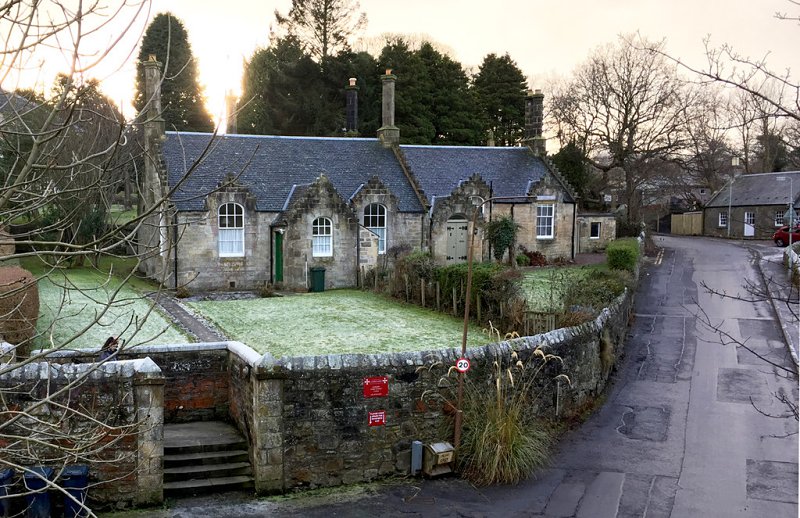
Killeith
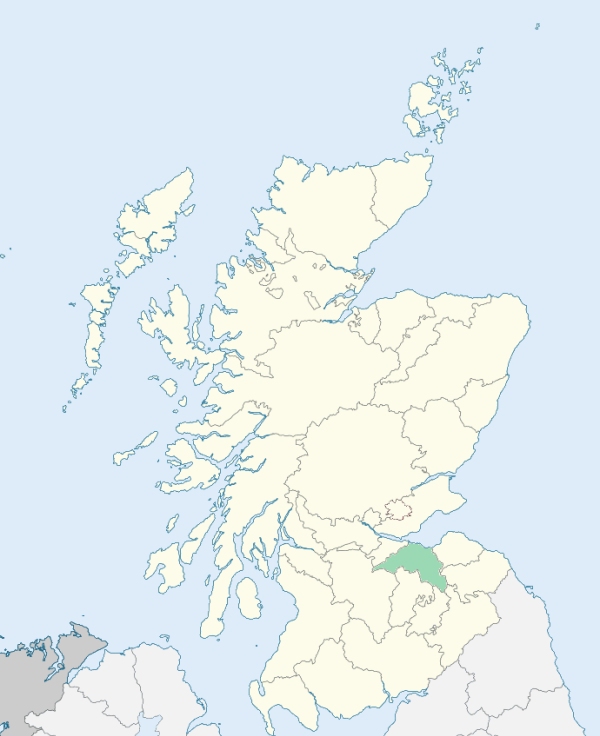
Currie is a parish in Edinburghshire. It is bounded by Corstorphine, Colinton, Penicuick, Mid-Calder, Kirknewton, and Ratho. (1867: The Imperial Gazetteer of Scotland, by John Marius Wilson).
Balerno, Currie, Hermiston, Loanhead
Arniston, Crookston, Currie, Harvieston, Middleton House, Vogrie
Baberton, Buteland, Curriehill, Malleny, Ravelrig, Riccarton
(1) The parish of Corstorphine had one small detached part, situated south-west of the village of Corstorphine and west of South Gyle. This detached part was transferred to the parish of Currie. See affected properties and landholders. (1892: Boundary of counties and parishes in Scotland as settled by the Boundary Commissioners under the Local Government Act, 1889, by Hay Shennan)
(2) The parish of Kirkliston had a detached part in the county of Edinburgh which has been transferred to the parish of Currie. See affected properties and landholders. (1892: Boundary of counties and parishes in Scotland as settled by the Boundary Commissioners under the Local Government Act, 1889, by Hay Shennan)
PRE-REFORMATION GOVERNANCE:
POST-REFORMATION GOVERNANCE:
The church was dedicated to St Mungo. Nearby is St Mungo's Well.
Includes ministers, licentiates, assistants, readers, and clerks.
(1928: Fasti Ecclesiæ Scoticanæ, by Hew Scott, D. D.)
Parish registers turned over to the Registrar-General, as a result of the Registration of Births, Deaths, and Marriages (Scotland) Act of 1854. The letters B. D. and M. indicate Births (or Baptisms), Deaths (or Burials), and Marriages (or Proclamations of Banns) respectively. Numbers indicate separate volumes or books. Note: These records are by no means complete or without damage; consult the Detailed List of the Old Parochial Registers of Scotland (1872) to learn more about the condition of the records.
| OPR and RD Numbers | |||
|---|---|---|---|
| Date Range | Name | Number | Type |
| 1638-1854 | Currie | 682 | OPR |
| 1855-1971 | Currie | 682 | RD |
| 1972-2002 | Currie | 769 | RD |
| 2003-2009 | City of Edinburgh, Currie | 741 | RD |
| 2026 | City of Edinburgh Council; Currie Community Council | ||
(2009: Parishes and Registration Districts of Scotland - Old and New, National Records of Scotland)
Local community councils (2026) are provided as a potential source of additional information for settlements within the original boundaries of the parish. (Source)
Statistics from informal and official censuses
Black, Brown, Campbell, Henderson, Napier, Smith, Watt, Weir, Wilson, Young
Note: Names appearing in research materials, other than censuses. Simple names (First name, surname only) have been omitted unless they appear associated with large properties. All women's names, and men's names with occupations, military ranks, or peerage titles are included.
By Dr William Nisbet, Physician in Edinburgh.
"The population at present is 1300, of whom 200 have been added, only within these 4 or 5 years, by the introduction of the paper manufacture. Except those employed in the paper manufacture, and a few mechanics of different occupations, not exceeding 12, the rest of the inhabitants are confined to the business of agriculture. In their religious opinions, one half of the parish are Seceders.
With respect to the manufactures of the parish, little can be said. The only one, that of paper, has been lately introduced. The paper trade employs children from 10 to 12 years of age, a period when they can do nothing very labourious, and when their morals, from idleness and neglect, are very apt to be corrupted. It employs also, in some departments, people who are a good deal advanced in life, and after they can no longer work at those occupations without doors, that require much exertion.
Freestone abounds in a great number of places in this parish. At the village of Balerno, a freestone quarry has been wrought for some years, and goes to supply many of the buildings in the New Royalty of Edinburgh.
Till within these few years, the people of this parish, were sober, industrious, and economical. The vices of the capital, however, are beginning to spread fast amongst them, and the introduction of those baneful articles to the poor, tea and whisky, will soon produce that corruption of morals and debility of constitution, which are already so severely felt in many parishes, and which must soon materially injure the real strength and population of Scotland."
(This section contains excerpts, at times restructured or paraphrased, from an article appearing in Statistical Account of Scotland, Sir John Sinclair, 1791-1799)
Primary Sources:
Statistical Account of Scotland (1791-1799), Volume 5, p. 313
New Statistical Account of Scotland (1834-1845), Volume 1, p. 542
See Parish Page Sources for all source information and links.