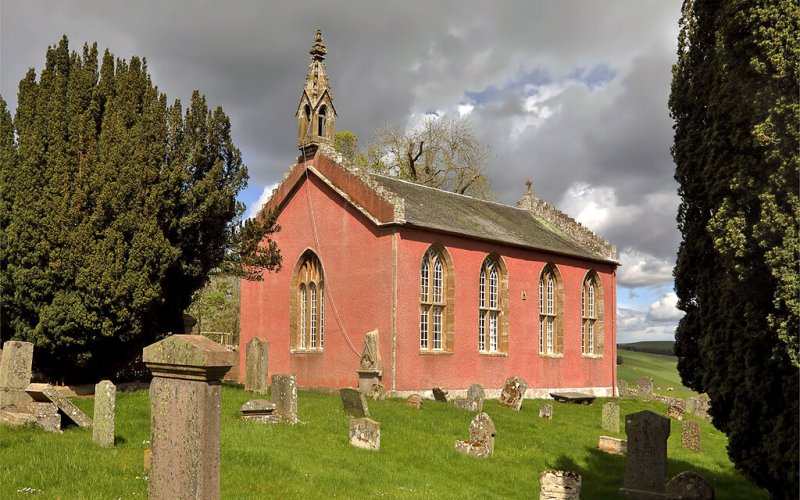
Childeschirche, Child's Kirk
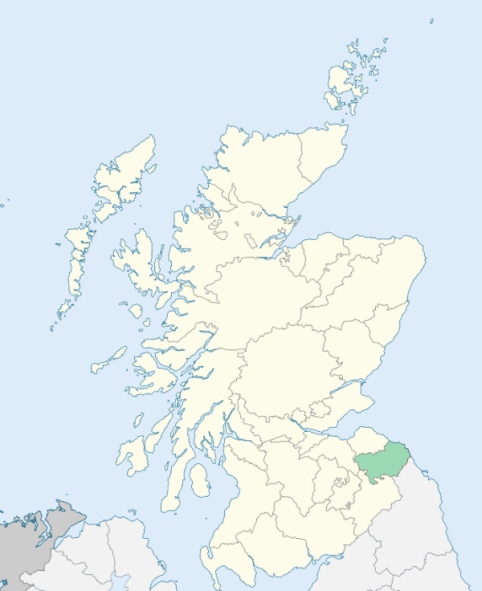
Channelkirk is a parish in the north-west corner of Berwickshire, bounded by Edinburghshire, Haddingtonshire, and the parish of Lauder. (1867: The Imperial Gazetteer of Scotland, by John Marius Wilson).
Carfrae or Carfrae Mill, Glengelt, New Channelkirk, Old Channelkirk, Oxton or Agston
Airhouse
PRE-REFORMATION GOVERNANCE:
POST-REFORMATION GOVERNANCE:
The original church is believed to have been built between the seventh century and the ninth. The monks of Dryburgh (circa 1248) claimed that it was the mother and parish church of the whole of Lauderdale. It was built in honour of St Cuthbert, and named Childeschirche, or the Child's Kirk. Hugh de Moreville of Lauderdale gave the church to the Abbey of Dryburgh in the twelfth century, and it continued under that Abbey till the Reformation. It was consecrated by Bishop David de Bernham, 23 March 1241. There were chapels in the parish at Glengelt and Carfrae.
Includes ministers, licentiates, assistants, readers, and clerks.
(1928: Fasti Ecclesiæ Scoticanæ, by Hew Scott, D. D.)
Parish registers turned over to the Registrar-General, as a result of the Registration of Births, Deaths, and Marriages (Scotland) Act of 1854. The letters B. D. and M. indicate Births (or Baptisms), Deaths (or Burials), and Marriages (or Proclamations of Banns) respectively. Numbers indicate separate volumes or books. Note: These records are by no means complete or without damage; consult the Detailed List of the Old Parochial Registers of Scotland (1872) to learn more about the condition of the records.
| OPR and RD Numbers | |||
|---|---|---|---|
| Date Range | Name | Number | Type |
| 1651-1854 | Channelkirk | 729 | OPR |
| 1855-1966 | Channelkirk | 729 | RD |
| 2009 | Scottish Borders, Lauder | 788 | RD |
| 2026 | Scottish Borders Council; Oxton and Channelkirk Community Council | ||
(2009: Parishes and Registration Districts of Scotland - Old and New, National Records of Scotland)
Local community councils (2026) are provided as a potential source of additional information for settlements within the original boundaries of the parish. (Source)
Statistics from informal and official censuses
Bell, Cowan, Denholm, Fleming, Lindsay, Pringle, Robertson, Todd, Torrance, Wilson
Note: Names appearing in research materials, other than censuses. Simple names (First name, surname only) have been omitted unless they appear associated with large properties. All women's names, and men's names with occupations, military ranks, or peerage titles are included.
By the Reverend Mr Thomas Murray.
"According to Dr Webster's report, the number of souls in 1755, was 531. The population, as appears from the records of the parish, is much the same that it has been for 100 years past, and amounts to about 600 souls. The tradesmen and mechanics are: 1 weaver, 6 tailors, 2 shoemakers, 2 smiths, 1 wright, 3 masons, 3 millers, and 1 gardener.
The present incumbent having been but a few months resident in the parish, has not yet had time to be individually acquainted with all his hearers; but from the general acquaintance he has obtained of them, he has no hesitation to pronounce them a frugal, industrious, and happy set of people. They live harmoniously with each other, and support their families decently on the fruits of honest industry."
(This section contains excerpts, at times restructured or paraphrased, from an article appearing in Statistical Account of Scotland, Sir John Sinclair, 1791-1799)
Primary Sources:
Statistical Account of Scotland (1791-1799), Volume 13, p. 384
New Statistical Account of Scotland (1834-1845), Volume 2, Section III, p. 88
See Parish Page Sources for all source information and links.