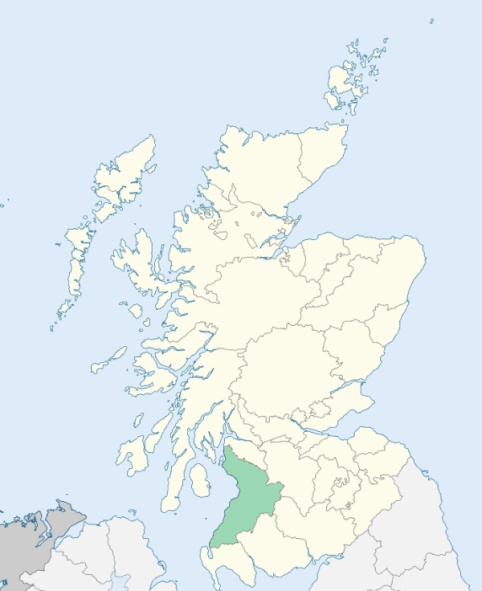
St Quivox - St Quivox is a parish in Ayrshire. It is bounded by the parishes of Monkton and Prestwick, Tarbolton, Ayr, and Newton-upon-Ayr. (1867: The Imperial Gazetteer of Scotland, by John Marius Wilson).
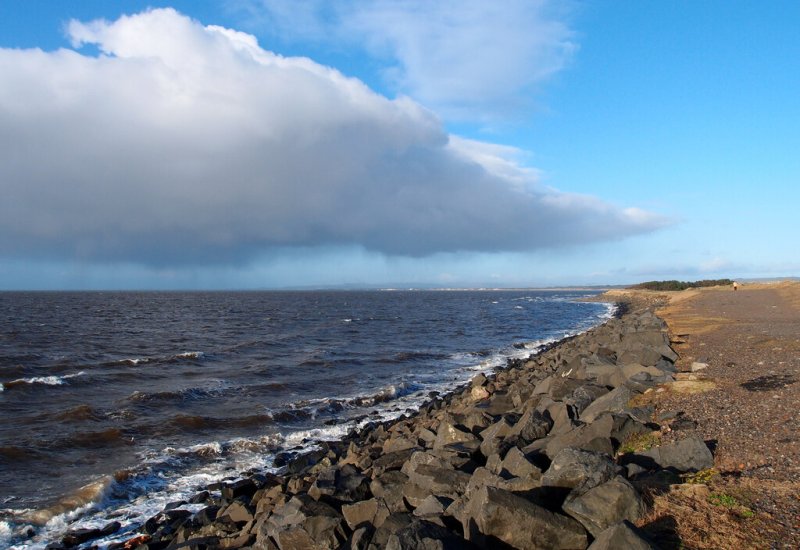
Newton-upon-Ayr - Newton-upon-Ayr is a small parish on the coast of Kyle, Ayrshire. It is bounded on the west by the Firth of Clyde, and on other sides by the parishes of Prestwick, St Quivox, and Ayr. (1867: The Imperial Gazetteer of Scotland, by John Marius Wilson).
Auchencraive or Auchincruive, Newton-on-Ayr or Newton-upon-Ayr, Wallacetown, Whitelets or Whitletts
Auchencraive, Craigie
PRE-REFORMATION GOVERNANCE:
POST-REFORMATION GOVERNANCE:
St Quivox. The church of Sanchar-in-Kyle was dedicated to St Kevoc. For the sake of distinction from Sanquhar in Nithsdale, this parish came to be called St Kevoc's, a name now corrupted into St Quivox. From 1221 to 1238 the church of Sanchar belonged to the Gilbertine Priory of St Mary at Dalmulin within the parish, founded in 1221 by Walter, third High Stewart of Scotland. From 1238 till the Reformation it was owned by the Abbey of Paisley.
Newton-upon-Ayr. A church was built here in 1777. The parish was disjoined from Monkton and Prestwick, and erected by the Lords Commissioners of Teinds, 15 Dec 1779.
Disjoined Quoad Sacra Parishes:
Annbank. A chapel was built at Annbank in 1871. This parish, erected 10 July 1914 by the Court of Teinds, was disjoined from the parishes of Tarbolton and St Quivox.
Wallacetown. The church was built in 1834. In 1836 the General Assembly granted it a constitution and a district of its own. The parish was disjoined from St Quivox by the Court of Teinds, 9 March 1874.
Includes ministers, licentiates, assistants, readers, and clerks.
St Quivox (QO)
Newton-upon-Ayr (QO)
Annbank (QS)
Wallacetown (QS)
(1928: Fasti Ecclesiæ Scoticanæ, by Hew Scott, D. D.)
Parish registers turned over to the Registrar-General, as a result of the Registration of Births, Deaths, and Marriages (Scotland) Act of 1854. The letters B. D. and M. indicate Births (or Baptisms), Deaths (or Burials), and Marriages (or Proclamations of Banns) respectively. Numbers indicate separate volumes or books. Note: These records are by no means complete or without damage; consult the Detailed List of the Old Parochial Registers of Scotland (1872) to learn more about the condition of the records.
| OPR and RD Numbers | |||
|---|---|---|---|
| Date Range | Name | Number | Type |
| 1735-1854 | St Quivox | 612-1 | OPR |
| 1780-1854 | Newton-on-Ayr | 612-2 | OPR |
| 1855-1890 | St Quivox and Newton-on-Ayr | 612 | RD |
| 1981-1895 | St Quivox | 612 | RD |
| 2009 | South Ayrshire, Ayr | 680 | RD |
| 2026 | (St Quivox) South Ayrshire Council; Mossblown and St Quivox Community Council | ||
| 2026 | (Newton-on-Ayr) South Ayrshire Council; Newton and Heathfield Community Council | ||
(2009: Parishes and Registration Districts of Scotland - Old and New, National Records of Scotland)
Local community councils (2026) are provided as a potential source of additional information for settlements within the original boundaries of the parish. (Source)
Statistics from informal and official censuses
St Quivox: Anderson, Brown, Kerr, Neil, Patton, Reid, Russell, Smith, Stewart, Wilson
Newton-onAyr: Campbell, Hamilton, Hunter, Morrison, Reid, Robertson, Smith, Taylor, Wilson, Young
Note: Names appearing in research materials, other than censuses. Simple names (First name, surname only) have been omitted unless they appear associated with large properties. All women's names, and men's names with occupations, military ranks, or peerage titles are included.
By the Reverend Mr William Peebles.
Newton upon Ayr." At the last visitation, in summer, 1790, there were found 1350 persons, from 7 years and upwards: of these, 610 were males, and 740 females; the number of families amounting to 380; the number of souls to about 1750.
Newton upon Ayr is a seaport town. A few houses, of late, have been built nearer the quay. In December, 1789, considerable damage was done to the shipping of this place: no less a number than 12 vessels, in one night, were stranded - one them was totally wrecked, and all the hands in it perished; several men, on board the other vessels, at the same time, lost their lives. This deplorable calamity pointed out the necessity of erecting a lighthouse. Two reflecting lights were erected on the north-east side of the harbour; a small duty is paid by each vessel for maintaining them. Though these lights were only erected in October, 1790, they have already been found very beneficial; no accidents have happened through neglect.
For many years past, shipbuilding has been carried on at this harbour; fifty hands are employed in this branch of business. Ten hands are employed in manufacturing ropes. Four boats, with four men to each boat, are employed in salmon fishing at the mouth of the river, and along the coast. White fish, haddocks, cod, and ling, with a few mackerals, flounders, and lobsters are taken in this bay. This fishing is carried on by some of the natives of the town, but chiefly by a set of fishers, who, within these 20 years, came from the parish of Pitsligo. Most of them reside in this parish and they are an industrious set of people; nine boats with 4 mean to each boat, are employed in this fishery. Seal fishing is also followed by a few of the inhabitants."
By the Reverend Mr William M'Quae.
St Quivox. "In the country part of the parish there are at present 96 families, which contain 490 souls of all ages. Thirty families live by farming; 4 blacksmiths, 4 masons, 5 colliers, 4 house-carpenters, 3 weavers, the remaining are labourers, or poor, or employed in different ways about the collieries.
The town of Wallacetown contains 250 families, in all 960 souls, 187 married pairs, 38 widows, 8 widowers, 7 bachelors, 10 unmarried women that keep house. There are 479 males and 481 females.
Total population of the parish: In the country 96 families 490 souls; in Wallacetown, 250 families, 960 souls; in total 346 families, 1384 souls.
There is one Antiburgher Seceding minister. Four families in the country part of the parish, and 20 families in Wallacetown, belong to this congregation. Three Burghers, 3 Moravians, 3 Methodists, and 10 of the Church of England. All the rest are of the Established Church (This section contains excerpts, at times restructured or paraphrased, from an article appearing in Statistical Account of Scotland, Sir John Sinclair, 1791-1799)
Primary Sources:
Statistical Account of Scotland (1791-1799), Volume 7, p. 353 (St Quivox); Volume 2, p. 262 (Newton-upon Ayr)
New Statistical Account of Scotland (1834-1845), Volume 5, Section I, p. 118 (St Quivox); Volume 5, Section I, p. 86 (Newton-upon-Ayr)
See Parish Page Sources for all source information and links.