Choan, Cuan
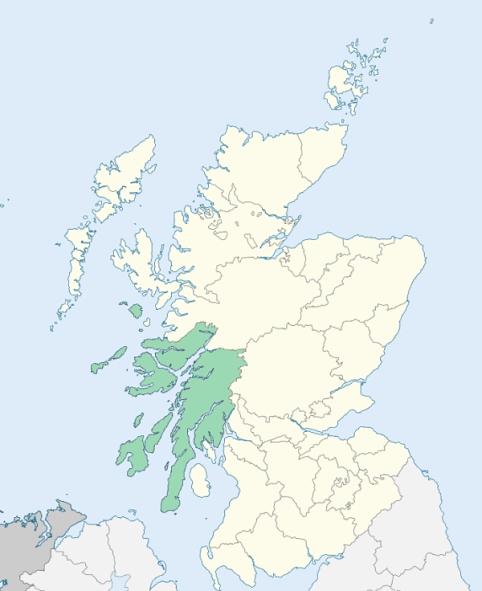
Kilbrandon and Kilchattan is a united parish in the district of Nether Lorn, Argyleshire. It consists of a portion of the mainland, and a group of islands, five of which (Seil, Luing, Easdale, Rosay, and Shuna) are inhabited. It is bounded on the north-west by the south end of the Sound of Mull, on the north-east by the Sound of Clachan, on the east by the parish of Kilninver, on the south-east by Loch Melfort, on the south by the north end of the Sound of Jura, and on the west by the Atlantic Ocean. It is commonly called, by its own inhabitants and those of the surrounding country, the parish of Choan or Cuan. (1867: The Imperial Gazetteer of Scotland, by John Marius Wilson).
Ardlarach, Balvicar, Blackmillbay, Colipool or Colipole, Droinen, Easdale, Ellanabriech or Ellenabeich, Millbay, Shuna, Tobernochy or Toberonichy
PRE-REFORMATION GOVERNANCE:
POST-REFORMATION GOVERNANCE:
The parishes of Kilbrandon and Kilchattan were united in the seventeenth century. Each of them has its own separate church.
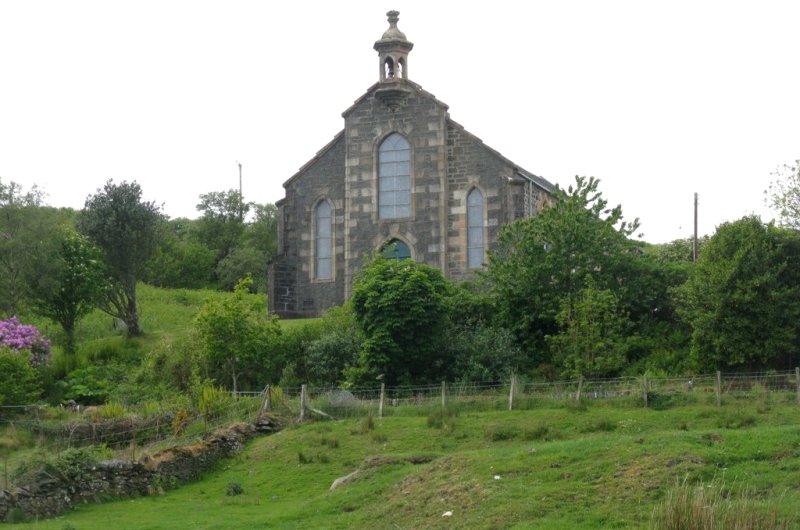
Kilbrandon. This maritime parish is made up of Seil, Easdale, and several smaller islands, with a pretty large share of the adjacent mainland. Its church, built upon Seil, was dedicated to St Breandan the Voyager. There were two chapels within the bounds, St Bride's at Kilbride in Seil, and St Coan's at Kilchoan on the mainland.
Kilchattan. The insular parish of Kilchattan consists of Luing, Shuna, Torsay, and various smaller islands. Its church is on Luing, and was dedicated to St Catan.
Includes ministers, licentiates, assistants, readers, and clerks.
Kilbrandon and Kilchattan (QO)
Kilchattan (QO)
(1928: Fasti Ecclesiæ Scoticanæ, by Hew Scott, D. D.)
Parish registers turned over to the Registrar-General, as a result of the Registration of Births, Deaths, and Marriages (Scotland) Act of 1854. The letters B. D. and M. indicate Births (or Baptisms), Deaths (or Burials), and Marriages (or Proclamations of Banns) respectively. Numbers indicate separate volumes or books. Note: These records are by no means complete or without damage; consult the Detailed List of the Old Parochial Registers of Scotland (1872) to learn more about the condition of the records.
| OPR and RD Numbers | |||
|---|---|---|---|
| Date Range | Name | Number | Type |
| 1753-1854 | Kilbrandon and Kilchattan | 515 | OPR |
| 1855-1871 | Kilbrandon and Kilchattan | 515 | RD |
| 1972-2006 | Kilbrandon and Kilchattan | 527 | RD |
| 2007-2010 | Argyll and Bute, Kilbrandon and Kilchattan | 527 | RD |
| 2026 | Argyll and Bute Council; Seil and Easdale Community Council | ||
(2009: Parishes and Registration Districts of Scotland - Old and New, National Records of Scotland)
Local community councils (2026) are provided as a potential source of additional information for settlements within the original boundaries of the parish. (Source)
Statistics from informal and official censuses
Kilbrandon: Brown, Cameron, Campbell, Clark, Fletcher, Gillies, Johnston, Livingston, May, Munroe
Kilchattan: Campbell, Carmichael, Clark, Currie, Ferguson, Livingston, May, Paterson, Sinclair, Shaw
Note: Names appearing in research materials, other than censuses. Simple names (First name, surname only) have been omitted unless they appear associated with large properties. All women's names, and men's names with occupations, military ranks, or peerage titles are included.
By the Reverend Mr John MacFarlane.
"In the month of March 1793, the number of inhabitants was 2060. The number of males was 1013, of females 1047; 595 were under 10 years of age. There were 444 families. More than one-third of the inhabitants are slate quarriers.
The inhabitants, in general, are not inferior to those of any country in hospitality and charity. Many exert themselves, in private, to relieve their neighbours, when they are in need of aid; and in public, wherever their help could be expected, their contribution has been cheerful and liberal. However, though hospitable, they are jealous of strangers residing among them. A stranger residing in the country, many of them look upon as an intrusion and encroachment on their right. All the inhabitants are Protestants. There are no sectaries, except a few, who call themselves Covenanters."
(This section contains excerpts, at times restructured or paraphrased, from an article appearing in Statistical Account of Scotland, Sir John Sinclair, 1791-1799)
Primary Sources:
Statistical Account of Scotland (1791-1799), Volume 14, p. 157
New Statistical Account of Scotland (1834-1845), Volume 7, Section II, p. 71
See Parish Page Sources for all source information and links.