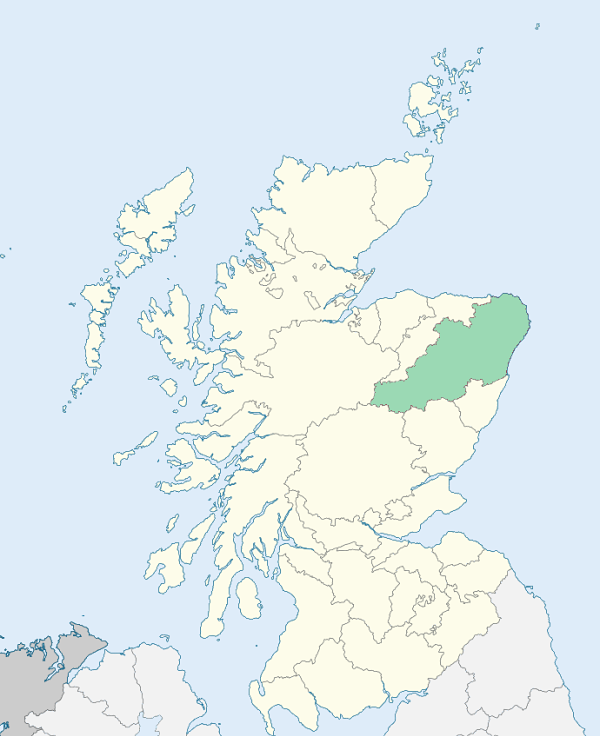
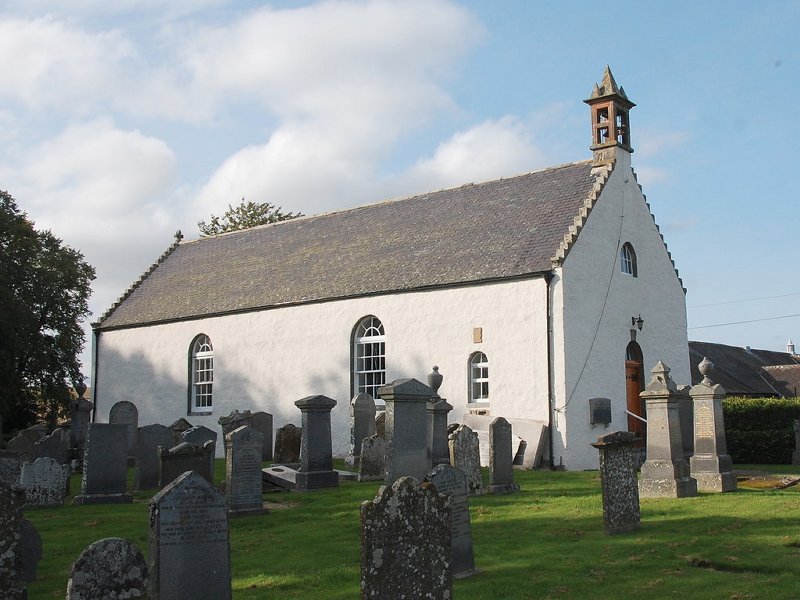
Clatt is a parish in the western extremity of the district of Garioch, Aberdeenshire. It is bounded by the parishes of Kinnethmont, Leslie, Tullynessle, Auchindoir, and Rhynie. (1867: The Imperial Gazetteer of Scotland, by John Marius Wilson).
Clatt
PRE-REFORMATION GOVERNANCE:
POST-REFORMATION GOVERNANCE:
The church of Clatt was dedicated to St Luag. Clatt was a prebend of Aberdeen. A Fair of St Luag was held at Clatt.
Includes ministers, licentiates, assistants, readers, and clerks.
(1928: Fasti Ecclesiæ Scoticanæ, by Hew Scott, D. D.)
Parish registers turned over to the Registrar-General, as a result of the Registration of Births, Deaths, and Marriages (Scotland) Act of 1854. The letters B. D. and M. indicate Births (or Baptisms), Deaths (or Burials), and Marriages (or Proclamations of Banns) respectively. Numbers indicate separate volumes or books. Note: These records are by no means complete or without damage; consult the Detailed List of the Old Parochial Registers of Scotland (1872) to learn more about the condition of the records.
| OPR and RD Numbers | |||
|---|---|---|---|
| Date Range | Name | Number | Type |
| 1680-1854 | Clatt | 180 | OPR |
| 1855-1967 | Clatt | 180 | RD |
| 2009 | Aberdeenshire, Insch | 318 | RD |
| 2026 | Aberdeenshire Council; Tap O'Noth Community Council | ||
(2009: Parishes and Registration Districts of Scotland - Old and New, National Records of Scotland)
Local community councils (2026) are provided as a potential source of additional information for settlements within the original boundaries of the parish. (Source)
Statistics from informal and official censuses
Anderson, Brown, Duncan, Gordon, Ingram, Reid, Smith, Stewart, Thomson, Watt
Note: Names appearing in research materials, other than censuses. Simple names (First name, surname only) have been omitted unless they appear associated with large properties. All women's names, and men's names with occupations, military ranks, or peerage titles are included.
By the Reverend Mr Robert Findlay.
"The population of this parish has decreased considerably within these 40 years; chiefly owing to some families, who had small farms, removing to the manufacturing towns, where they find a more easy and comfortable way of living. At Whitsunday 1792, when the incumbent completed his last course of visiting and catechising, the number was 213 males, 212 females, 425 total. Of these the number of communicants is about 200; the number of inhabited houses, and families, is 89.
Almost all the inhabitants occupy farms. The artificers, or trades people, such as wrights, tailors, smiths, &c. are merely sufficient to supply the inhabitants with their respective sorts of work. Some are paid by the day, or piece; others have what is called custom work. All have as much land as enables them to keep a cow or two, and a yard, or garden.
All the residing inhabitants are of the Established Church, excepting one Roman Catholic, whose wife and family are Presbyterians. The people, in general, are sober, intelligent, and industrious; charitable, according to their circumstances, and regular in attending upon the ordinances of religion; though it is to be regretted, that, in this last respect, that the gentry are far from being exemplary, to those whom they deem much their inferiors. It is so far fortunate, however, that the vulgar, as they are called, do not imitate their betters, otherwise we should have very thin churches."
(This section contains excerpts, at times restructured or paraphrased, from an article appearing in Statistical Account of Scotland, Sir John Sinclair, 1791-1799)
Primary Sources:
Statistical Account of Scotland (1791-1799), Volume 8, p. 535
New Statistical Account of Scotland (1834-1845), Volume 12, p. 846
See Parish Page Sources for all source information and links.